the interview desk
Thom Yorke
The crunchy piano chords on “The Eraser” are Jonny Greenwood's, taped on a dictaphone Thom Yorke left on top of the piano.
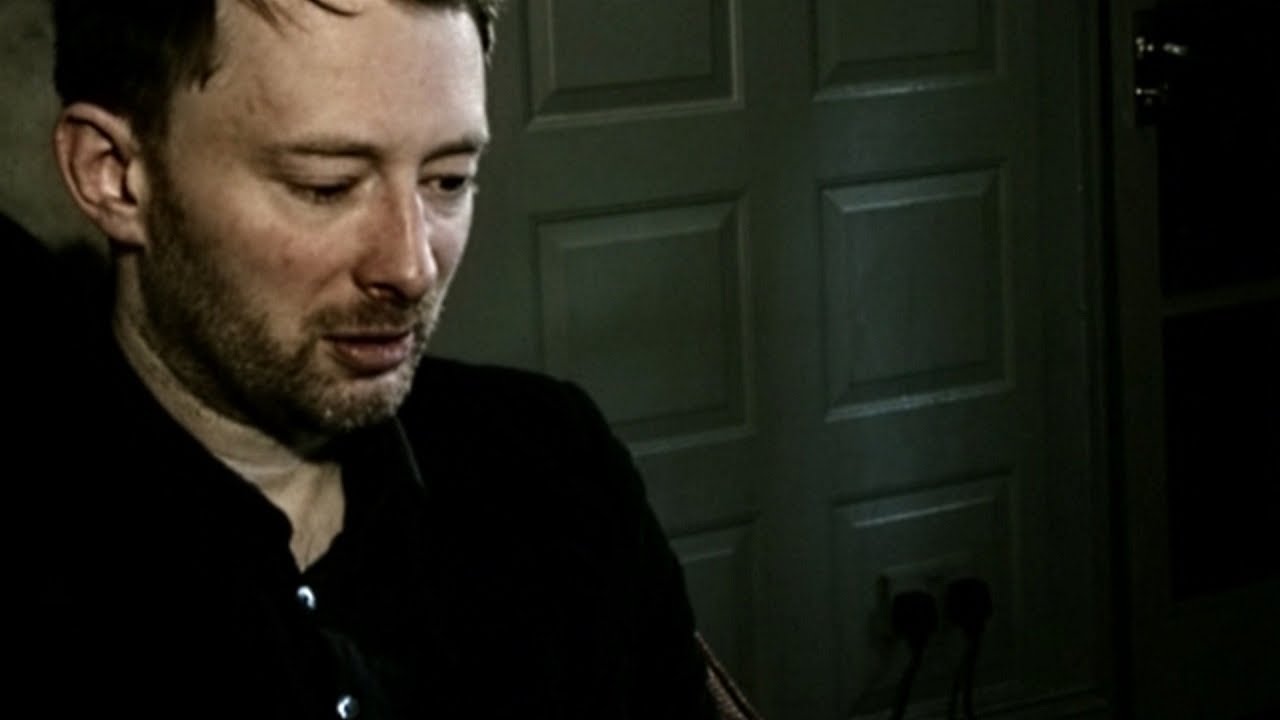
2006 · source not known · Thom Yorke
Thom Yorke talks about The Eraser in 2006. Radiohead had stopped because it was getting boring and self-perpetuating. He won't call this a solo album, as if he had walked away, or a side project, as if it were a doodle; the others told him to get on with it. The sketches came from a tiny cupboard at home and a laptop on tour, and the record was made with Nigel Godrich at Godrich's London studio and at the band's. At the end of Hail to the Thief, he says, they had lost all their confidence.
Stanley Donwood's art drew on old German expressionism, and the record keeps trying to put things out of mind and failing. The climate came in because he was working with Friends of the Earth when an IPCC report arrived, its graphs all going one way. The title track could be the oldest song, he says, its crunchy piano chords Jonny Greenwood's, taped on a dictaphone Yorke left on top of the piano. “The Clock” came out of anger at leaders shuffling paper while waiting for the growth figures. The music of “And It Rained All Night” was written on a laptop through a sleepless night of rain the size of tennis balls, and “Atoms for Peace” in 10 minutes. He went to XL instead of EMI because the record was made with the doors shut, and he felt it should come out in a different context too.
where it comes up
- 0:37 Why the band stopped, and why not a solo album
- 1:43 Laptop sketches in a cupboard and on tour
- 3:30 Confidence lost after Hail to the Thief
- 4:39 Stanley Donwood's art and trying to forget
- 5:14 The climate report behind the record
- 6:05 “The Eraser” and Jonny's piano chords on tape
- 6:51 “The Clock” and leaders who will not act
- 8:57 “And It Rained All Night” and a sleepless night
- 10:41 Why XL and not EMI
sources · 1
- “Thom Yorke - The Eraser Interview 2006”, WiseRiley, 3 June 2017