the interview desk
Radiohead
One of them bought the Strokes' first album for his 11-year-old nephew, but his wife saw the cover, so the nephew gets a tape.
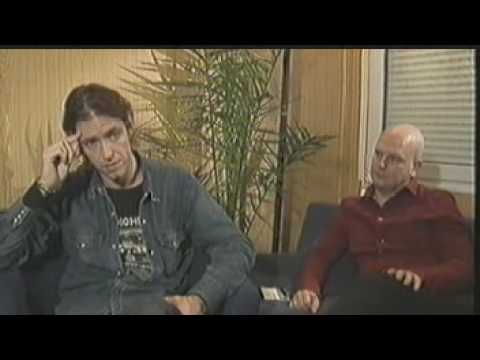
date not known · source not known · Radiohead
A television interviewer talks to Radiohead in the Kid A and Amnesiac period, with Ed O'Brien among them. Asked whether the new music needed a new way of drumming, one of them says the emphasis moved to rhythm, to finding grooves solid enough for a song to be built on, with programmed beats alongside. The interviewer passes on a friend's remark that if almost any other band made an album like this, nobody would listen to it. They agree that OK Computer earned them a few patient listens, and that having no pressure from the record company and none to sell was empowering and scary at once.
Bowie in the 1970s and the Rolling Stones come up, and one of them says the Stones made their best records an album or two after their experiments. Lennon is quoted on aiming, missing and finding your own thing in the miss. Songs from the sessions such as “Optimistic” and “How to Disappear Completely” fall into a more familiar way of working for the band, but they are not going back to make a rock album. Asked what is special about a Rickenbacker, O'Brien remembers being handed one as the band's first guitar after signing. They are listening to Peaches and the Strokes' debut, which one of them bought for his 11-year-old nephew; his wife saw the cover, and the nephew is getting it on tape instead.
where it comes up
sources · 2
- “Radiohead Interview 9/11 Part 2”, CTKIH, 11 September 2009
- “Radiohead Interview 9/11 Part 1”, CTKIH, 11 September 2009