Song · The Bends era (1994–96)
Street Spirit (Fade Out)
The song Thom Yorke says is the reason he does this at all, and the single that proved the band were not a one-hit wonder.
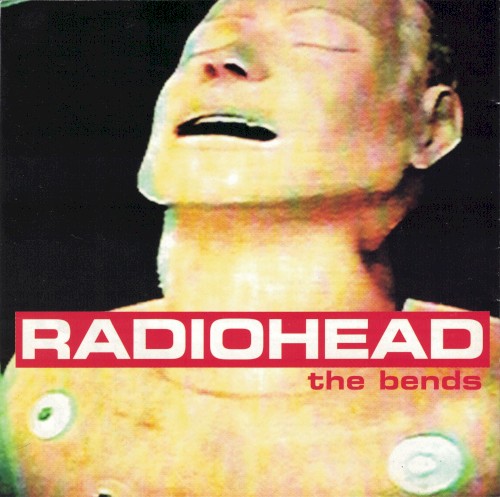 The Bendsalbum
- 1995released
- 4:12length
1994
r.e.m. and the famished road
Yorke has traced it to R.E.M. and to Ben Okri's 1991 novel The Famished Road. The arpeggio that runs the whole length of it is his, played by Ed O'Brien. They recorded several versions with John Leckie before one worked, and when it did the band knew something had changed in how they wrote.
If I ever forget why I started this as a career, then ['Street Spirit'] is why I started… We spent a day going round in circles until I was thinking, ‘This is never going to happen.’ Then suddenly something happened and I was transported to a place that I'd been willing myself to be in for months on end.
thom yorke · mojo, june 2001
1995–96
the video in the desert
Yorke went to Jonathan Glazer after seeing his video for Massive Attack's “Karmacoma”. Glazer shot in black and white over two nights in a desert outside Los Angeles, using a trick from nature documentaries: high-speed cameras with frames removed, so everything drifts. Parlophone paid to fly him to Germany for extra footage of Yorke.
He has called it the turning point in his own work: the band had “found their own voices as an artist”, and “I got close to whatever mine was, and I felt confident that I could do things that emoted, that had some kind of poetic as well as prosaic value”.
22 jan 1996
number five
Released on 22 January 1996 as the fifth single from The Bends, it reached number five, the band's highest chart position to that point, and settled the one-hit-wonder question for good. Pitchfork, years later, said it “channels a sense of capitalist dread that even class-conscious Britpop artists repressed”, and called it the bridge between The Bends and OK Computer. Stereogum, at the album's twentieth anniversary: “one of the all-time great album closers… a perfectly rendered slice of doomy, incantatory psychedelia that made it sound like Radiohead could do anything”.
Peter Gabriel and the Darkness have both covered it.
1993–2025
how the night ends
It was in the set from 2 November 1993 in Montreal, more than two years before the single, and played 94 times in 1995. Seventy-six of them ended with it, more than any other song: this is what they play when there is nothing left to play.
the video
The promo, directed by Jonathan Glazer.· Radioheadwatch on youtube →
takes(3)
Live history
| Times played | 456 shows |
|---|---|
| Live debut | Tuesday 2 November 1993 · Montreal |
| Last played | Tuesday 16 December 2025 · Copenhagen |
| Opened the night | 12 times |
| Closed the night | 73 times |
| Longest absence | 7 years · back on Wednesday 5 November 2025 · Madrid |
First played live in 1993, 2 years before it was released.
Nights played include broadcasts; opened and closed count gigs only. A cancelled night has no setlist. All setlist stats →
Tabs (1)
Remixes & alternate versions (1)
- Street Spirit (Fade Out) (Acoustic Version)
Heard in (2)
- The Handmaid's TaleUnder June's attack on Aunt Lydia in the van during the escape.
- YellowjacketsUnder Natalie's death; the music supervisor had first thought of it for the feast.
sources8
- Nick Kent, “Happy now?”, Mojo, June 2001.
- Brian Draper, “Chipping away”, Third Way, December 2004.
- Sam Delaney, “Final cut is the deepest”, The Guardian, 23 September 2005.
- Anthony Kaufman, “Shooting the ‘Beast’: Jonathan Glazer tames the gangster genre”, IndieWire, 12 June 2001.
- Marcus Smith, “The annotated guide to the music videos of Radiohead's The Bends”, PopMatters, 16 March 2021.
- Tom Breihan, “The Bends turns 20”, Stereogum, 13 March 2015.
- Mac Randall, Exit Music: The Radiohead Story.
- Sharma Amit, interview with Ed O'Brien, Guitar World, 9 June 2020.