Radiohead studio album · The Bends era (1994–96)
The Bends
EMI booked nine weeks to follow “Creep”; it took most of 1994, three studios, a fight in Mexico and somebody else's mixing desk.
the sessions
- Jan 1994Canned Applause, OxfordshireRelearning the new songs in a converted apple shed
- Feb 1994RAK Studios, LondonNine weeks booked with John Leckie
- 27 May 1994London AstoriaLeckie tapes the show; “My Iron Lung” comes from it
- Jul 1994The Manor, OxfordshireTwo weeks; the stalled songs finally go down
- Oct 1994MexicoA short tour, a fight, camcorder footage for the sleeve
- Nov 1994Abbey Road, LondonLast overdubs and strings; Leckie starts mixing
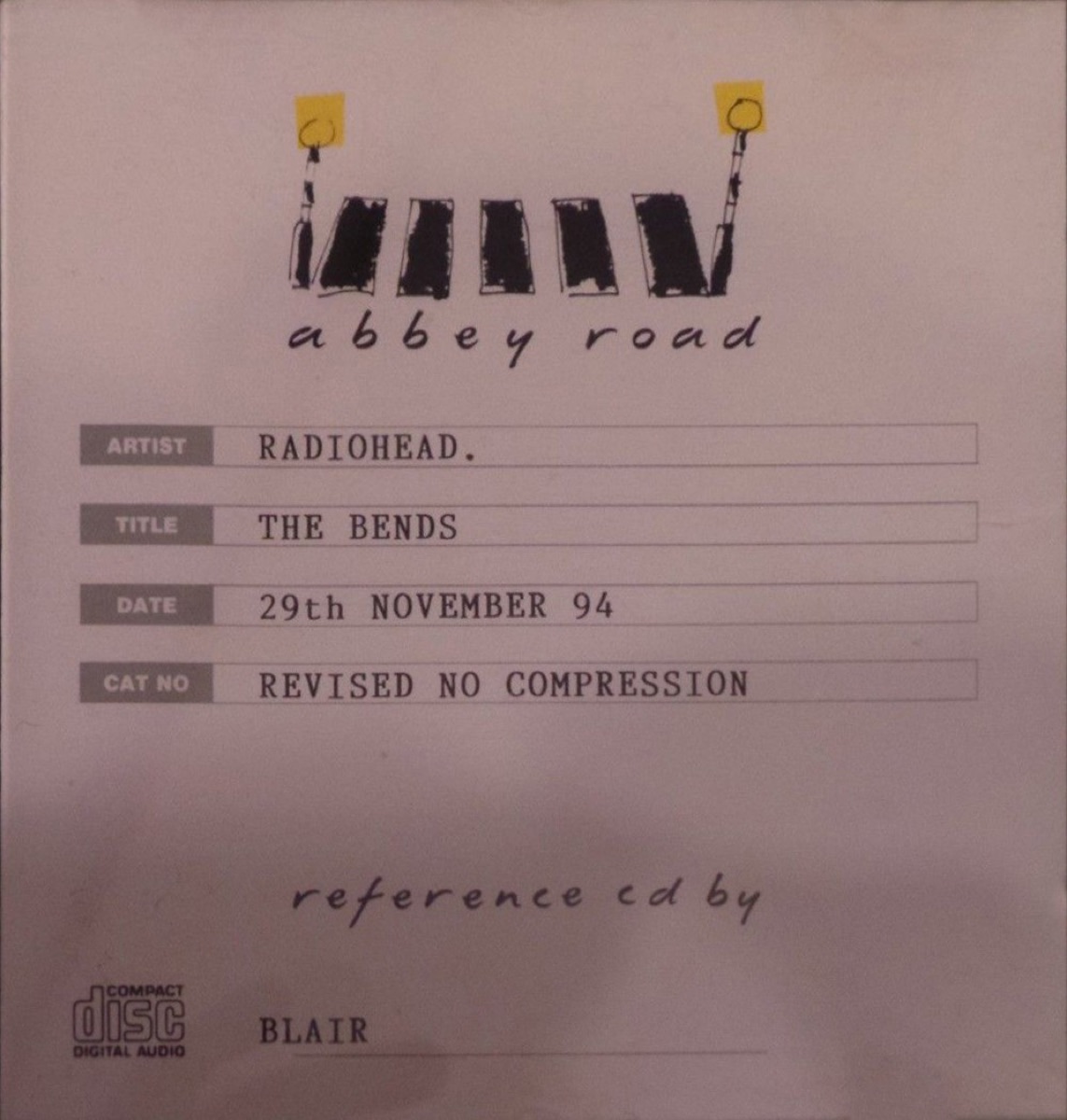
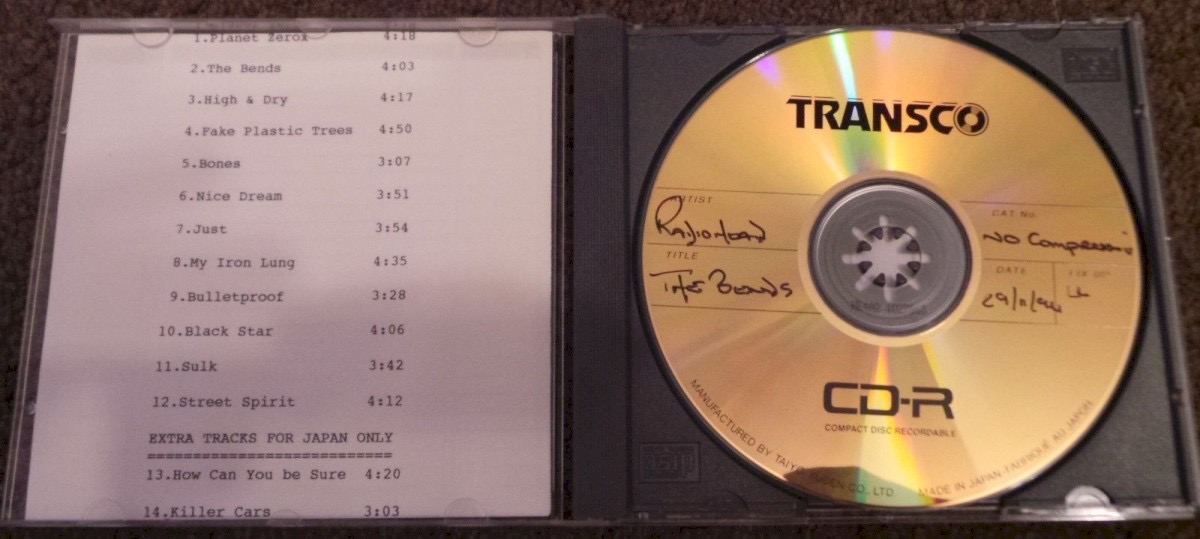
- 29 Nov 1994Abbey Road, LondonChris Blair cuts the reference CD of the master
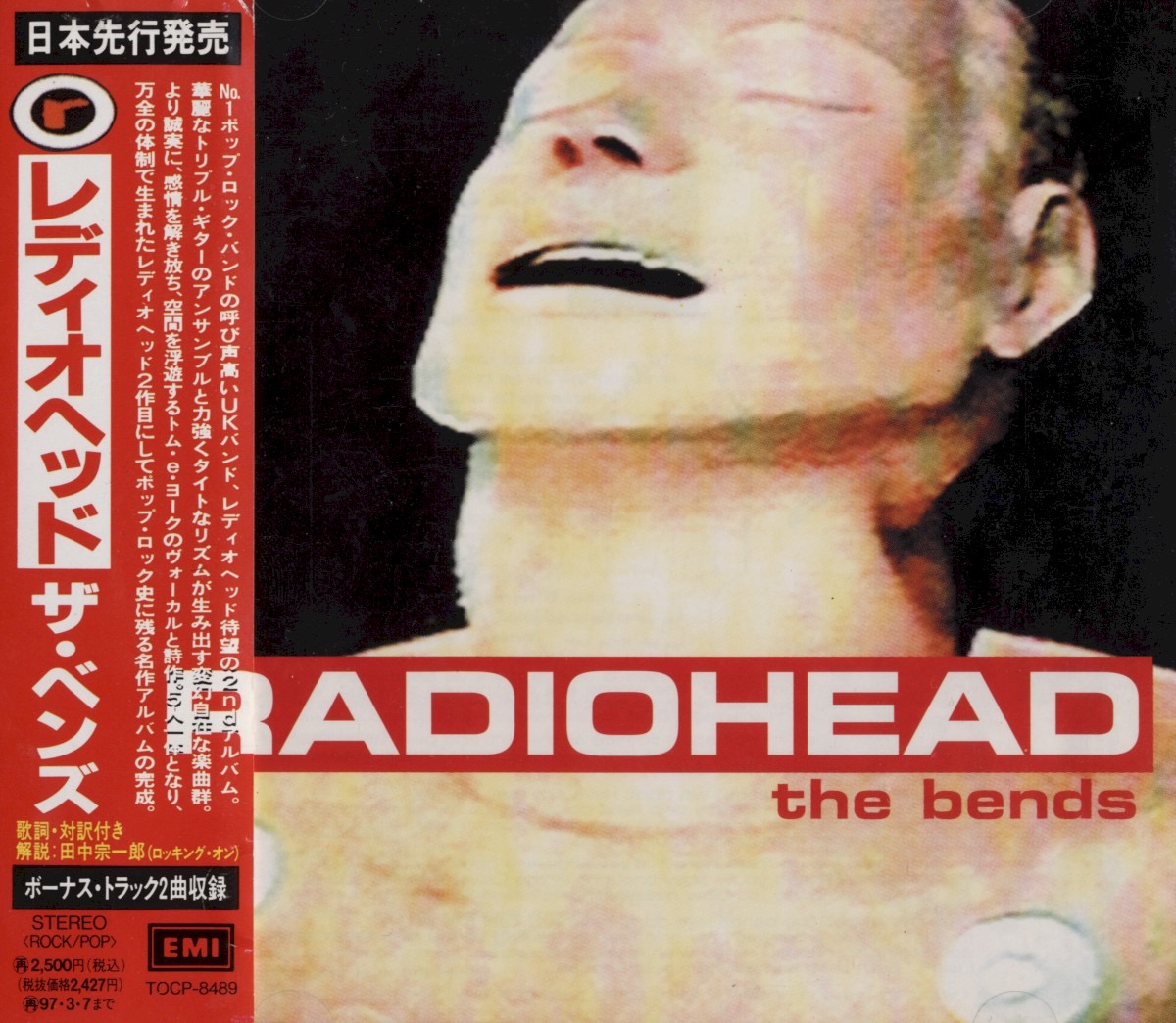
- 8 Mar 1995JapanFirst release, with two extra tracks
- 13 Mar 1995Wulfrun Hall, WolverhamptonOut in Britain; the band play that night
- 4 Apr 1995United StatesCapitol releases it in America
1993
the benz
Radiohead came off the Pablo Honey tours at the end of 1993 with a hit they had renamed “Crap”, a cancelled Reading festival slot behind them and a singer whose throat had given out. The rumour was that EMI had given them six months to sort themselves out or be dropped. Keith Wozencroft, the A&R man who signed them, remembers it differently. Capitol, Uncut reported later, were sitting on their option for a second album until they heard something new.
There was something new. As the Pablo Honey sessions wound up, Thom Yorke had handed Paul Kolderie a demo tape of fresh songs under the working title The Benz, a car joke that would be swapped for a diving one.
I was a little shocked when suddenly he pops out a batch of songs that are all better than anything on ‘Pablo Honey’.
paul q. kolderie · nme, 13 march 2019
John Leckie was best known for the Stone Roses' first album; Yorke wanted him for Real Life, Magazine's first. Leckie had started at Abbey Road as a tape operator in 1970 and worked on All Things Must Pass and Meddle. He was busy with a record for Ride, so the band spent January 1994 in their new rehearsal space, a converted apple shed they called Canned Applause. Yorke said they knew the songs almost too well and had to learn to like them again.
feb–apr 1994
nine weeks at rak
EMI booked nine weeks at RAK in St John's Wood from February, aiming at an October release. The house engineer was a young RAK staffer called Nigel Godrich, who had started there helping with the tea. Yorke came in early every morning, made tea and played the piano alone for four hours. Leckie's memory is that new songs were pouring out of him, and that you learned not to interrupt.
The trouble was the brief. The label wanted the single first, nobody could agree which song it was, and the search slowed everything to a crawl. Jonny Greenwood paraded more and more exotic instruments through the studio, then went back to the two Telecaster Pluses he used for the rest of the record. Chris Hufford, who co-managed the band, thought about quitting over what he called Yorke's mistrust of everybody, and Ed O'Brien remembers all five looking for the get-out clauses in their contracts. Yorke's summary was two months of meltdown.
People from the label would visit and it got very uncomfortable.
nigel godrich · rolling stone, 13 march 2020
O'Brien counted 22 songs, and called the first batch of recordings dreadful. Two of the keepers came out of nights off: “Planet Telex” after a dinner, “Fake Plastic Trees” after Jeff Buckley at the Garage. The rest waited.
may–jul 1994
the road, then the manor
With the October date given up, they went touring in May and June, around Europe and then Japan, Hong Kong, Australia and New Zealand, with a stop at the London Astoria on 27 May that MTV Europe filmed and Leckie taped. “My Iron Lung” came from that tape. At Glastonbury that June they were on the second stage with Oasis, Blur and Pulp, and Phil Selway says that apart from the clothes they never belonged to that scene.
Two weeks at the Manor in Oxfordshire in July were the turn. Richard Branson's country studio was not far from home, and the band arrived from the shows playing like a band again; Selway credits the gigs for that. Speaking to Music Week the following January, Yorke said they scrapped half of what they had recorded and learned that their best performances were first takes and most of the good things were accidents. Selway's tally for the whole album is about four months in studios, spread across a year.
oct–nov 1994
mexico, then abbey road
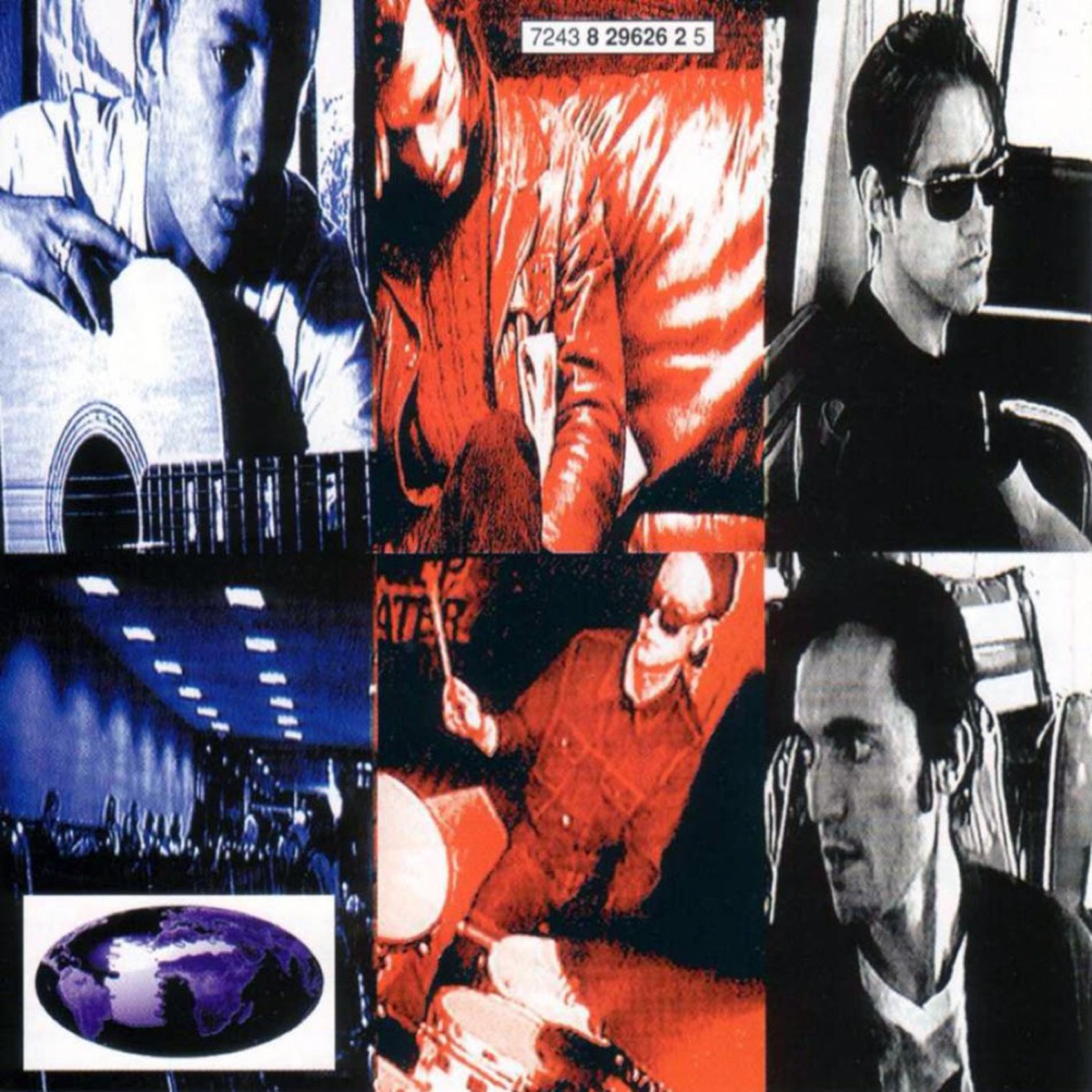
In October Radiohead became, by their own claim in the fan club newsletter, the first English band to do any kind of tour of Mexico. The venues were unsafe, the mosquitoes came in squadrons, and when Yorke was not on stage he was out with a camcorder shooting pictures for the album's artwork. Somewhere on that run the five had it out, years of things unsaid in one day. Yorke said they were spitting and fighting and crying, and that afterwards the album made sense.
It was like a band imploding, when it needed to find its feet.
ed o'brien · uncut, august 2001
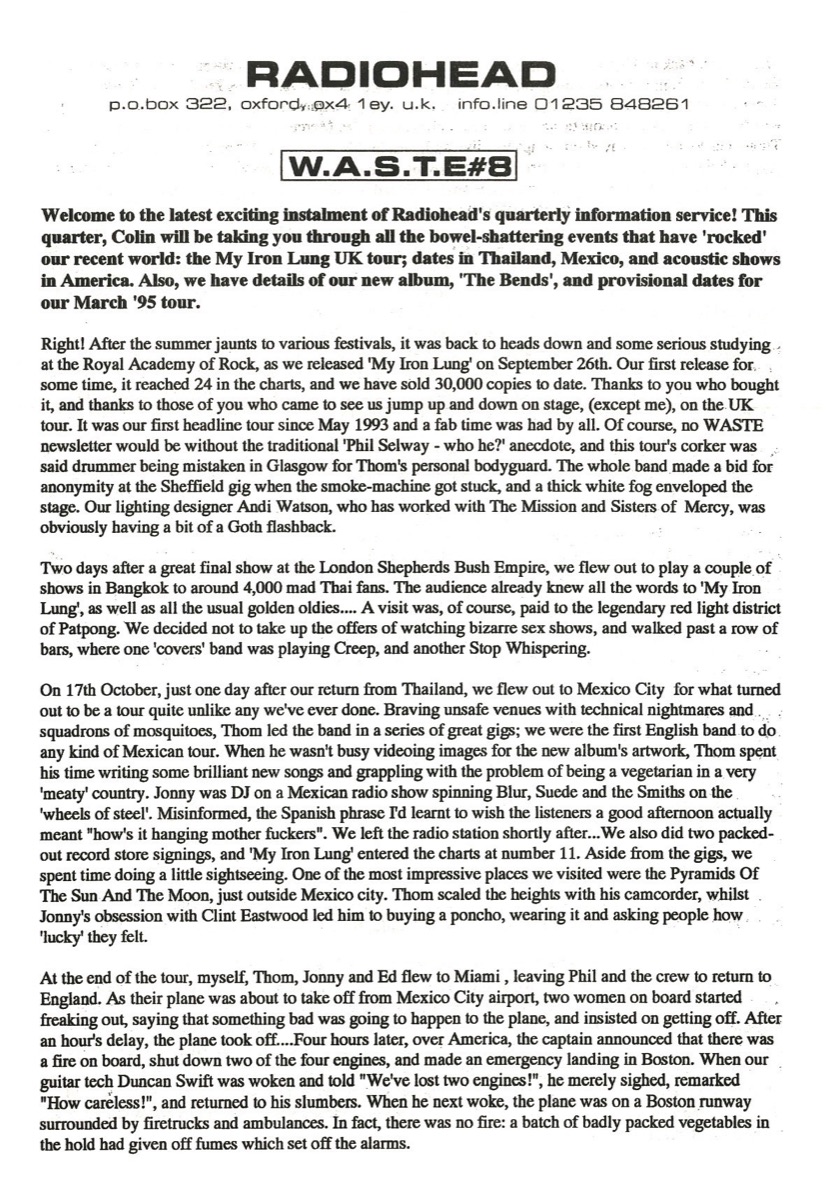
The flight out was no calmer. Two passengers insisted on getting off before take-off at Mexico City, and four hours later the captain shut down two of the four engines and put down in Boston among the fire engines. The fumes, the newsletter reports, came from a badly packed load of vegetables in the hold.
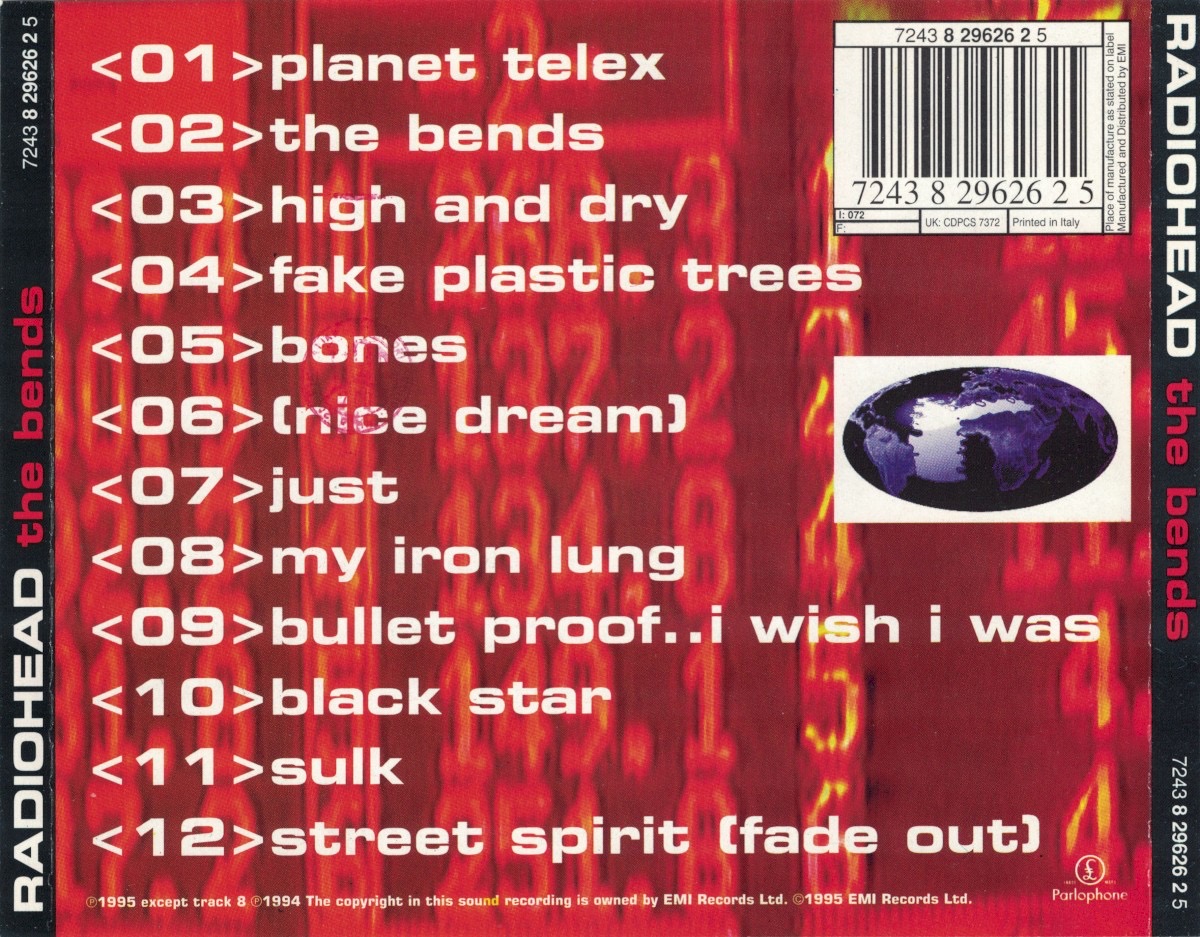
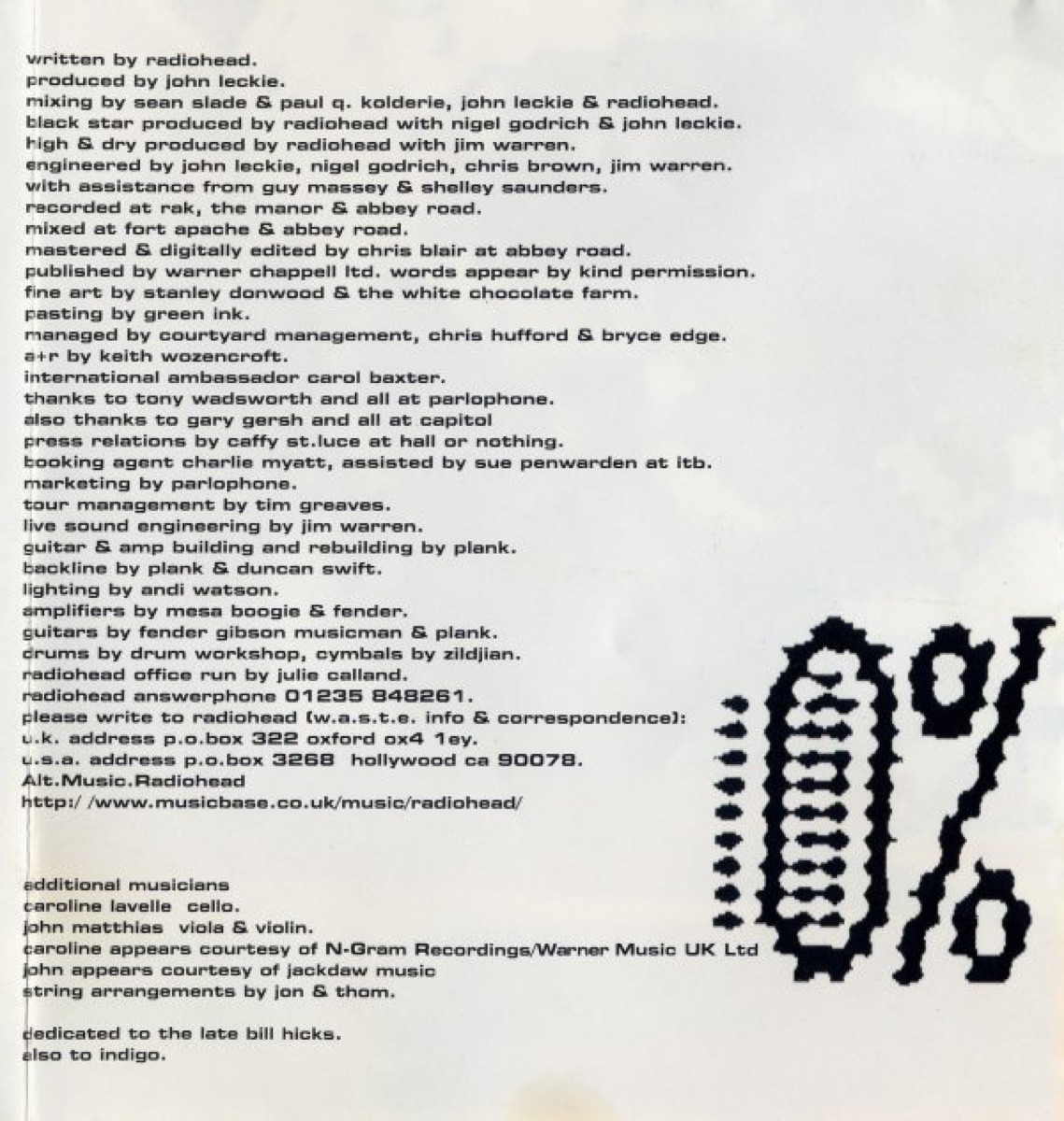
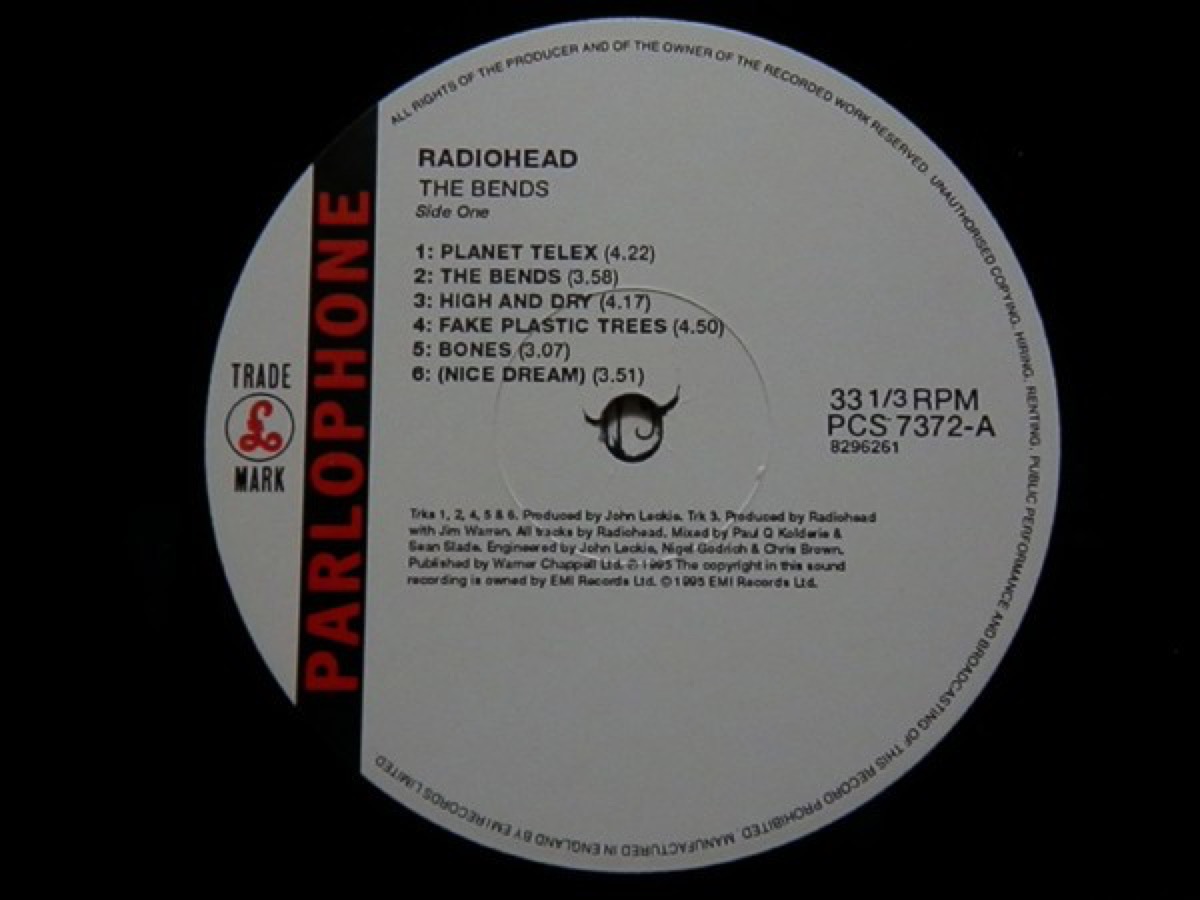
The last sessions were at Abbey Road in November. Caroline Lavelle played cello and John Matthias viola and violin, to string parts arranged by Jonny and Thom. The engineering credit is shared by Leckie, Godrich, Chris Brown and Jim Warren, the band's live engineer, who had recorded “High and Dry” at Courtyard a year before any of this.
Then Leckie started mixing, slowly. Sean Slade remembers a back-channel phone call, from Ed he thinks: Leckie was great, but he was taking a whole week to mix a song. EMI sent the tapes to Slade and Kolderie at Fort Apache in Massachusetts without telling Leckie. Their first mix took a couple of hours, every one that came back pleased the label, and more tapes followed. Three of Leckie's mixes survived: “My Iron Lung”, “Street Spirit (Fade Out)” and a share of the title track.
Oh, the final mixes are a bit brash. They're kind of, ‘Zing! Look at me!’
john leckie · nme, 13 march 2019
Chris Blair mastered it at Abbey Road. His reference CD, dated 29 November 1994 and marked “revised no compression”, already has the final running order, with the opener still listed as “Planet Zerox” and two extra tracks for Japan only, “How Can You Be Sure” and “Killer Cars”. That month Colin Greenwood told the fanzine Sun Zoom Spark the album was finished, had no title, and would come out everywhere on the same day at the end of January.
the sleeve
a dummy in the basement
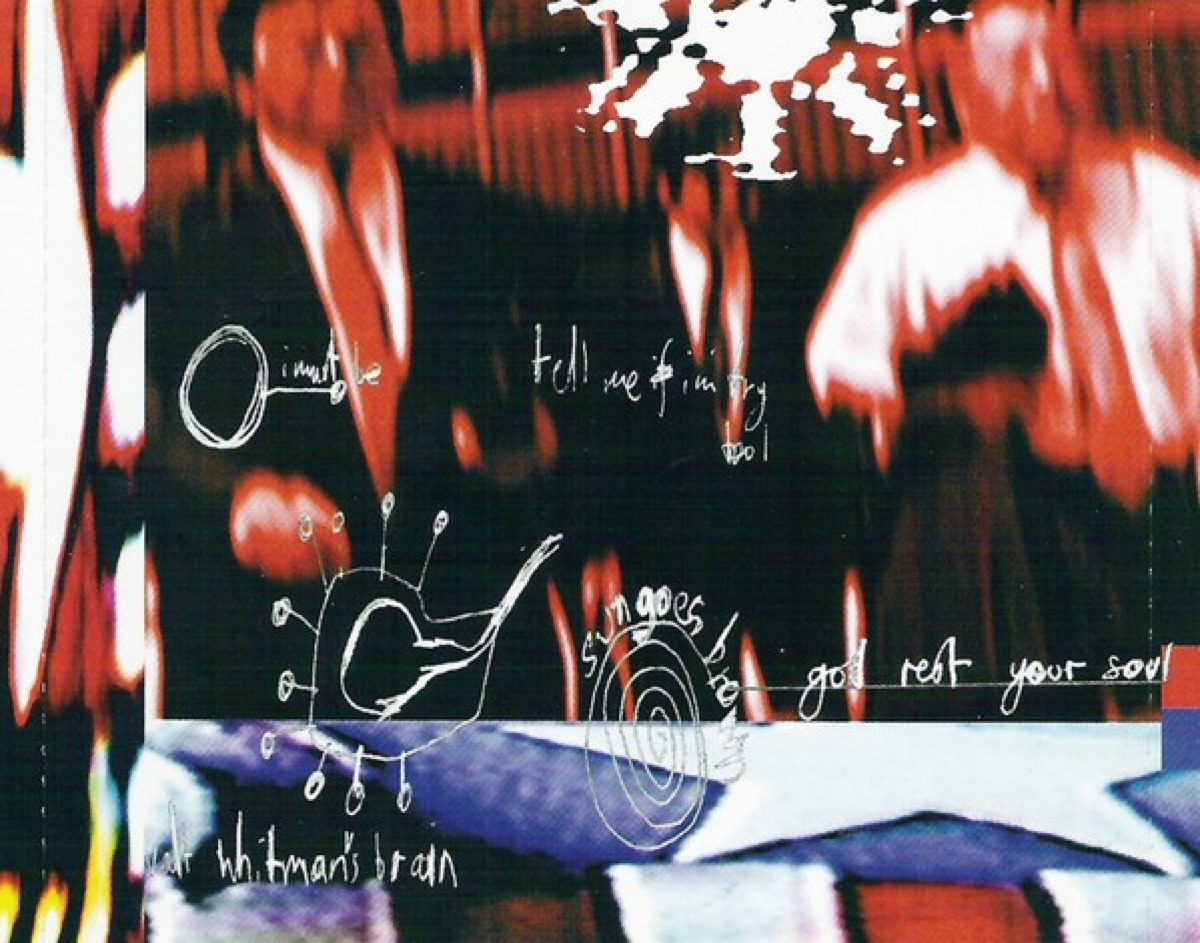
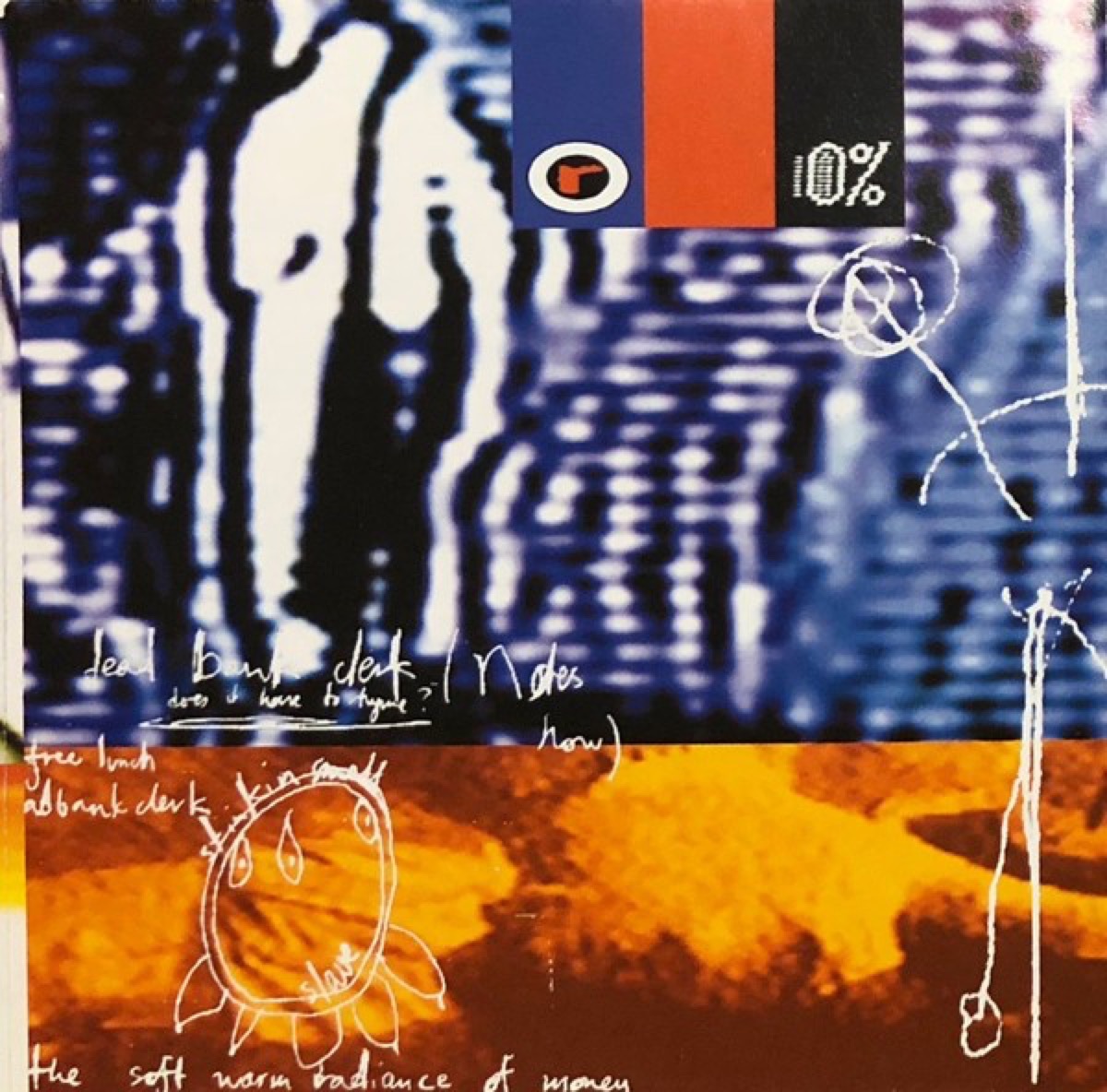
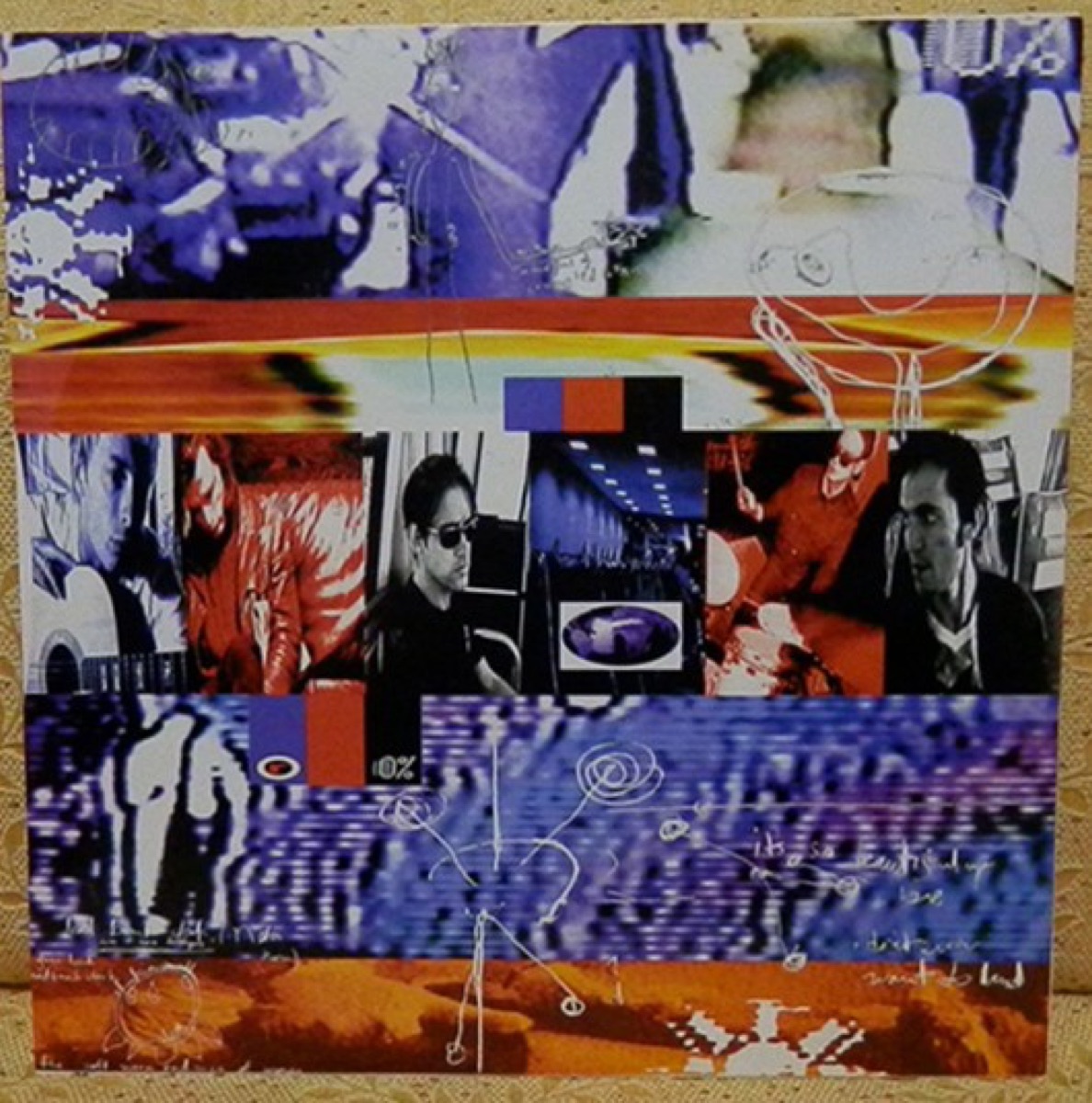
The art was by Stanley Donwood, real name Dan Rickwood, who had met Yorke at Exeter and made the My Iron Lung sleeve with him first. He has said he took the job because he knew Thom, not because he liked the band. Their method was a hired camcorder: film anything, play it back on Yorke's television, photograph the screen, scan the prints. Donwood reckons they made something like 50 attempts at the My Iron Lung sleeve, all terrible.
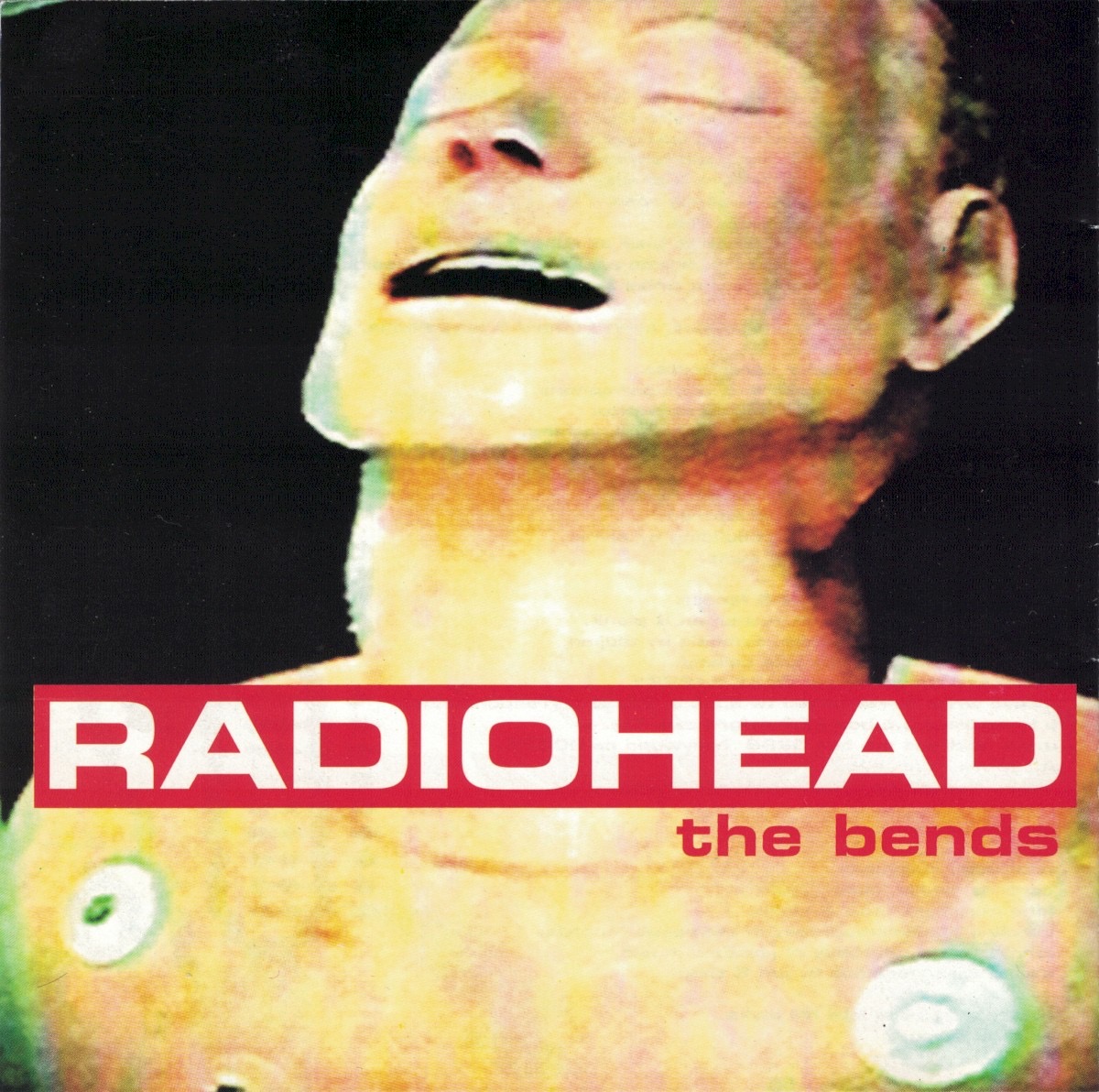
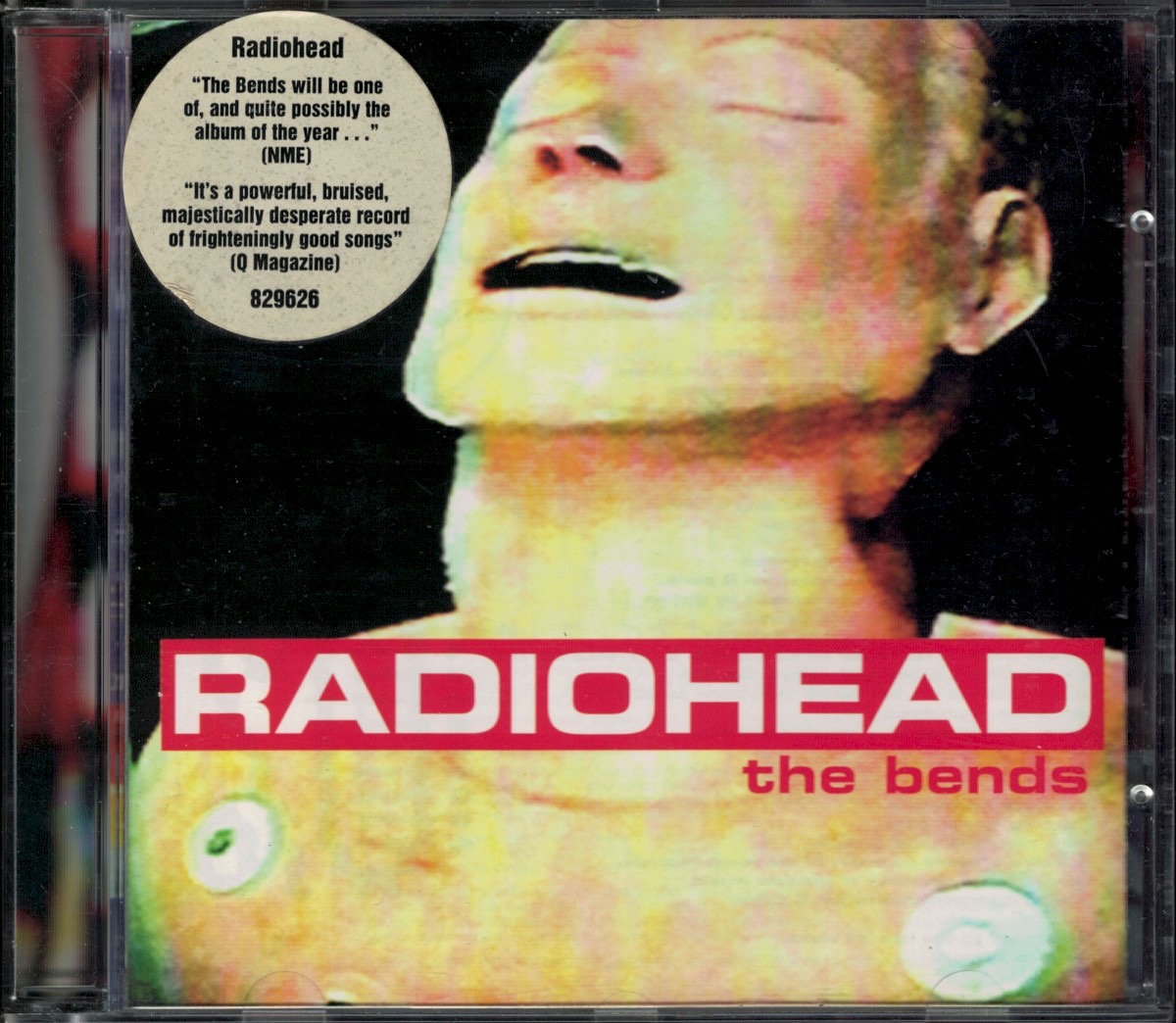
The album sleeve was meant to be literal. Donwood had heard that the John Radcliffe Hospital in Oxford still had an iron lung, and he and Yorke got into its basement with the camera; neither of them knows how. The iron lung was a grey metal box in a dark room. Nearby lay a few of the dummies people practise resuscitation on, and they filmed one of those instead.
The expression on the dummy and the angle we filmed it from, it looked somewhere between agony and ecstasy.
stanley donwood · rolling stone, 13 march 2020
They stretched the picture to push the face a little further. In 1996 Rickwood told Raw they had three days left to make it; in 2025 Donwood remembered the deadline as the next day. They had only just learned Photoshop, and the blues came off the press as a muddy mauve. Yorke's view in 2025 was that it was a good job the record sold all right, because it looked as if they meant it.
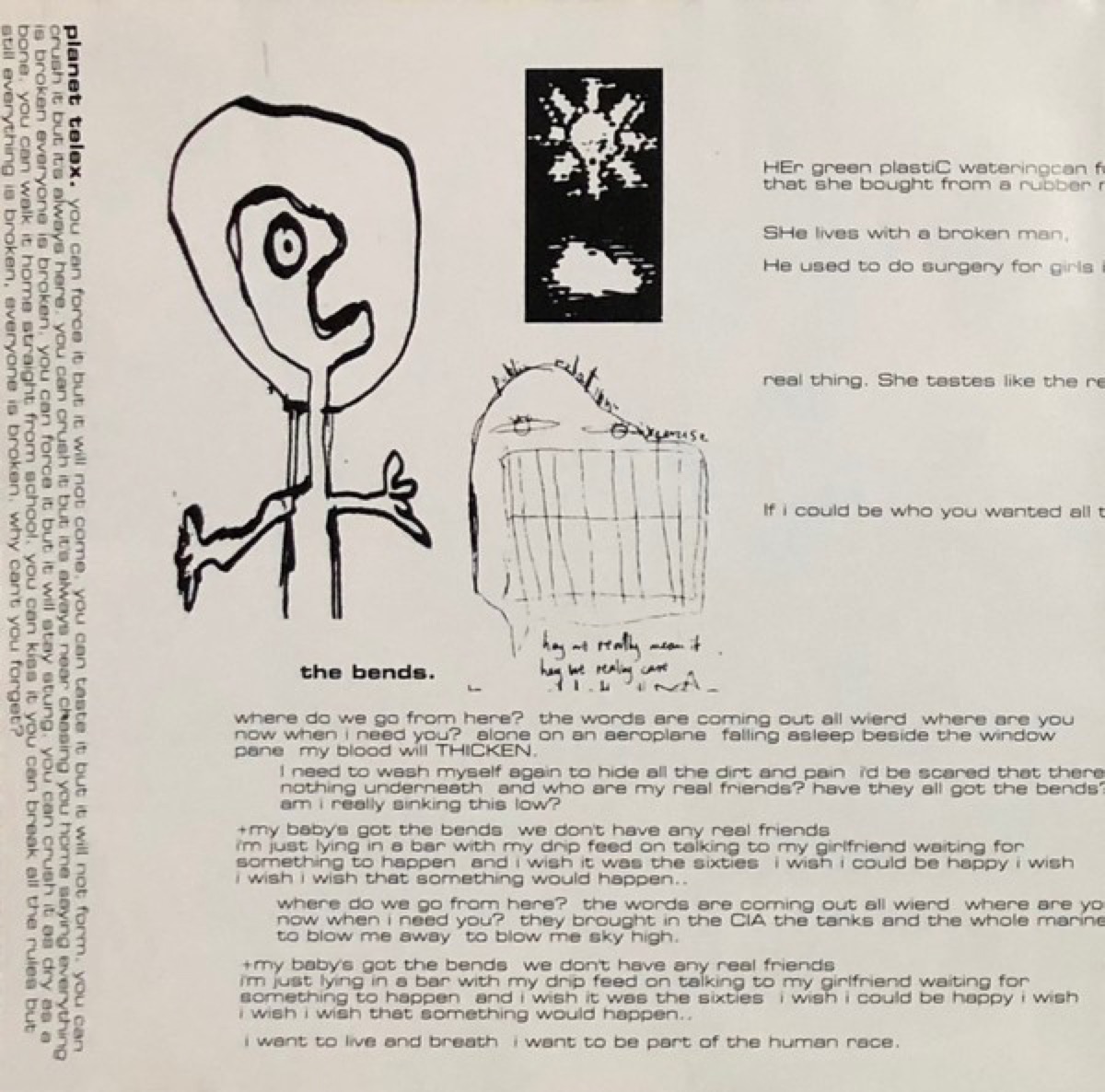
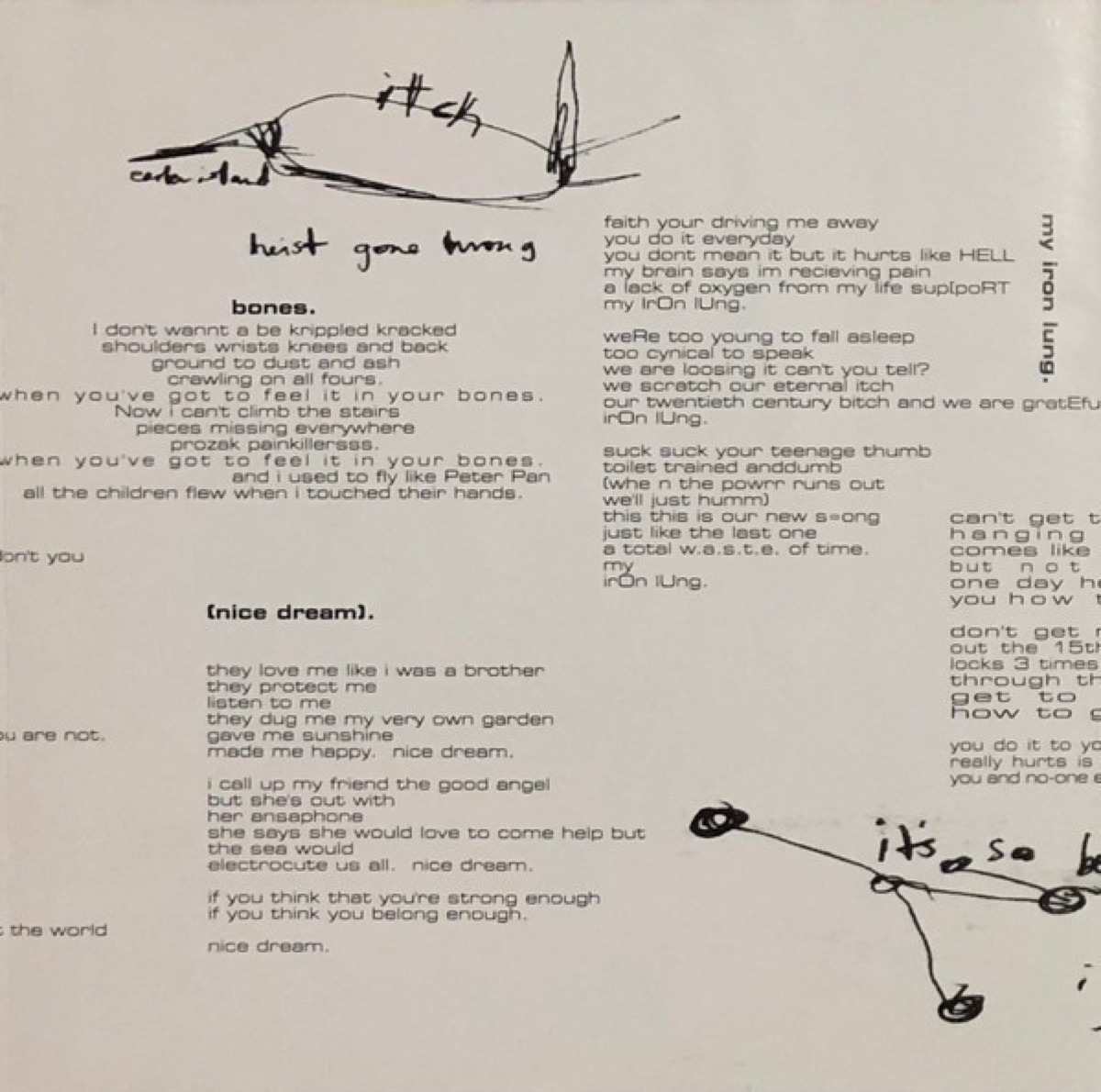
The booklet lays the lyrics over more of the same television pictures, with handwriting and drawings across them: one page reads “dead bank clerk (does it have to rhyme?)”, another “the soft warm radiance of money”, and a “0%” sign turns up on panel after panel. The credits give the fine art to Stanley Donwood and The White Chocolate Farm, Yorke's name for himself on the sleeves. The album is dedicated to Bill Hicks, who died on 26 February 1994, the month the RAK sessions began. The back page gives the band's P.O. box in Oxford, an answerphone number and the newsgroup Alt.Music.Radiohead.
feb–apr 1995
the launch
The end of January came and went. W.A.S.T.E., the fan club's newsletter, told members that winter that The Bends would be out worldwide in March, the 13th in Britain, with a double A-side of “Planet Telex” and “High and Dry” on 27 February. Parlophone's plan for the shops had Yorke and Jonny playing four acoustic preview nights for fans in February, double flyposters in the streets, listening posts in the shops and Pablo Honey at mid-price until the end of May. Tony Wadsworth, who ran Parlophone, had made up his mind in January.
My impression is that they've missed out their second album and gone straight to their third.
tony wadsworth · music week, 14 january 1995
Japan had it first, on 8 March, with the two extra tracks. In Britain it came out on Monday 13 March, the night the band played Wolverhampton's Wulfrun Hall, and went into the chart at number six. The British CD carried a sticker with two lines from the reviews. NME's, as printed there, promised one of, and quite possibly the album of the year; what Mark Sutherland had written was “indie rock albums of the year”.
Capitol released it in America on 4 April. What American listeners missed, Hufford said, was another “Creep”, so Capitol made “Fake Plastic Trees” the first US single to get as far from it as possible. Clark Staub, a marketing director there, told Entertainment Weekly that nobody was going to call them “that ‘Fake Plastic Trees’ band”.
1995
the reviews
The British press was sold early. Sutherland gave it 9 out of 10 in NME and called it this year's Parklife, Q gave it four stars, and NME and Melody Maker both put it in their top ten of the year. America took longer. Ted Drozdowski in Rolling Stone heard no easy hits and expected a difficult stretch, Chuck Eddy in Spin gave it five out of ten for not being enough like “Creep”, and the Chicago Tribune gave it one star and called the band alternative rock's answer to the Moody Blues. Robert Christgau got round to it in December 1996 and gave it a C.
Either way it kept selling. It spent 36 weeks on the British chart in 1995, dropped out, and came back in December for another 48.
1995–96
the slow climb
The touring ran on for a year and a half after release, and two things in it changed the band's fortunes. The first was R.E.M.: six European dates with them in the summer of 1995, then the American arenas from Miami on 8 September to Hartford on 1 October. Yorke said meeting Michael Stipe taught him it was possible to make more than two albums and want to stick around.
The bad luck came straight after. Three days after Hartford their van was stolen in Denver with most of their equipment, Jonny's two Telecaster Pluses included, and Yorke and Jonny played the show as a duo on hired gear. In Munich that November Yorke collapsed on stage, and the short NME item about it kept him out of the paper's interviews for five years. One of the Telecasters came back in 2014, when a fan who had bought it in Denver recognised it from a description online; Jonny was playing it on stage in Oxford by February 2015.
The second was the videos. Selway credits “Just”, “Fake Plastic Trees” and “Street Spirit (Fade Out)” with letting the record seep into people's consciousness, and MTV's Matt Pinfield kept playing it while it sold less than the albums it was up against; Yorke thanked him with a gold disc. “Street Spirit” reached number five early in 1996, higher than “Creep” had gone, and on 10 February the album reached number four, eleven months after it came out. It went platinum in Britain that month and was nominated for best British album at the Brits.
In America it re-entered the Billboard 200 in February 1996 and peaked at 88 on 20 April, a year after release, still the lowest any of their albums has charted there. It went platinum anyway, in 1999. By August 1996 Radiohead were opening for Alanis Morissette and trying out songs nobody had heard, “Karma Police” and “Paranoid Android” among them.
after
the one they learned from
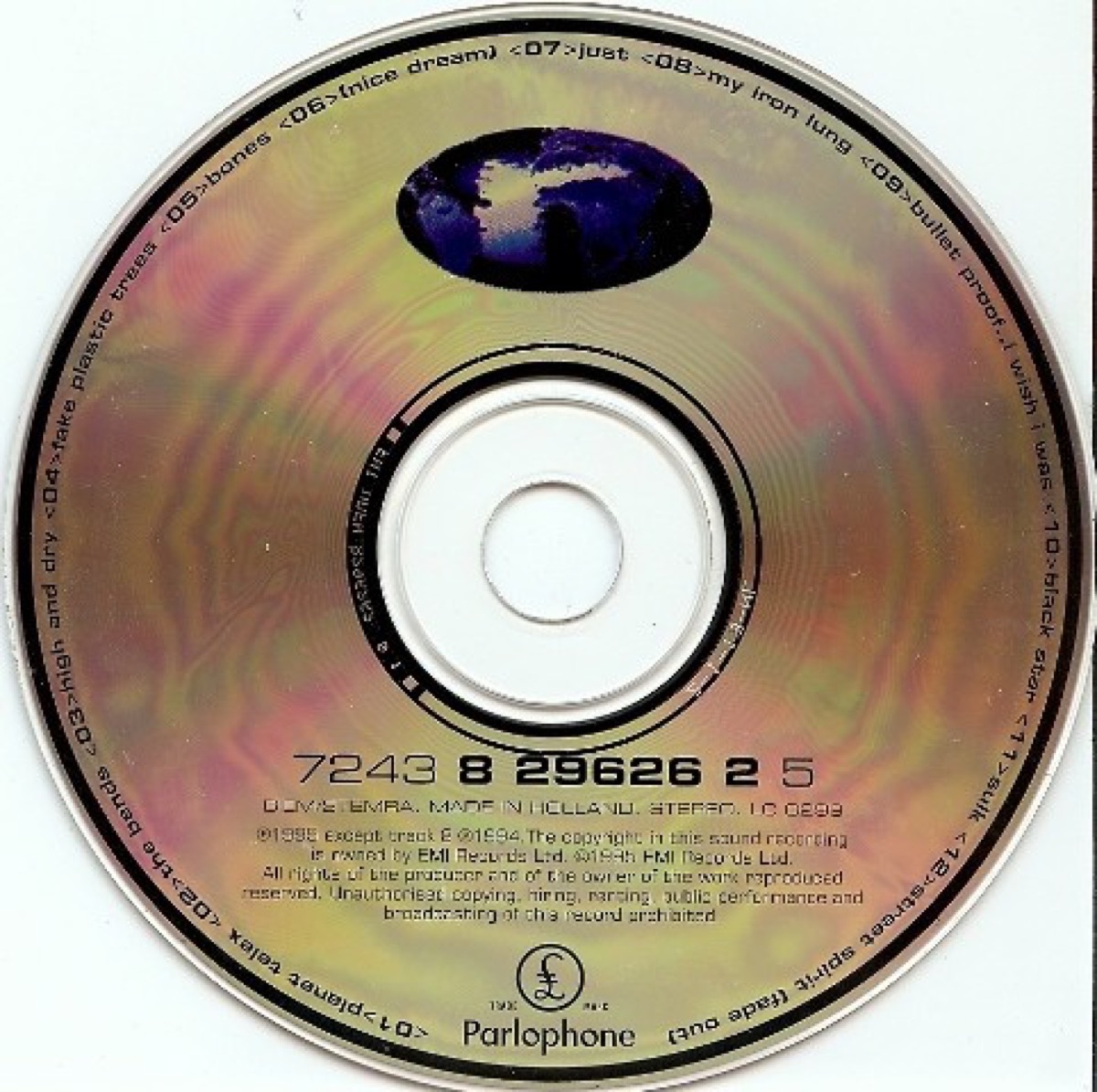
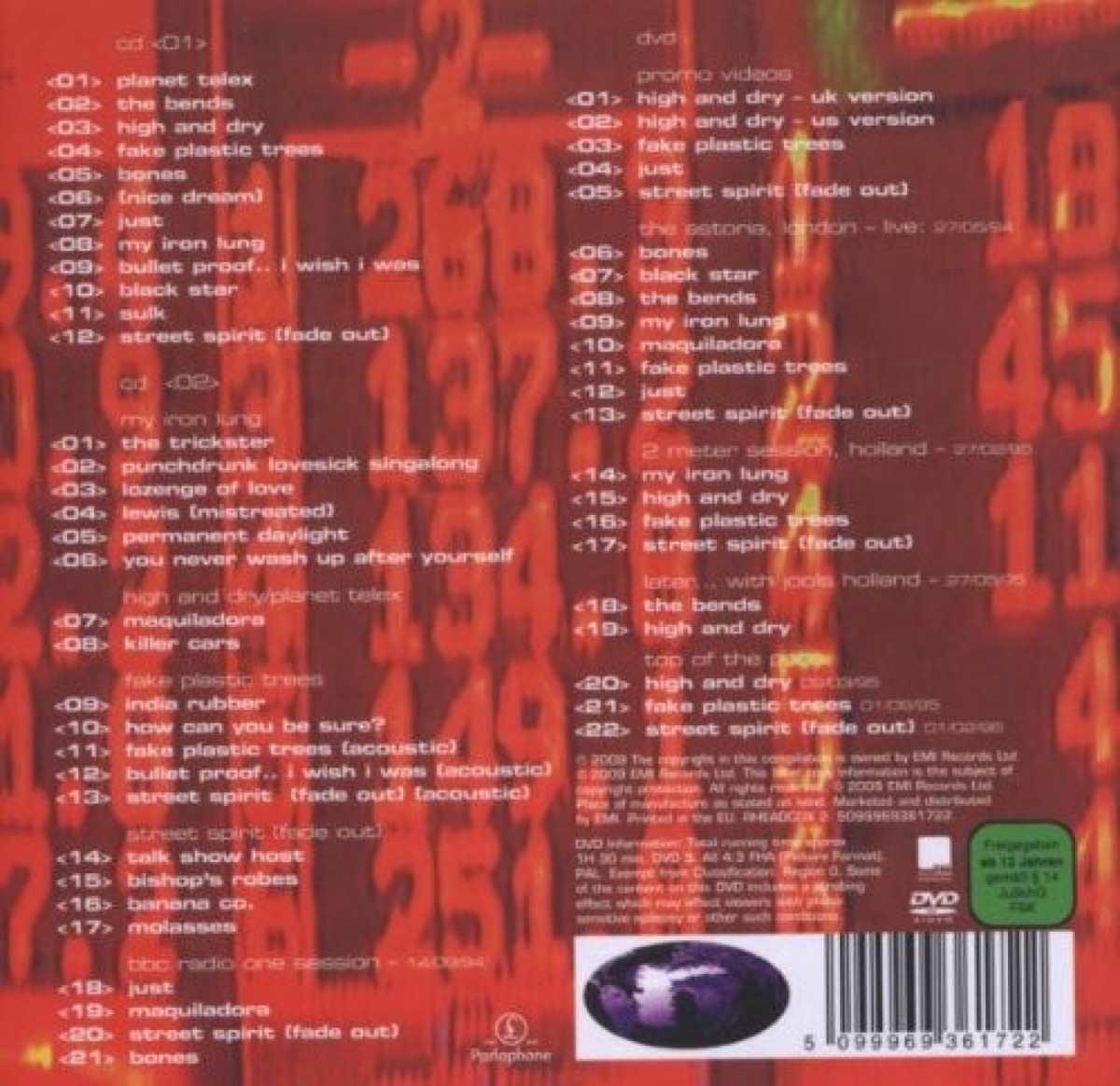
EMI, with Radiohead long gone, reissued it in March 2009 as a Collector's Edition with a disc of B-sides and sessions and, in the larger set, a DVD; the band had no part in it. In 2016 the catalogue moved to XL, which put it back out on vinyl. Mojo put it sixth among the greatest guitar albums in 2003, Pitchfork third among Britpop records in 2017, a scene the band wanted nothing to do with, and Rolling Stone's 2020 list of the 500 greatest albums has it at 276.
It is the Radiohead record other bands learned most from, and Yorke never quite forgave it. In 2006 The Observer counted it among 50 albums that changed music, for the falsetto ballad that filled the decade after it; the same year Yorke told Pitchfork the copying had upset him, however hard he tried not to let it. Godrich's answer was that nobody invented a man singing falsetto over an acoustic guitar.
For the thirtieth anniversary in March 2025 the band did not reissue it. They posted a VHS tape of Yorke alone at the Horseshoe Tavern in Toronto two weeks after release and a playlist of the B-sides, while Leckie told the story of the sessions to a sold-out room at the British Library. Four years earlier a sketchpad from the band's rehearsal barn had sold at Omega Auctions for £5,000, below its reserve. One of the unreleased songs in it was “Dead Bank Clerk”, a title that had already made it into the booklet.
on film
The lyrics track by track, starting from the pressure that followed “Creep”.· Stempwatch on youtube →
videos(9)
the sleeve
the booklet (6)
the art and the editions
the press
the press release
from W.A.S.T.E. newsletter no. 8 · Colin Greenwood
dated dec 1994
After America it was back to blighty for some hard earned rest and Yuletide cheer to prepare ourselves for 1995 and promoting our new album, The Bends which will be released world-wide in March (UK:13th).
the reviews
9/10
NME
Mark Sutherland · 18 mar 1995
read it →the consummate, all-encompassing, continent-straddling '90s rock record
3.5/5
Rolling Stone
Ted Drozdowski · 8 mar 1995
read it →a sonically ambitious album that offers no easy hits
4/5
Q
apr 1995
a powerful, bruised, majestically desperate record of frighteningly good songs
B+
Entertainment Weekly
Tom Sinclair · 7 apr 1995
read it →a smorgasbord of guitar flavors, most of them tasty
4 stars
Orlando Sentinel
7 apr 1995
read it →angst can be exhilarating when artists are truly spilling their steaming guts
1/4
Chicago Tribune
Kevin McKeough · 27 apr 1995
read it →alternative rock's answer to the Moody Blues
3/4
Los Angeles Times
Sandy Morris · 7 may 1995
read it →A nugget of pure pop pulses at the heart of every acridly whimsical track
5/10
Spin
Chuck Eddy · may 1995
read it →Too much nodded-out nonsense mumble, not enough concrete emotion.
C
The Village Voice
Robert Christgau · 3 dec 1996
read it →the words achieve precisely the same pitch of aesthetic necessity as the music
later
- looking backRolling Stone · Gavin Edwards · 11 mar 2003 4/5they usually mean that they sound like Radiohead's brilliant second albumread →
- looking backBBC Music · David McGuire · 2008where they really put themselves firmly into the public consciousnessread →
- looking backPitchfork · Scott Plagenhoef · 16 apr 2009 10.0To many fans, this more approachable and loveable version of the band is its peak.read →
- on the listsMojo · sep 2003 no. 6100 Greatest Guitar Albums, no. 6read →
- on the listsPitchfork · Jazz Monroe · 29 mar 2017 no. 3The 50 Best Britpop Albums, no. 3read →
- on the listsRolling Stone · 22 sep 2020 no. 276500 Greatest Albums of All Time, no. 276read →
sources28
- Jazz Monroe, “Radiohead's ‘The Bends’: inside the anti-capitalist, anti-cynicism classic”, NME, 13 March 2019 (first published 2015), for Wozencroft, Kolderie and the demo tape, Real Life, Yorke at the piano, Jonny's instruments, Hufford, Slade's phone call, the Fort Apache mixes and Leckie on them.
- Mac Randall, “Radiohead's ‘The Bends,’ 20 years later”, Guitar World, 15 May 2015, for the nine weeks from February, the search for a single, the Astoria recording, the Manor, the mix count, Leckie at Abbey Road from 1970, and Jonny's Telecaster Pluses and the one that came back.
- Stephen Dalton, “Radiohead: ‘We were spitting and fighting and crying…’”, Uncut, August 2001 (web.archive.org copy), for “Crap”, Reading, Capitol's option, Canned Applause, the get-out clauses, Mexico, Munich and Stipe.
- Angie Martoccio, “Radiohead's The Bends: 10 things you didn't know”, Rolling Stone, 13 March 2020, for Godrich on the label's visits and Donwood on the camcorder, the iron lung and the dummy.
- “Radiohead album cover image taken in hospital basement”, BBC News, 2 August 2025, for the John Radcliffe basement, Donwood's real name, the deadline, Photoshop, the mauve and Yorke's joke.
- Lizzie Edmonds, “Stanley Donwood: ‘I didn't like Radiohead but they're OK with computers’”, Evening Standard, 25 March 2015, for why Donwood took the job.
- Martin Talbot, Music Week, 14 January 1995, reprinted in the Pop Is Dead fanzine (Internet Archive scan), for Yorke on first takes and Wadsworth's verdict.
- Q&A with Philip Selway, Stereogum, 9 March 2015, for Glastonbury 1994, the Manor, the four months and the videos.
- Ed Power, “Why Radiohead's The Bends is the worst great album of all time”, The Irish Times, 12 March 2020, for Godrich and the tea at RAK, and Godrich on falsetto.
- The Bends booklet, Parlophone CDPCS 7372, 1995 (Cover Art Archive scans), for the studios, engineers, strings, mixers, mastering, art credits, handwriting, dedication and addresses.
- The Bends reference CD-R, Abbey Road, 29 November 1994 (Cover Art Archive scans; MusicBrainz release 66336036), for Chris Blair's reference, “Planet Zerox” and the Japan tracks.
- W.A.S.T.E. newsletter no. 8, winter 1994–95 (Radiohead Public Library), for Mexico, the camcorder, the Boston landing and the release dates.
- Alison Freebairn and Charlie Bravo, interview with Thom Yorke and Colin Greenwood, Sun Zoom Spark, November 1994, for the January plan.
- Ed O'Brien to Miami New Times, September 1995, for the 22 songs and the six European R.E.M. dates.
- Parlophone sales presenter and press kit for The Bends, 1995 (Internet Archive scans), for the preview nights, the posters and the mid-price Pablo Honey.
- Capitol press kit, 22 May 1995, reprinting an Entertainment Weekly piece, for Clark Staub.
- Pat Gilbert, Record Collector, November 1996, for Hufford on the first US single.
- Raw, January/February 1996, for Rickwood's three days.
- The Bends UK CD with front sticker, Parlophone 1995 (Cover Art Archive scan), for the quotes it carries.
- Mark Sutherland, review of The Bends, NME, 18 March 1995 (nme.com archive via web.archive.org), for the score, Parklife and the line the sticker trimmed.
- Ted Drozdowski, Rolling Stone, 8 March 1995; Chuck Eddy, Spin, May 1995; Kevin McKeough, Chicago Tribune, 27 April 1995; Robert Christgau, The Village Voice, 3 December 1996, for the American reviews.
- Wikipedia, “The Bends (album)”, for the Ride delay, Yorke on relearning the songs, Q's stars, the year-end placings, Pinfield's gold disc, the Brit nomination, the US chart and certifications, the 2009 and 2016 reissues, The Observer's list and the Rolling Stone ranking; “Thom Yorke” for The White Chocolate Farm; “Bill Hicks” for his death.
- Official Charts Company, The Bends, for number six on 25 March 1995, the two chart runs and number four on 10 February 1996.
- Scott Plagenhoef, interview with Thom Yorke, Pitchfork, 16 August 2006, and Jazz Monroe, “The 50 best Britpop albums”, Pitchfork, 29 March 2017, for the copying and the ranking.
- Mojo, 100 greatest guitar albums, 2003, as reported in the Frankston Journal (web.archive.org copy).
- Capitol Records media release, 6 October 1995, for the Denver theft.
- treefingers.com live archive, Fort Apache Studios, Cambridge, Massachusetts, 28 September 1995, for where Fort Apache is.
- treefingers.com news: the Horseshoe Tavern tape (14 March 2025), the B-sides playlist (17 March 2025), Leckie at the British Library (13 March 2025), the Alanis Morissette dates (August 1996) and the sketchpad sale (Sam Moore, NME, 25 February 2021).