The band · books
Criticism and study
Radiohead read by musicology, philosophy, theology and media studies, each through its own lens.
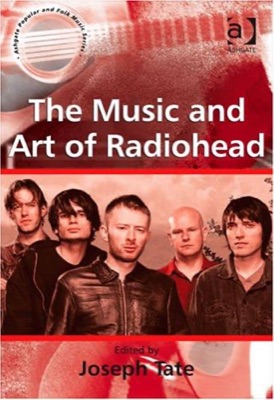 Joseph Tate (ed.) · 2005 · Ashgate
Joseph Tate of the University of Washington edited these essays by academics for Ashgate's Popular and Folk Music Series, with a foreword by Kevin J. H. Dettmar. Contributors include the musicologist Allan Moore, Dai Griffiths and the composer Paul Lansky, whose “Mild und Leise” was sampled on “Idioteque”. Subjects range from authenticity in “Creep” to Stanley Donwood's paintings and the videos, and Tate closes with “Hail to the Thief: A Rhizomatic Map in Fragments”, an essay in short pieces. Routledge has since reissued it.
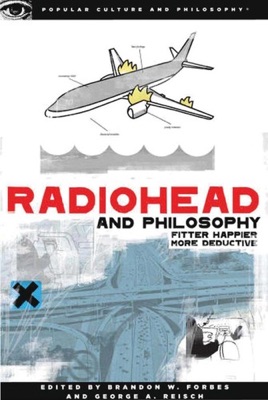 Brandon W. Forbes and George A. Reisch (eds.) · 2009 · Open Court
Volume 38 of Open Court's Popular Culture and Philosophy series, edited by Brandon W. Forbes and George A. Reisch. The essays sit in sections named after lyrics and cover art and belief, the economics of the music industry, Hail to the Thief and politics, Heidegger and technology, and the postmodern. Mark Greif, Joseph Tate and Tim Footman are among the writers; Michael Thompson's chapter is on time in “Pyramid Song”. A discography is included.
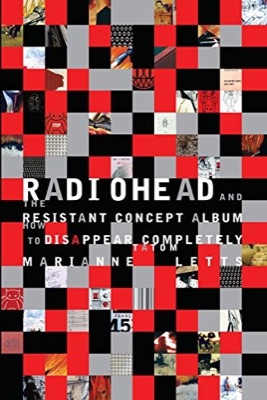 Marianne Tatom Letts · 2010 · Indiana University Press
Marianne Tatom Letts, who studied music at North Texas and Texas at Austin, reads Kid A and Amnesiac as concept albums that hold out against the tradition they come from, a kind she calls the resistant concept album. She works mainly from the music, with musical examples, and gives chapters to how OK Computer and Kid A were received, to each record in turn and to the band as commodity. Under the Radar's reviewer trusted her track analysis more than her readings of the lyrics.
 Phil Rose · 2015 · Fairleigh Dickinson University Press
Phil Rose, a media studies lecturer in Canada, takes OK Computer as his main text and reads it, with some of the band's other work, from a media ecology standpoint: what the songs have to say about living with new technology. It came out in Fairleigh Dickinson University Press's series in communication studies and went into paperback in 2019.
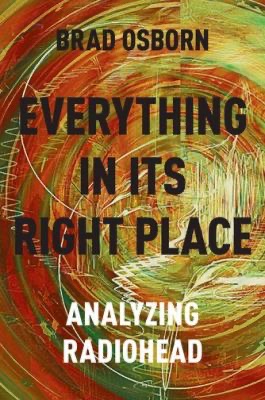 Brad Osborn · 2017 · Oxford University Press
Brad Osborn, a music theorist at the University of Kansas, arranges the book by topic rather than by album. Form, rhythm and meter, timbre, and harmony each get a chapter that ends on a single song (“2 + 2 = 5”, “Idioteque”, “Like Spinning Plates”, “Faust Arp”), and the last chapter brings all of it to bear on “Pyramid Song”. His argument is that the music means most where it sits between rock convention and experiment, so the early records get little room.
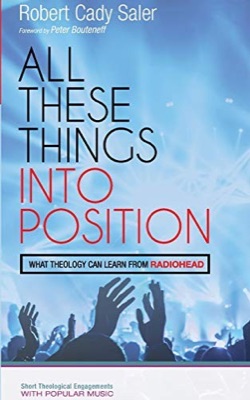 Robert Saler · 2019 · Cascade Books
Robert Saler, a Lutheran pastor and dean at Christian Theological Seminary in Indianapolis, argues that Christian theology has things to learn from a band whose lyrics hardly mention religion. The short book belongs to Cascade's Short Theological Engagements with Popular Music series and takes in market forces and art, ecology, aesthetics and Christology. The foreword is by Peter Bouteneff of St Vladimir's Orthodox Theological Seminary.
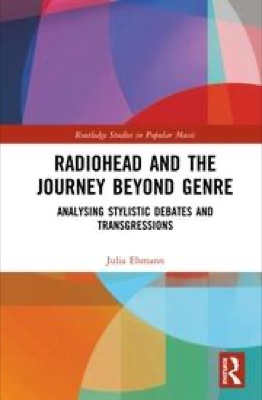 Julia Ehmann · 2019 · Routledge
Julia Ehmann, a popular music historian at the University of Hamburg, sets analysis of the songs beside analysis of what has been written about them, to see how the band uses genre and breaks it. A chapter on the music itself comes first. Chapters on the music press and on academic writing follow, then one on fans online. It is in the Routledge Studies in Popular Music series.
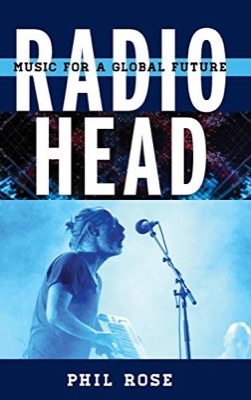 Phil Rose · 2019 · Rowman & Littlefield
Phil Rose's second book on the band runs through the records in order, from the members meeting at Abingdon School and Pablo Honey onwards, with a close reading of every song tied to books and political events. Publishers Weekly picked out surveillance, climate change and automation among the themes he follows. It is in Rowman & Littlefield's Tempo series on rock, pop and culture.
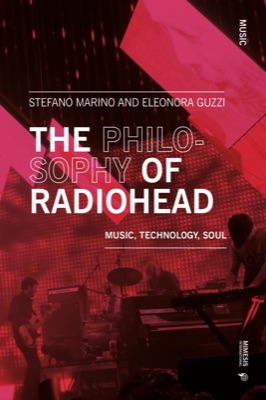 Stefano Marino and Eleonora Guzzi · 2024 · Mimesis International
Stefano Marino, who teaches aesthetics at the University of Bologna, wrote this with Eleonora Guzzi; it first came out in Italian from Mimesis in 2021 as La filosofia dei Radiohead, and this is the revised English edition. Readings of the records and lyrics sit alongside essays on art, technology and society. Adorno's idea of artistic technique is the starting point, and Heidegger, Arendt, Anders and Gehlen are drawn in too.
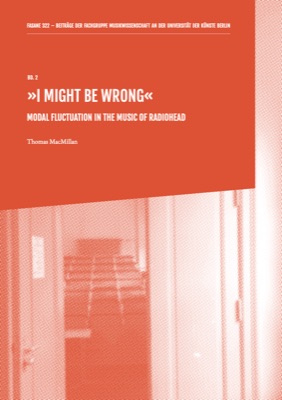 Thomas MacMillan · 2025 · Universität der Künste Berlin
Thomas MacMillan's musicology doctorate at the Universität der Künste Berlin, finished in 2022, argues that the band's harmony is better heard as movement between modes than measured against classical tonality. He sorts songs into three grades, from those that stay in one mode (“Let Down”, “Bloom”) to complex shifts (“Paranoid Android”, “Treefingers”), analysing each from transcriptions. It is in English, in the UdK musicology series Fasane 322, named after a lecture room there. It has been free to read through musiconn, Germany's open-access repository for musicology, since 2025, and Books on Demand prints it.
a title opens the book’s library record, its publisher or a reviewcovers from Open Library and the publishers
Know a book that belongs on this shelf, or spot a detail that is off? I would love to hear.