Song · Kid A / Amnesiac era (2000–01)
Pyramid Song
Before it was “Pyramid Song” it was “Egyptian Song”, and before that “Nothing to Fear”.
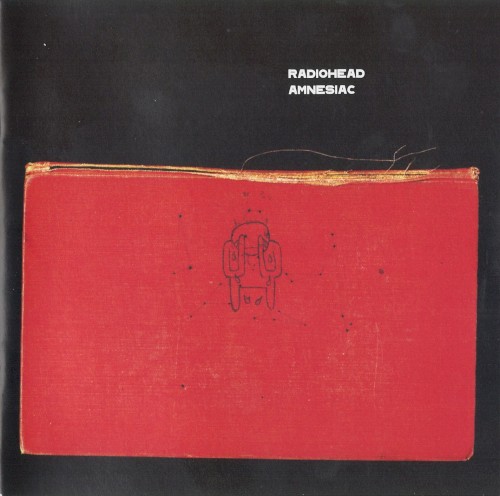 Amnesiacalbum
- 2001released
- 4:49length
1998
a piano in cornwall
Thom Yorke wrote it in the same week as “Everything in Its Right Place”, on the grand piano he bought for his house in Cornwall after the OK Computer tour. He made light of the chords himself.
The chords I'm playing involve lots of black notes. You think you're being really clever playing them but they're really simple.
thom yorke · mojo, june 2001
The other song went onto a synthesiser and turned into something else. This one sounded better left alone.
The swing came from Charles Mingus, from “Freedom” on the 1962 Complete Town Hall Concert, and the first version of the recording even carried that track's handclaps, sampled, until Yorke erased them because he did not like the sound. The words came from an exhibition of ancient Egyptian underworld art he saw while the band were recording in Copenhagen, crossed with the idea of time running in circles, which he had found in Buddhism and in Stephen Hawking. The river and the black-eyed angels answer “Swing Low, Sweet Chariot”, and the little row boat to heaven comes from Shirley Ellis's “The Clapping Song”.
1999–2000
the version they lost
Yorke played it alone at the piano at the Tibetan Freedom Concert in Amsterdam in June 1999, under the working title “Nothing to Fear”. By the time the band took it on the road the next summer it was “Egyptian Song”, and the 2003 version of this site remembered it under all three names.
The basic track on the record was cut in Copenhagen early in the sessions, with Yorke's voice and piano recorded at the same time as the drums. Colin Greenwood says they also recorded an amazing version onto DAT that the format would not let them use, and spent months piecing it back together. Phil Selway could not find the rhythm and thought the session was falling apart, until he stopped counting and followed the inflections of Yorke's piano and voice, and the part arrived.
It ran counter to what had come before in Radiohead in lots of ways… The constituent parts are all quite simple, but I think the way that they then blend gives real depth to the song.
phil selway · drowned in sound, 4 february 2015
Jonny Greenwood has used it as his example of what arranging this band is like.
How do we not make it worse, how do we make it better than Thom just playing it by himself, which is already usually quite great?
jonny greenwood · npr, 4 august 2016
The answer was the Orchestra of St John's, recorded in Dorchester Abbey, the 12th-century church where the strings for “How to Disappear Completely” were cut too, five miles from the band's own studio in Oxfordshire. Colin told the players to swing it like jazz musicians, and Jonny's arrangement slides about in glissando harmonics. Alex Ross, in the New Yorker, heard the chords hanging somewhere between calm and sadness. The strings on their own came out in 2021 on Kid A Mnesia.
1999–2025
the bass that fed back
From Amsterdam on, the archive has it on 257 nights, and when the band came back in 2025 after seven years away it returned on their second night in Madrid. At Benicassim on 3 August 2002, where Radiohead headlined the Saturday of the Spanish festival, Colin's double bass fed back so badly halfway through that the song stopped, and he played the rest of it on electric bass. Afterwards he told NME he was glad people had enjoyed it, but the sound had not been that good.
may 2001
the first single in three years
Kid A had no commercial single, so this was the band's first since “No Surprises” in 1998, and it went top ten in seven countries. Shynola made the video from a dream of Yorke's, a diver drifting through a sunken city and letting himself into a submerged house, and it won the NME Carling Award in 2002. NME made it single of the week and Alexis Petridis, in The Guardian, liked its tangle of time signatures. Ed O'Brien, talking to Rolling Stone that spring, called it the best thing Radiohead had done.
the video
The promo, animated by Shynola.· Radioheadwatch on youtube →
the record(1)
on stage(9)
explained
Is it 4/4 with a swing, or groups of 3, 3, 4, 3 and 3? Both readings, played out.· David Bennett Music Theorywatch on youtube →
videos(3)
Live history
| Times played | 267 shows · 10 of them Thom Yorke solo shows |
|---|---|
| Live debut | Sunday 13 June 1999 · Amsterdam |
| Last played | Tuesday 16 December 2025 · Copenhagen |
| Longest absence | 7 years · back on Wednesday 5 November 2025 · Madrid |
First played live in 1999, 2 years before it was released.
Thom Yorke, solo 26 October 2002 Mountain View, 29 October 2024 Melbourne, 1 November 2024 Sydney, 2 November 2024 Sydney, 5 November 2024 Singapore, 12 November 2024 Osaka, 15 November 2024 Tachikawa, 18 November 2024 Fukuoka, 21 November 2024 Nagoya, 24 November 2024 Tokyo
Nights played include broadcasts; opened and closed count gigs only. A cancelled night has no setlist. Thom Yorke’s solo nights are counted and marked as his; the openers, closers, longest absence and chart are Radiohead’s own. All setlist stats →
Tabs (1)
Remixes & alternate versions (1)
- Pyramid Strings
Heard in (1)
- Daredevil: Born AgainOver the closing montage of the season.
sources15
- Nick Kent, “Happy now?”, Mojo, June 2001.
- Ed O'Brien and Colin Greenwood, interview, Ground Zero, 25 January 2001.
- David Fricke, “Radiohead warm up with Amnesiac”, Rolling Stone, 21 May 2001.
- Alex Ross, “The Searchers: Radiohead's unquiet revolution”, The New Yorker, 21 August 2001.
- Mac Randall, Exit Music: The Radiohead Story.
- Ryan Reed, interview with Philip Selway, Spin, 6 January 2023.
- Matt Langham, “DiS Meets Radiohead's Philip Selway”, Drowned in Sound, 4 February 2015.
- “All Songs +1: A Conversation With Radiohead's Jonny Greenwood”, NPR, 4 August 2016.
- Alexis Petridis, “Relax: it's nothing like Kid A”, The Guardian, 1 July 2001.
- Toby Manning, “For a minute there… Radiohead's Amnesiac a quarter of a century on”, The Quietus, 30 May 2026.
- “Radiohead Revealed: The Inside Story of the Year's Most Important Album”, Melody Maker, 29 March 2000.
- George Varga, “Radiohead's Jazz Frequencies”, JazzTimes, 1 November 2001, for “Freedom” and the handclaps.
- NME, “'HEAD WEST”, 4 August 2002, for the double bass at Benicassim.
- The 2003 treefingers.com lyric page for the song, for its three names.
- Performance dates from this site's own setlist archive.