Radiohead studio album · OK Computer era (1996–98)
OK Computer
Recorded in an apple shed and Jane Seymour's manor house, the album Capitol heard no single on went to number one in Britain.
the sessions
- Jan 1996Canned Applause, DidcotRehearsals begin in the converted apple shed near Didcot
- Jul 1996Canned Applause, DidcotGodrich's mobile studio cuts four album tracks in the shed
- Aug 1996North AmericaNew songs played in supporting Alanis Morissette
- Sep 1996St Catherine's Court, BathFirst stay at Jane Seymour's house: ballroom and library
- Nov 1996St Catherine's Court, BathSecond stay; fourteen songs nearly done by Christmas
- Jan 1997Abbey Road, LondonStrings recorded, conducted by Nick Ingman; mixing in London
- 6 Mar 1997Abbey Road, LondonChris Blair finishes the master
- 21 May 1997JapanFirst released, on Toshiba EMI
- 22 May 1997Sala Zeleste, BarcelonaLaunch show for EMI staff opens the tour
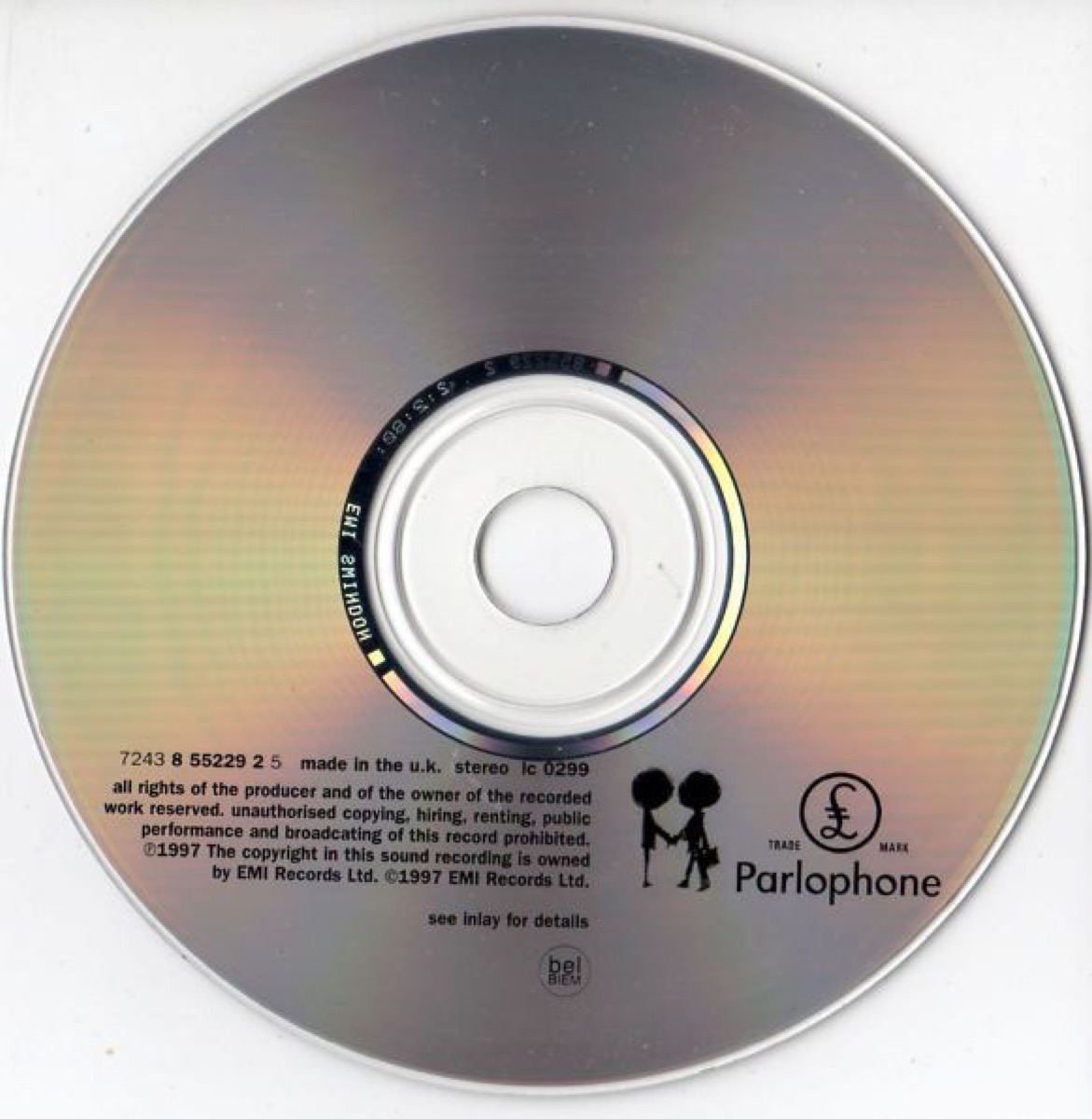
- 16 Jun 1997United KingdomReleased by Parlophone; number one the next week
1995–96
the blank cheque
Between 1993 and the end of the OK Computer tour in 1998, Radiohead had one month off, January 1996, as Ed O'Brien counted it for Rolling Stone twenty years later. Thom Yorke had told NME in December 1995 that he did not want to make another miserable record and was writing down the positive things he heard and saw. Phil Selway said doing the soul-searching of The Bends again would be excruciatingly boring.
The success of The Bends gave them the nerve to produce the next one themselves. Producers were suggested, Scott Litt among them, but the band wanted the engineer who had cut “Lucky” with them for a War Child record the September before, Nigel Godrich. Parlophone gave them about £100,000 to spend on recording equipment, and Godrich helped choose it; one item was a plate reverb bought from Jona Lewie, the man behind “Stop the Cavalry”. Yorke's version of the deal, told in 2017, was that the label said “Whatever you want, mate, you got it”, and the band asked for their own gear, their own studio and Nigel.
Take as long as you want, record it wherever you want, with whoever you want.
parlophone, as quoted in capitol's ok computer press kit, july 1997
The spring W.A.S.T.E. newsletter, the band's own mail-order and fan club, had all five of them writing about it. Selway admitted to feelings that ran from extreme excitement to bowel-shattering terror.
1996
the apple shed
They started at the end of January 1996 in Canned Applause, their rehearsal room in a roughly converted apple shed on a farm near Didcot. The name came from a competition in the W.A.S.T.E. newsletter. Most of the songs got their arrangements there, and some went out on the road to be played in: five weeks in North America in March, the summer festivals, and a headline set at T in the Park that EMI's press pack later quoted back as making stadium rock credible again. Offered the top of the bill at Reading and Phoenix that summer, they said no, and Yorke told the fan club he was proud of it.
By July Godrich had a mobile studio running in the shed. Colin Greenwood's account for the American press kit says four songs on the album came out of it, and that the first take on the first day was the one that stayed. The shed was too close to home and short of a kitchen and a toilet, and Selway remembered them jumping from song to song and leaving each one nearly finished.
Then they went back to America to open for Alanis Morissette, a run of amphitheatres from 12 August where the crowds knew “Creep” and nothing else. That freed them to play the new songs to people with no expectations. Colin remembered Jones Beach on Long Island: the band in black, scowling, the mums in the seats and preteen girls starting to cry. One new song went down better than the others, a light strummer with a huge chorus called “Lift”, and it was left off the album. The Hartford date on 20 August turned up on the sleeve later.
sep–dec 1996
st catherine's court
Days after the Morissette tour ended, the equipment went to St Catherine's Court, an Elizabethan manor in a secluded valley outside Bath that belonged to the actress Jane Seymour. As an American resident she could spend only 90 days a year in England, so the house was let when she was away; the Cure had made Wild Mood Swings there. Select put the rent at £10,000 a week. Yorke had told the fan club in August that it had twenty toilets and was extremely haunted.
They played in the ballroom, wood-panelled, with a medieval hanging on one wall, while Godrich recorded them from the library across a corridor. The nursery at the top of the house, full of soft toys, was a good-sounding room, and many of the vocals went down in the orangery in the garden. Godrich had no assistant. The roadie Peter Clements, known as Plank, helped him carry things, and that was the crew.
It was the seven of us plus the cook and Mango, Jane's cat.
nigel godrich · rolling stone, 16 june 2017
They were there twice, in September and again from November, with October spent rehearsing at home. In the first week, Yorke told Select, nobody left the house, and walking in the gardens at night with the music coming out of the house he could hear vixens yowling. Colin said the one day out, in Bath, felt like being released by kidnappers into a shopping centre. Seymour had held séances there, and nobody found anything. Selway wrote in the next newsletter that by the end it felt a little too much like The Shining.
Most of what they recorded there was played live by the five of them in a room. Colin put it at 80 per cent of the album in 1997, with a few songs “live bits glued together”, and O'Brien gave the same figure to Guitar Player. A page of Godrich's notebook from these sessions, which he posted in 2017, is about “True Love Waits”, which did not make the record either. At the end of the second stay, he said, they felt they had used the house up.
1997
london, and stopping
By Christmas they had fourteen songs almost done. The rest was finished in London in January and February 1997, with more recording at the Church in Crouch End, the strings at Abbey Road in January, arranged by the band and conducted by Nick Ingman, and what the sleeve calls audio fixing and dubbing at Mayfair, Air Lyndhurst and Courtyard, the studio their managers ran. Godrich mixed fast, about half a day a song, because longer than that and he started fiddling.
It could have gone on. Yorke told Select that Jonny Greenwood walked into the studio in January and said that was it, they had to stop now, which left Yorke with the running order and the slow realisation that no order would feel entirely right. Chris Blair finished mastering at Abbey Road on 6 March 1997. Colin wrote to the fan club three days after they finished: almost a year's work, with two American tours and a run of festivals in the middle of it.
Two of the fourteen, “Polyethylene” and “A Reminder”, became B-sides to “Paranoid Android”. “Lift”, “I Promise” and “Man of War” were recorded and left in the drawer, which is where the label would have looked for singles.
So I think probably, initially, we probably wrong-footed quite a few people.
phil selway · rolling stone, 16 june 2017
the sleeve
the colour of bleached bone
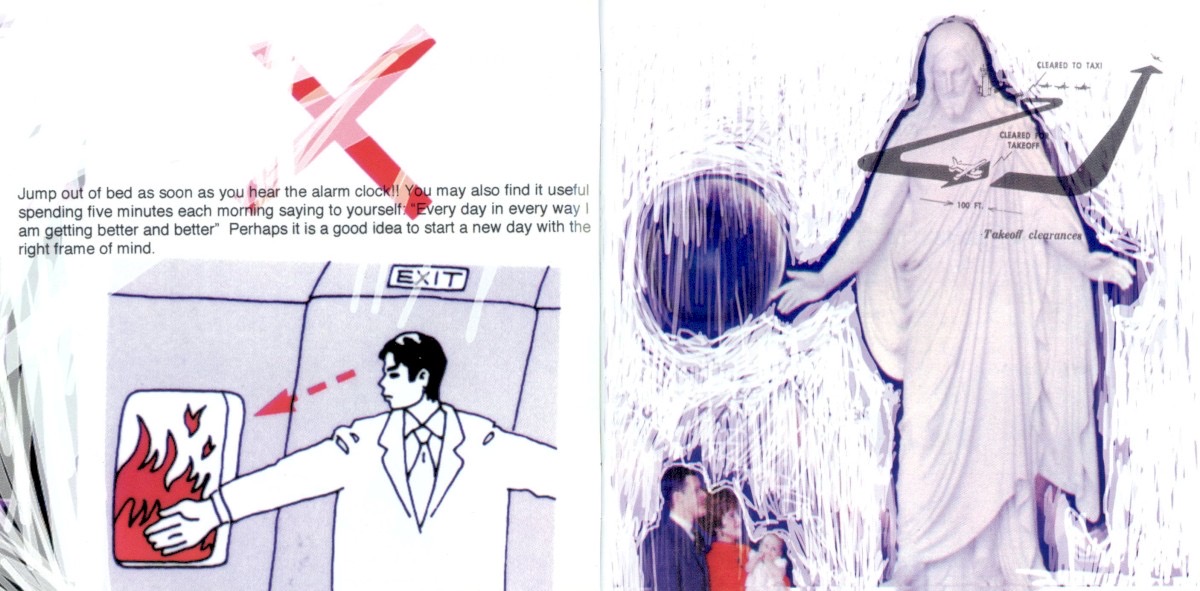
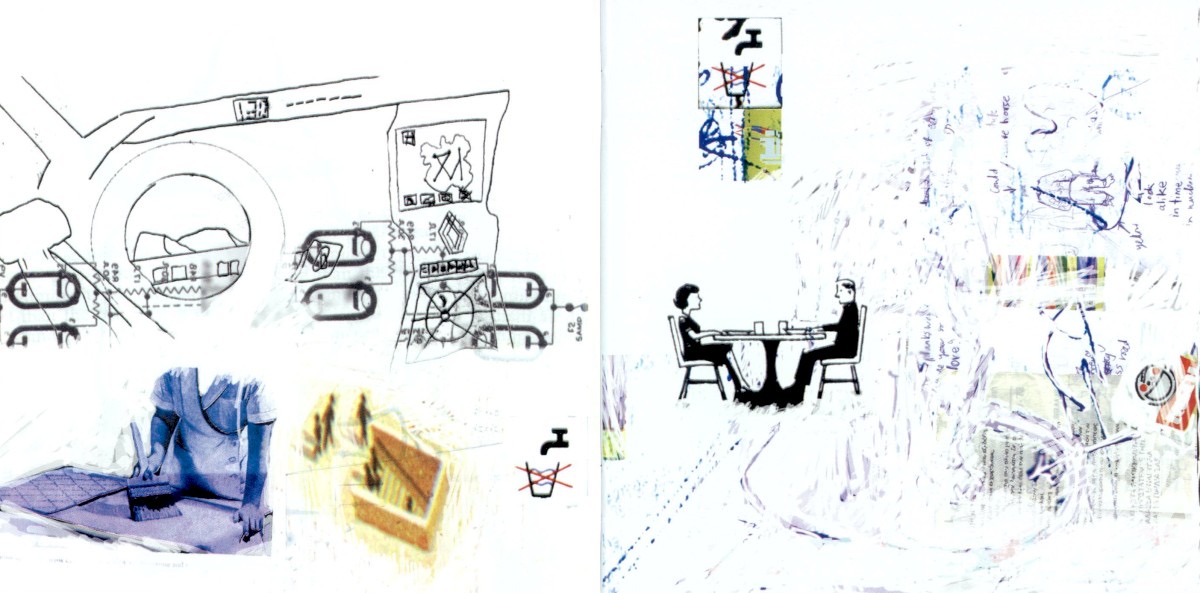
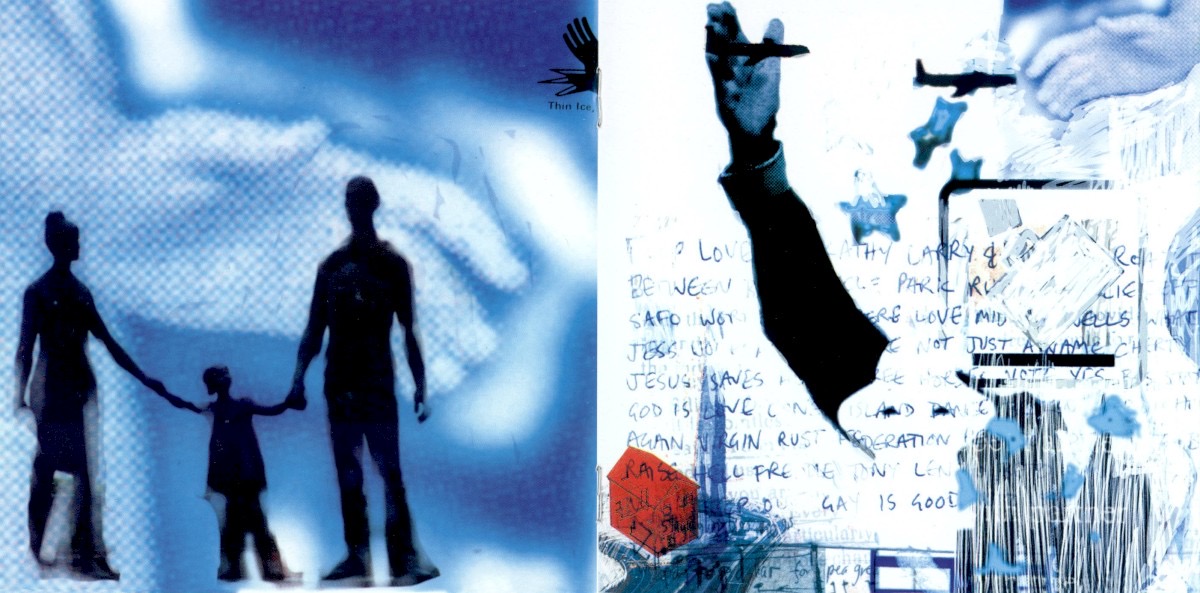
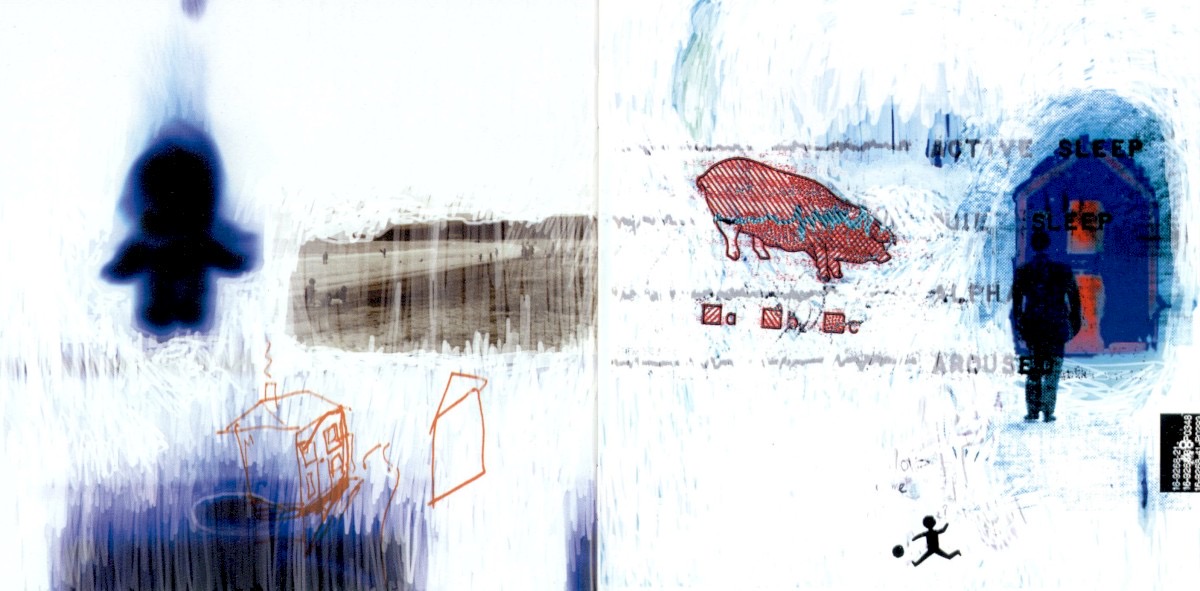
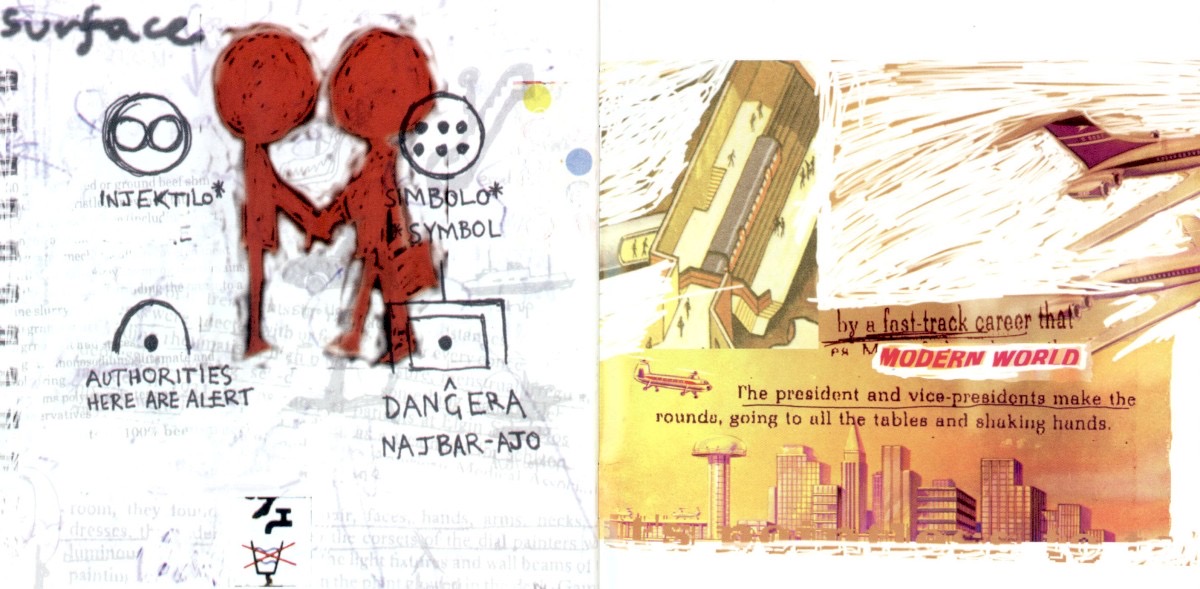
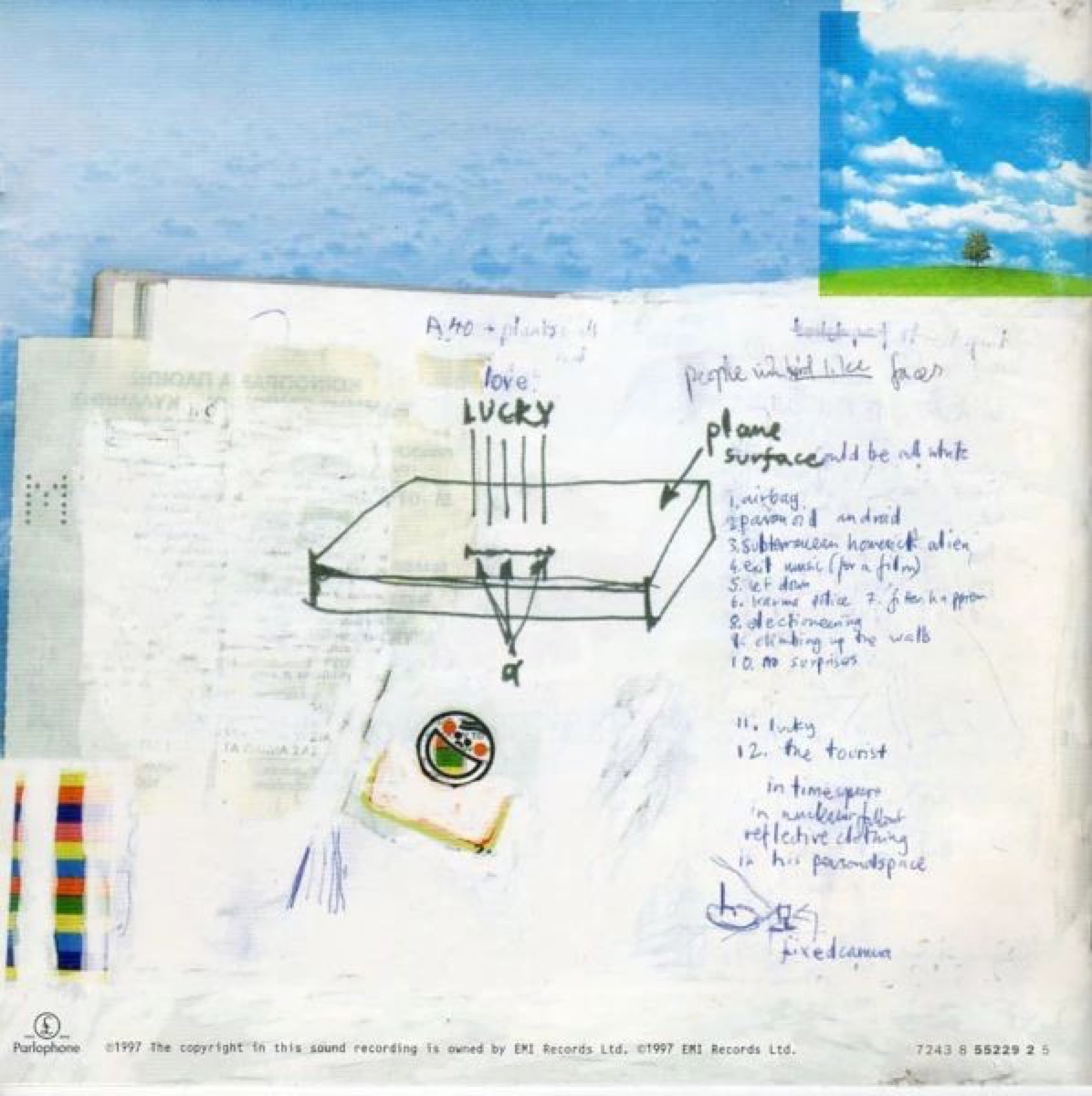
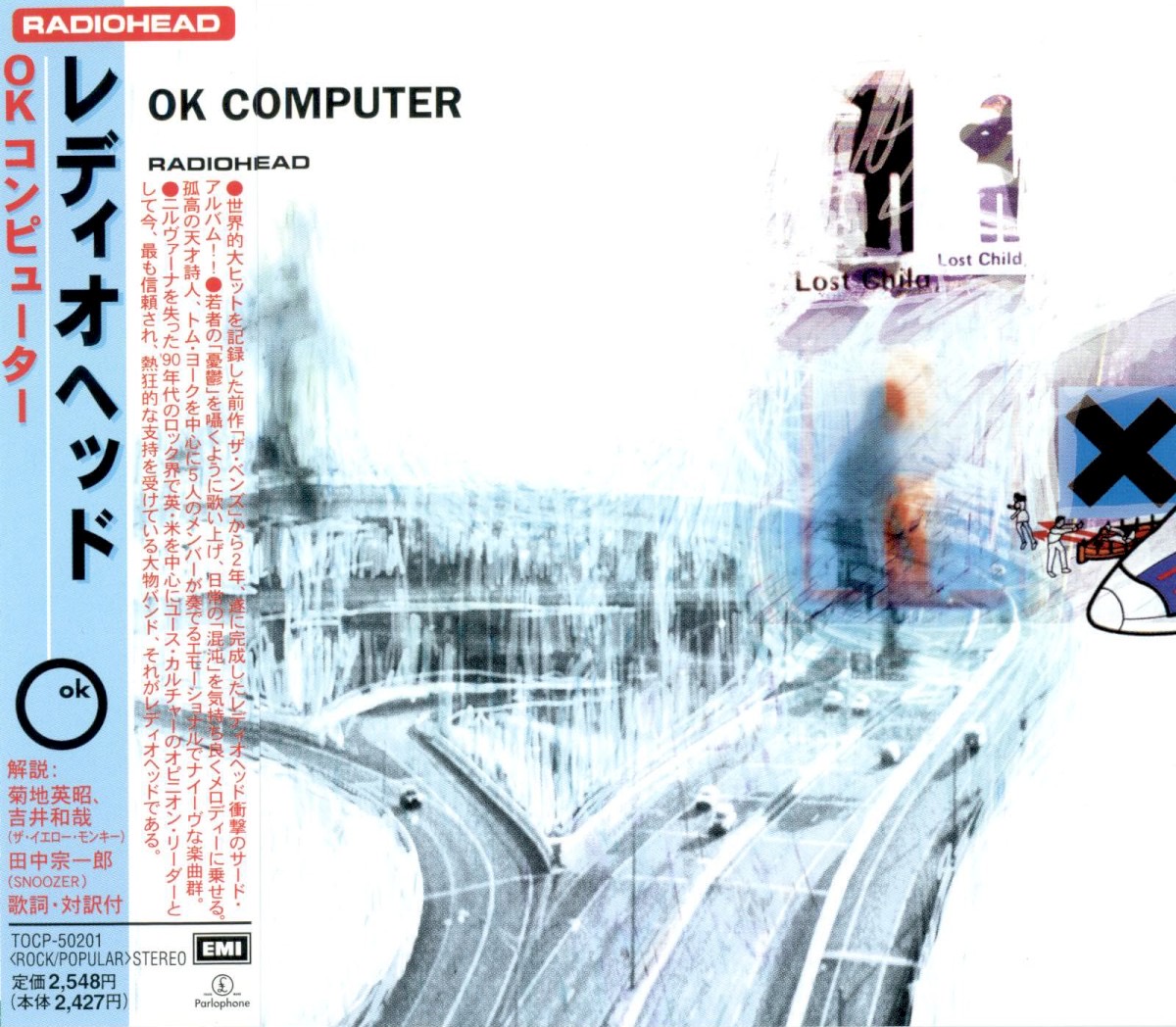
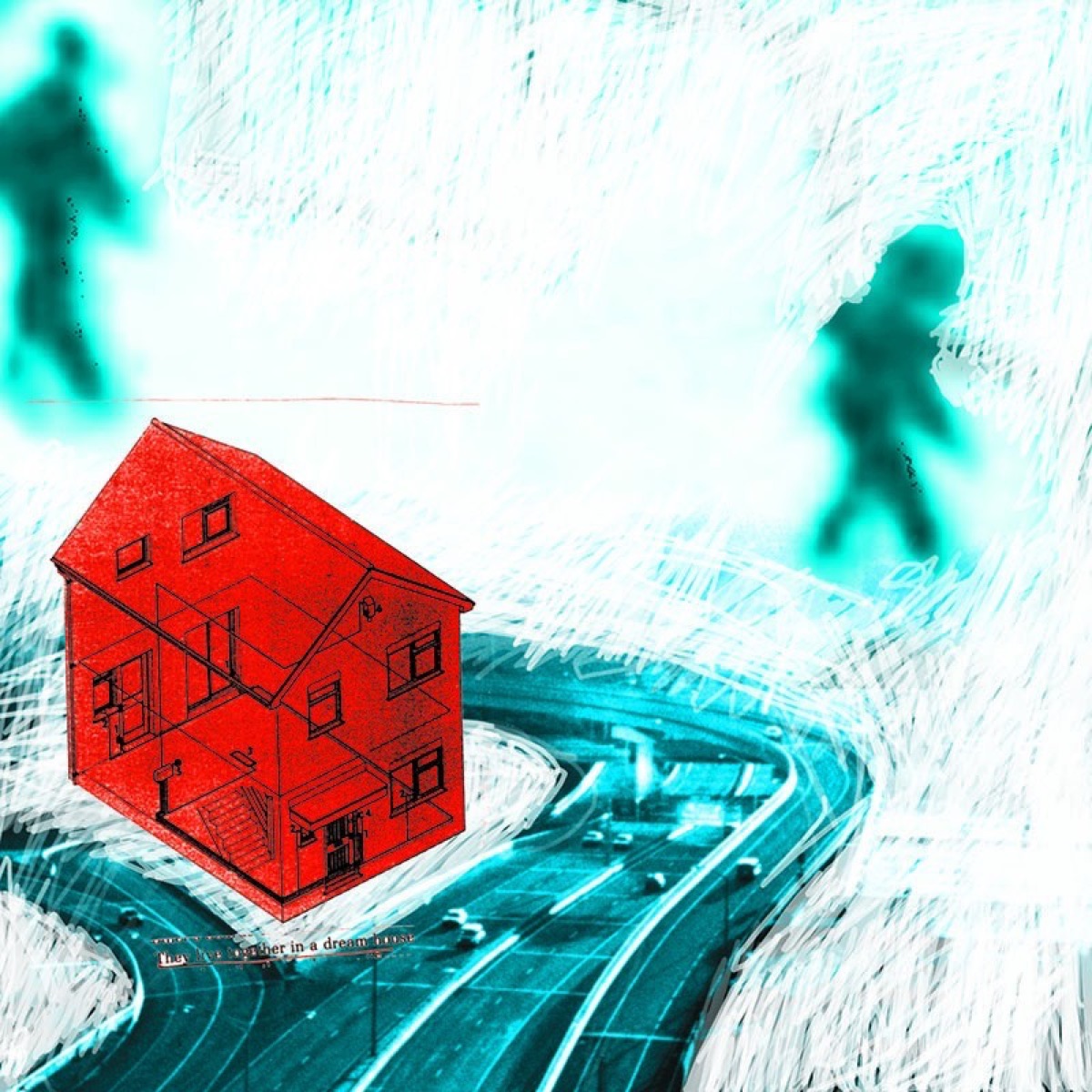
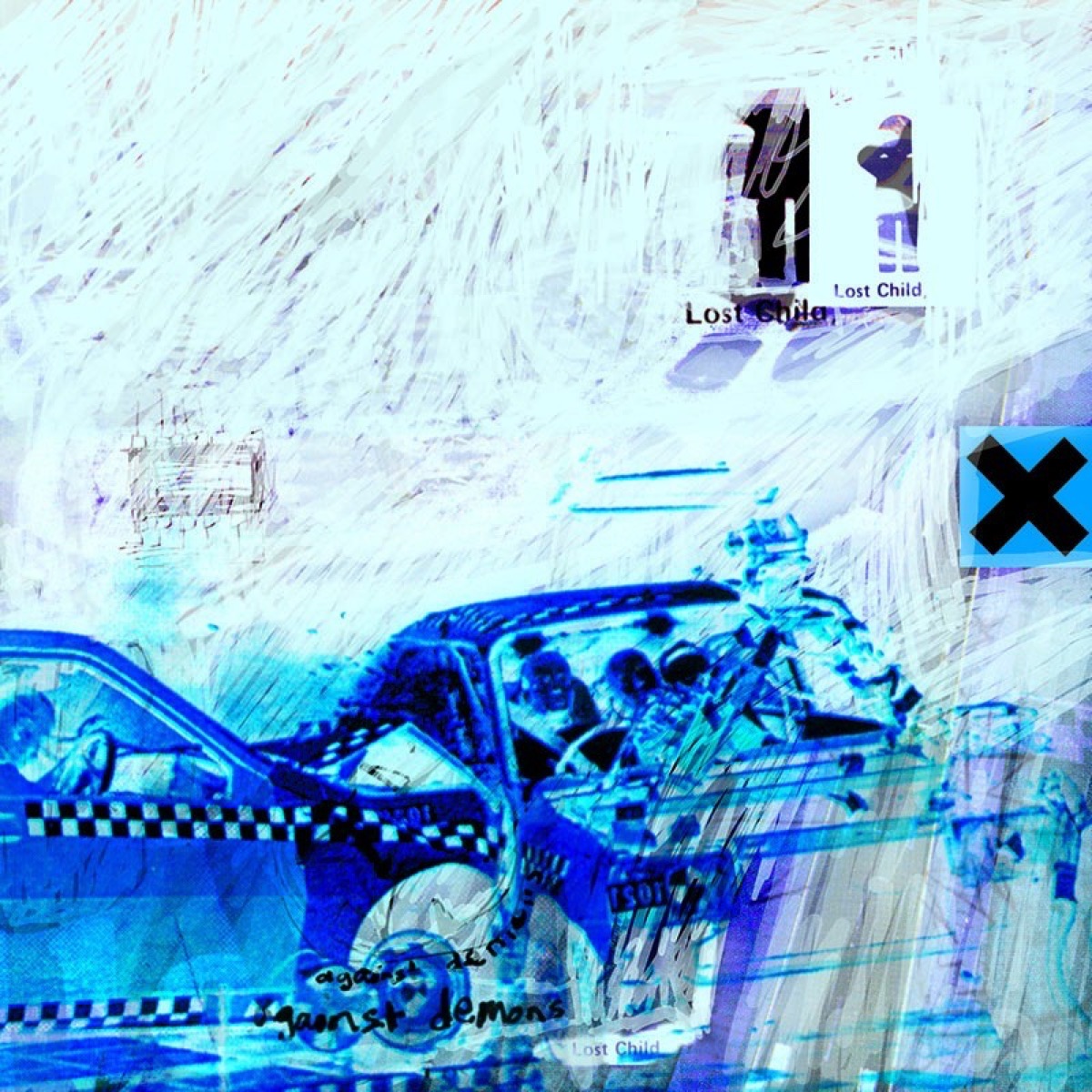
Yorke asked Stanley Donwood to keep a visual diary while the band recorded, and said later he did not trust the music until he could see a picture of it. Donwood lived in Bath and cycled over to St Catherine's Court to work. He scanned in what he found, things picked up in the street, scraps of text and an aeroplane safety card Yorke had taken off a flight, and layered it on a computer; mistakes were painted out in white rather than undone, and the white scribbles are all over the finished pages. Yorke worked with him as The White Chocolate Farm.
We layered it all together and then tried to obliterate it, almost like a terrible criminal trying to conceal the evidence of what he did.
stanley donwood · rolling stone, 16 june 2017
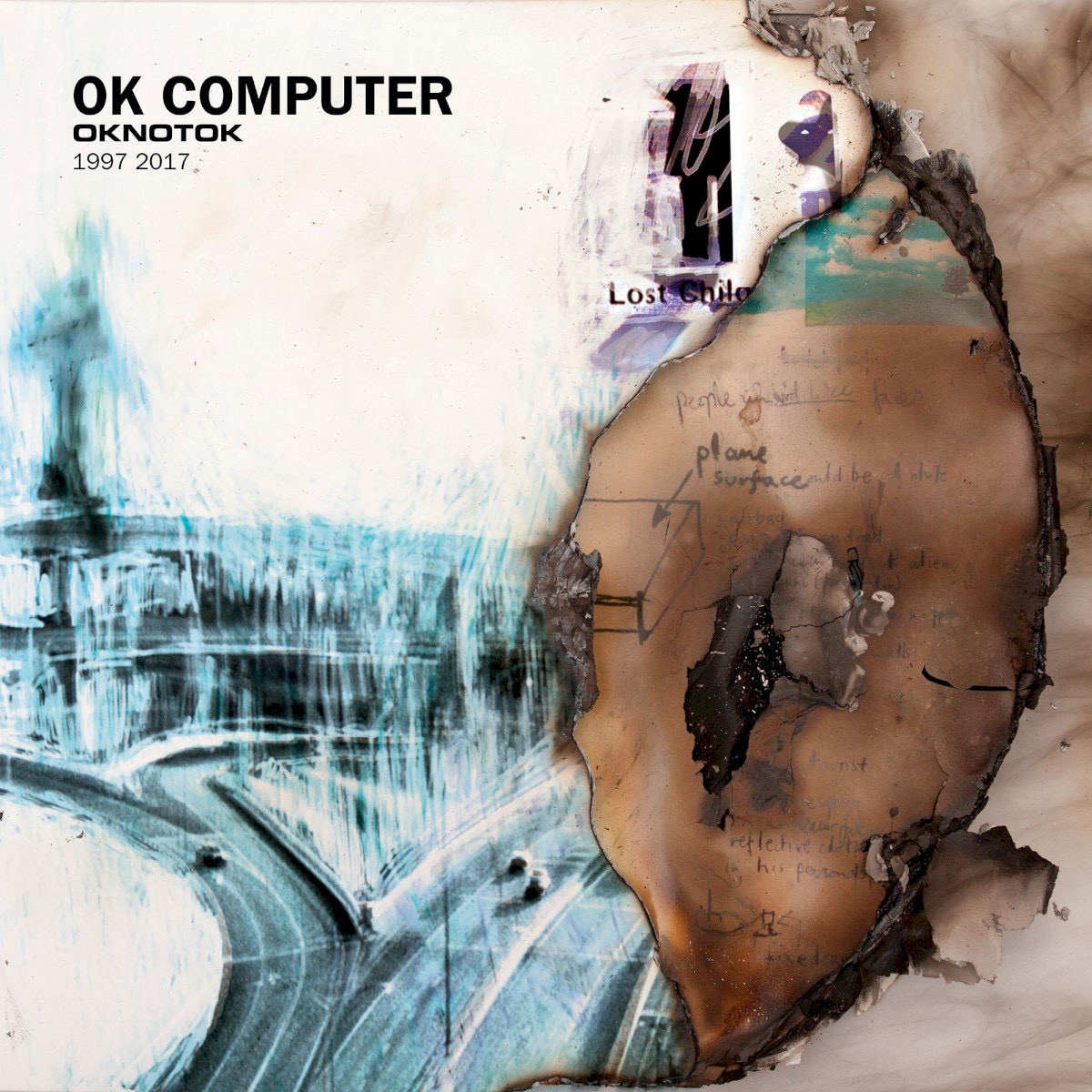
Donwood remembered wanting it white because he had the mistaken idea that white was the colour of death in some culture or other; elsewhere he described the palette as an attempt at the colour of bleached bone. He did not remember where the motorway on the cover came from. In 2017 it was traced to the junction of Interstate 84 and Interstate 91 in Hartford, Connecticut, the city of that Morissette date.
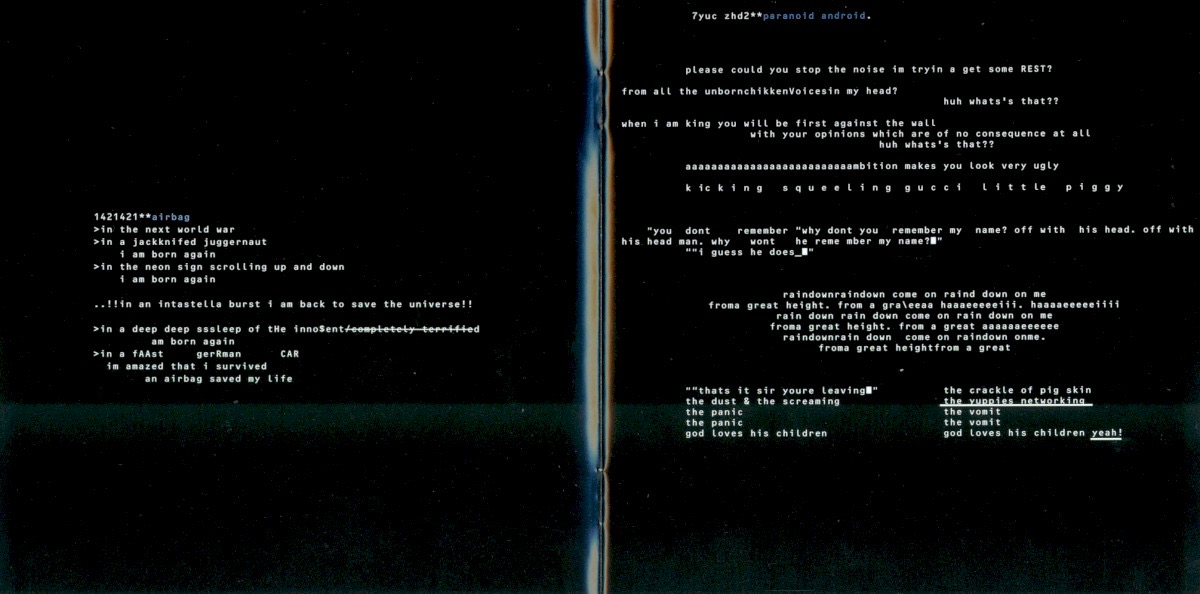
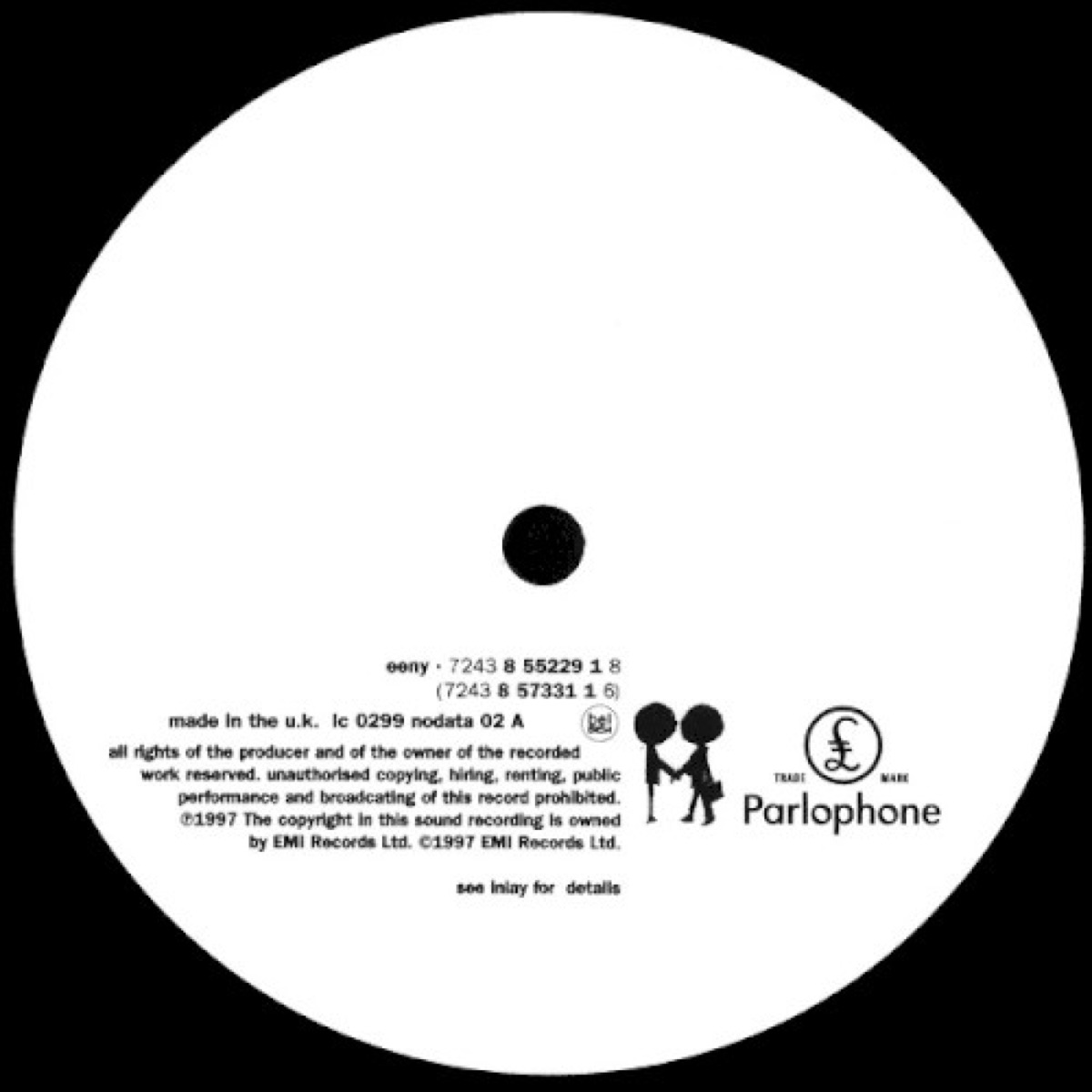
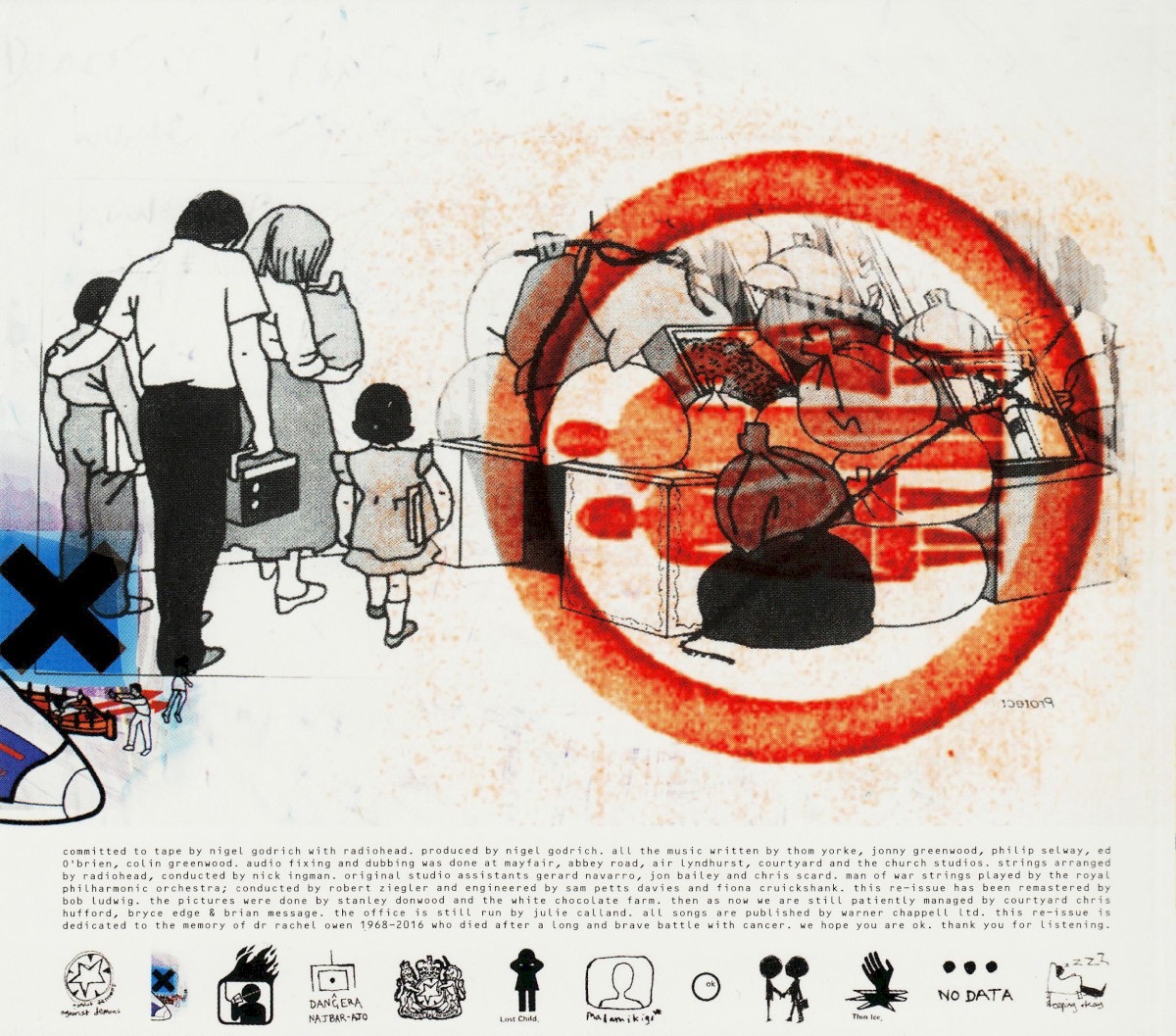
The booklet sets the lyrics in typewriter text with the spelling bent out of shape, among pages of Esperanto (“DANGERA NAJBAR-AJO”), health advice in English and Greek, and two stick figures shaking hands, which Yorke said meant someone being sold something they did not want. The back page is a pencil sketch with the running order written out by hand beside it. On the back cover “Fitter Happier” has no line of its own: it sits in small type beside “Karma Police” as a footnote, and the double LP named its four sides eeny, meeny, miney and mo. The credits have “artistic freedom in the market place” maintained by Keith Wozencroft and Tony Wadsworth, and print the copyright line “lyrics used by kind permission even though we wrote them”.
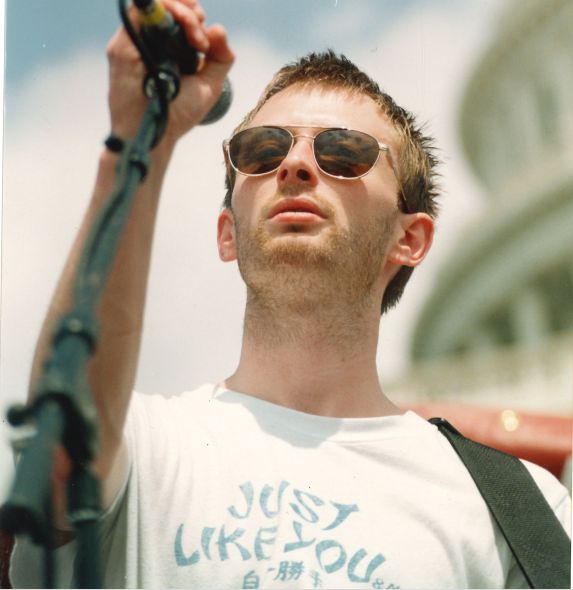
photo
Photo: John Mathew Smith & www.celebrity-photos.com from Laurel Maryland, USA · CC BY-SA 2.0 · Wikimedia Commons
the title
full manual control
On the bus in 1996 the band listened to the radio series of The Hitchhiker's Guide to the Galaxy, in which Zaphod Beeblebrox says “Okay, computer, I want full manual control now”, and Yorke wrote the phrase down. It was first the working title of the B-side “Palo Alto”. Jonny Greenwood said it then started attaching itself to everything they were doing, and Yorke called it a resigned, terrified phrase. The titles it beat included Ones and Zeroes and Your Home May Be at Risk If You Do Not Keep Up Payments.
may–july 1997
a walkman glued shut
The labels did not agree about what they had. Parlophone's managing director, Tony Wadsworth, told Billboard that everything that had worked for Radiohead had broken the rules. In America Capitol heard no single; the band's manager Chris Hufford remembered the word “disappointed”, and the American sales forecast went from two million to half a million. Colin Greenwood told Melody Maker he worried it would lose people who loved The Bends.
So Capitol did something odd with it. A thousand people in the American media were sent a Walkman with the cassette sealed inside, playable only on the headphones in the box, so that they would hear the album whole. There were screensavers on floppy disk and an FM radio shaped like a desktop computer. Radiohead.com went live with the record. In Britain Radio 1 gave the band a whole day on 10 June.
Japan had it first, on 21 May 1997, through EMI's Toshiba label. The next night the band played the launch at the Zeleste in Barcelona to EMI staff from around the world, and the day of interviews after it was Selway's thirtieth birthday, marked with a cake handed round the journalists. Parlophone released it in Britain on Monday 16 June on CD, cassette, MiniDisc and double LP, and it went in at number one with 136,476 copies sold in its first week, ahead of Jon Bon Jovi; it stayed two weeks. Capitol's release followed on 1 July, and it entered the Billboard 200 at 21. It was gold in America by December and platinum by May 1998.
1997–98
the reviews and the prizes
James Oldham gave it 10 in NME and called it a landmark record of the 1990s; David Cavanagh's Q review called it “a landmark on every latitude”. In Mojo Nick Kent bet that in twenty years it would be seen as the key record of 1997. In America Mark Kemp in Rolling Stone took it for a concept album about computers, and Alex Ross, in The New Yorker, set it against the Britpop that had earned the nickname dadrock. Not everyone signed up. Andy Gill in The Independent found it hard to love and preferred The Bends. Robert Christgau gave it a B minus in the Village Voice. Paul Morley, protesting at the arrival of star ratings in Uncut, gave it one star and then spent the rest of the review naming it.
It was the best album of the year for Mojo, Vox and Entertainment Weekly, and NME's readers voted it best album in January 1998, the night Yorke fluffed the acceptance video five times and Jonny did it in one. It lost the Mercury Prize to Roni Size and Reprazent's New Forms as the bookmakers' favourite, the chair of the judges calling it a classic on his way to explaining why it had not won. At the Grammys in February 1998 it won Best Alternative Music Performance and lost Album of the Year to Bob Dylan's Time Out of Mind. The band did not play the ceremony; Yorke told Triple J the organisers had said they were not good for the ratings.
Most of the reviews heard a record about computers and the future. By Colin's count four fifths of it was the five of them playing together in a room, and that is what it still sounds like.
1997–98
against demons
The tour was called Against Demons, the words written under a star on the CD's tray card. It started in Barcelona on 22 May 1997, took in their first Glastonbury headline set on 28 June, crossed Europe, North America, Japan and Australasia, and ended at Radio City Music Hall in New York on 18 April 1998. Grant Gee went with them with a camera, and the film he made of it, Meeting People Is Easy, opened in London in November 1998.
they were quiet and articulate people being put through this industrial process of sort of being vacuumed for image and information and quotes and thoughts.
grant gee · rolling stone, 16 june 2017
Yorke said he was doing five interviews a day and in the end could not manage one before a concert. Colin remembered him at his lowest at the British arena shows in November 1997. When it was over Yorke was due in New York to see Godrich and Michael Stipe mixing R.E.M.'s Up. They went to JFK to meet him, and he was not on the plane; he had turned round on the way to the airport and gone home.
after
oknotok and the minidiscs
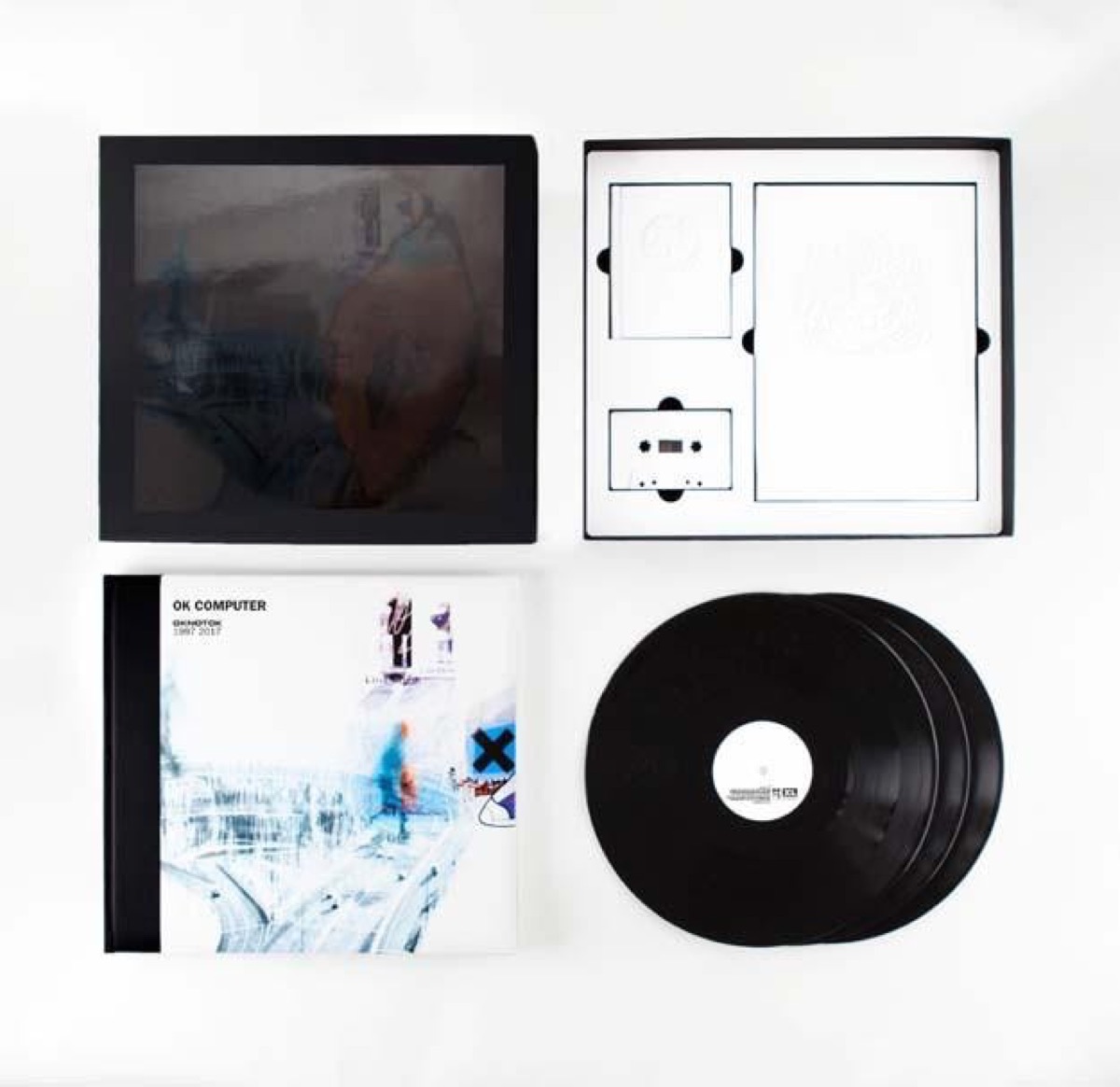
EMI kept the record when the band's contract ended in 2003, and in 2009 put out a Collector's Edition with a disc of B-sides and a DVD, without asking them. XL took over the catalogue in 2016. The band's own twentieth-anniversary edition, OKNOTOK 1997 2017, came out on 23 June 2017, the day they headlined Glastonbury again, remastered from the analogue tapes with the B-sides and, at last, “Lift”, “I Promise” and “Man of War”. Before it was announced, posters printed with lines from “Fitter Happier” went up in several cities with no name on them. The box had a picture of a burned copy of the album on the lid, 104 pages of Yorke's notebooks and a C90 of demos, and the end of the tape is a ZX Spectrum program, dated 19 December 1996, that puts the band's names on screen. The vinyl is dedicated to Rachel Owen, Yorke's former partner of 23 years, who had died the previous December. It went in at number two, behind Ed Sheeran.
In June 2019 about eighteen hours of Yorke's MiniDiscs from the period leaked online. The band put the lot on Bandcamp for 18 days as MiniDiscs [Hacked], the money going to Extinction Rebellion. The Library of Congress added the album to the National Recording Registry in 2015, and the Recording Academy put it in the Grammy Hall of Fame in 2026.
Christgau's review in 1997 guaranteed that “it will not occupy the charts for 10 years”. In September 2026, in its 309th week on the UK album sales chart, it climbed 25 places.
on film
The album's story, cut down to the essentials.· Pitchforkwatch on youtube →
videos(9)
the sleeve
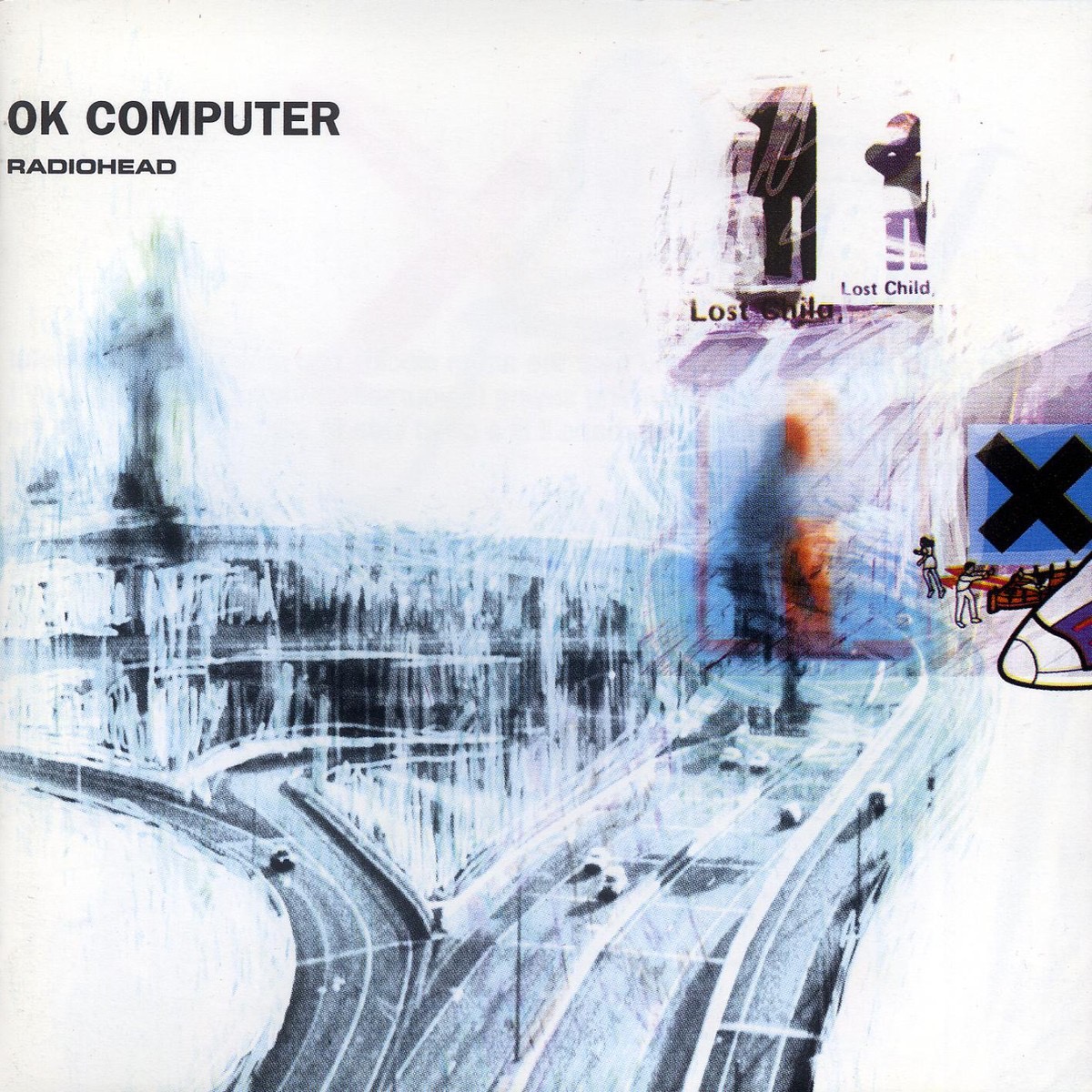
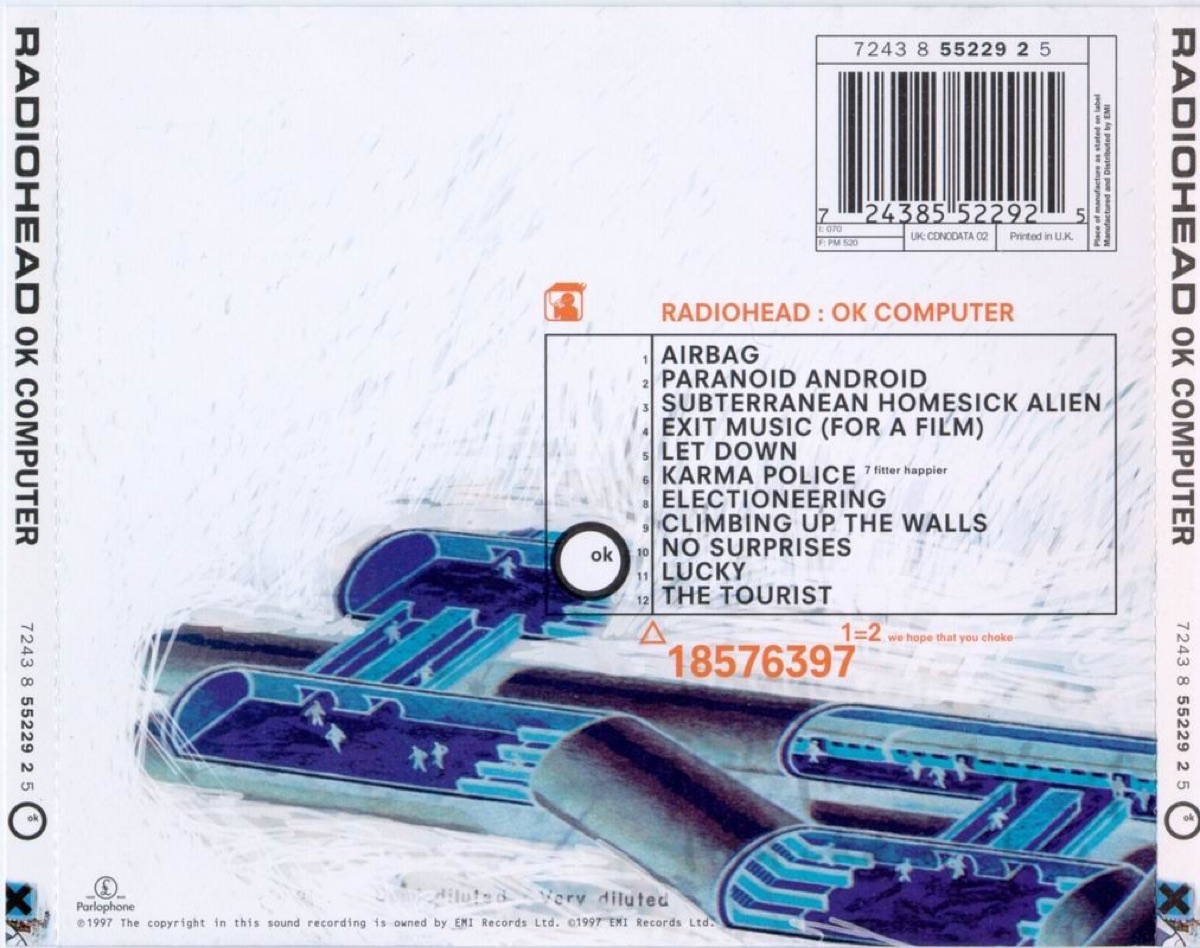
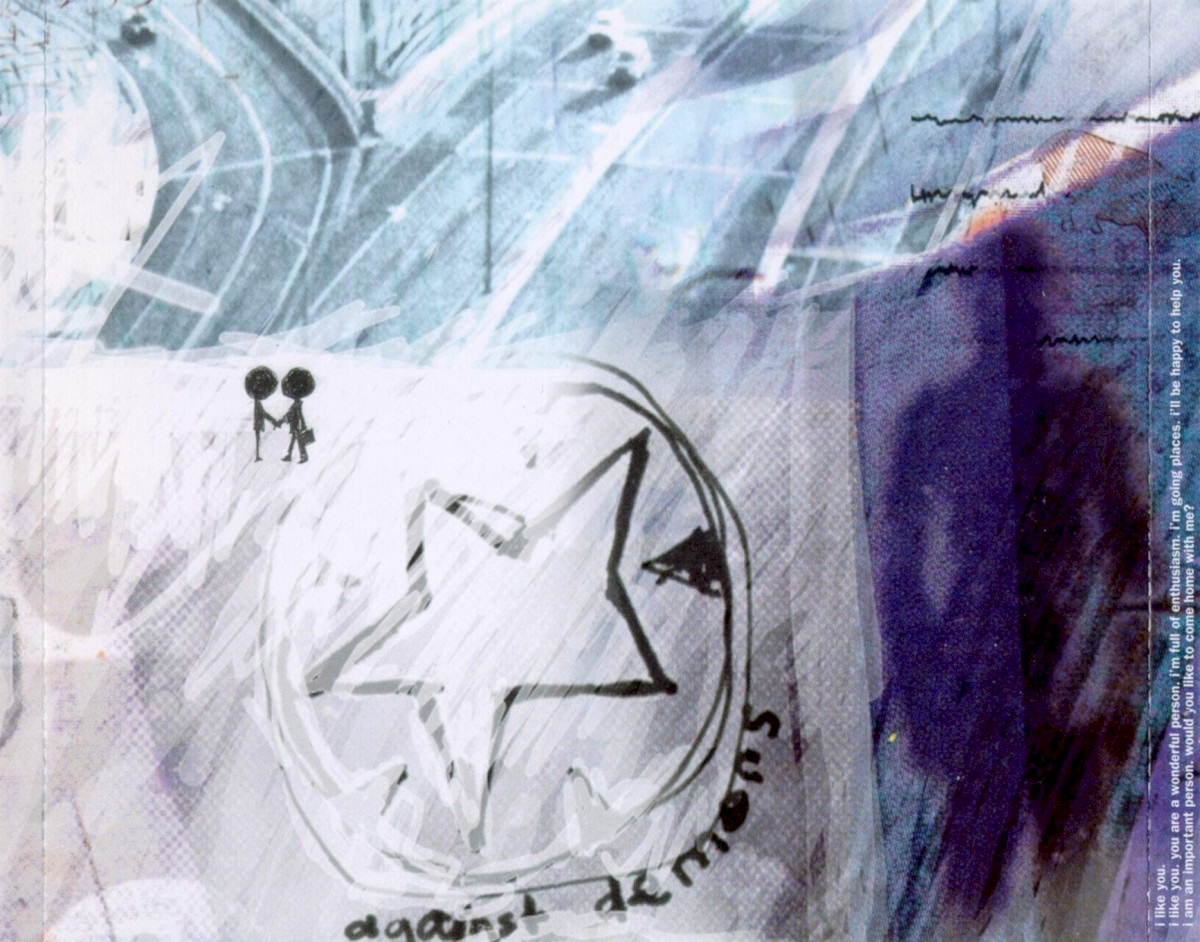
the booklet (7)
the art and the editions

the press
the press release
from EMI/Parlophone
dated may 1997
Modestly happy to continue making music that they like themselves, the biggest underground rock band of the 90s neither need nor welcome hype. This is not the new anybody. This is the first and the last Radiohead.
the reviews
10/10
NME
James Oldham · 14 jun 1997
read it →here is a landmark record of the 1990s
no mark
The Independent
Andy Gill · 13 jun 1997
read it →ultimately hard to love, an album that luxuriates so readily in its own despondency
3.5/4
Los Angeles Times
Sara Scribner · 29 jun 1997
read it →a broad, far-reaching nightmare of paranoia, aliens, “the future,” technology and social disgust
5/5
Q
David Cavanagh · jul 1997
read it →A landmark on every latitude.
no mark
Uncut
Paul Morley · jul 1997
read it →I will give it a star.
3.5/4
Chicago Tribune
Greg Kot · 4 jul 1997
read it →Rarely has a tantrum sounded so seductive.
4/5
Rolling Stone
Mark Kemp · 10 jul 1997
read it →a stunning art-rock tour de force
B+
Entertainment Weekly
David Browne · 11 jul 1997
read it →to take British pop to a heavenly new level
B-
The Village Voice
Robert Christgau · 23 sep 1997
read it →Their art-rock has much better sound effects than the Floyd snoozefest
no mark
The New Yorker
Alex Ross · 29 sep 1997
read it →one of the great art-pop balancing acts in the history of rock
later
- looking backPitchfork · Scott Plagenhoef · 16 apr 2009 10.0OK Computer was the balance everyone agreed uponread →
- looking backThe Guardian · Alexis Petridis · 22 jun 2017history's most brilliantly disguised example of an old musical traditionread →
- looking backPitchfork · Jayson Greene · 22 jun 2017 10.0a tantalizing alternate-history version of Radiohead's third LPread →
- on the listsPitchfork, Top 100 Albums of the 1990s · Brent DiCrescenzo · 17 nov 2003 no. 1OK Computer simply is the anxious, self-important, uncertain, technologically overwhelmed 1990s.read →
- on the listsRolling Stone, 500 Greatest Albums of All Time · Andy Greene · 24 sep 2020 no. 42hailed as musical saviors who could usher rock & roll into the 21st centuryread →
sources22
- Andy Greene, “Radiohead's ‘OK Computer’: An Oral History”, Rolling Stone, 16 June 2017, for O'Brien's month off, Yorke on the deal, the Morissette tour and Jones Beach, Seymour's house, the rooms, Plank, Mango, the night walks and the day in Bath, the notebook's end, Donwood on the sleeve, Selway on the unreleased songs, Gee on the press, the missed flight.
- Alexis Petridis, The Guardian, 22 June 2017, and Jayson Greene, Pitchfork, 22 June 2017, for “Lift” on the Morissette tour and “Palo Alto”'s working title.
- Rolling Stone Italia, 31 March 2017 (reported here), for Godrich's notebook page.
- Andy Greene, “Radiohead's rhapsody in gloom: OK Computer 20 years later”, Rolling Stone, 31 May 2017, as reported here, for Hufford and the word “disappointed”.
- Colin Greenwood, the band's history of the sessions in Capitol's OK Computer press kit, July 1997 (archive.org), for Parlophone's terms, the January start, the mobile studio, the first take, the two stays, the fourteen songs and the B-sides.
- EMI/Parlophone, OK Computer press pack and 1997 marketing plan, May 1997 (archive.org), for T in the Park, the Radio 1 day and the formats.
- W.A.S.T.E. newsletters 11, 12 and 13, 1996–97 (archive.org, as reported here), for Selway's terror, the shed's name, the twenty toilets, Reading and Phoenix, The Shining and Colin's letter on finishing.
- John Harris, OK Computer: Radiohead, Select fold-out booklet, 1998 (archive.org, as reported here), for the first week in the house, the vixens, the rent, Jonny calling time and the running order.
- OK Computer sleeve and booklet, Parlophone CDNODATA 02, 1997, for the London studios, Nick Ingman, Chris Blair, the credits' jokes, the footnote, the Esperanto and the handwritten running order; the LP, NODATA 02, for eeny, meeny, miney and mo.
- Wikipedia, “OK Computer”, for Yorke and Selway in late 1995, Scott Litt, the £100,000 and Jona Lewie, Chipping Norton, Selway on jumping between songs, the Abbey Road strings, Godrich's mixing, the 6 March finish, the visual diary, bleached bone, the white scribbles, the handshake, the title and the rejected titles, the forecast, the merchandise, the year-end lists and the MiniDiscs [Hacked] release.
- Alex Young, “Location of Radiohead's OK Computer artwork has been discovered”, Consequence, 9 May 2017, for Hartford.
- Paul Sexton, Billboard, 10 May 1997, and Capitol's media release of 16 June 1997 (archive.org, as reported here), for the Walkman mailing and Wadsworth.
- Mark Sutherland, Melody Maker, 24 May 1997 (as reported here), for Colin's worry.
- Jim Irvin, Mojo, July 1997, as republished in 2025 (reported here), for Barcelona and Selway's birthday.
- “Beyond Oasis”, Chicago Tribune, 3 August 1997, for Colin's 80 per cent.
- Music Week, 14 June 1997, and Alan Jones, Music Week, 30 June 2017, for the formats and the first week's sales; Official Charts Company for the number one, the two weeks and the 2017 number two; Billboard 200 for the entry at 21; RIAA, via bestsellingalbums.org, for gold and platinum.
- James Oldham, NME, 14 June 1997; David Cavanagh, Q, July 1997; Mark Kemp, Rolling Stone, 10 July 1997; Andy Gill, The Independent, 13 June 1997; Robert Christgau, Village Voice, 23 September 1997; Paul Morley, Uncut, July 1997, republished by The Quietus, 2012; Alex Ross, “Dadrock”, The New Yorker, 29 September 1997; Nick Kent, Mojo, July 1997, via Wikipedia; for the reviews.
- Alexandra Williams, The Independent, 29 August 1997, for the Mercury odds and Simon Frith; NME.com, 27 January 1998, for the NME Awards; Recording Academy and Melody Maker, 14 March 1998, for the Grammys and Yorke on the ratings.
- Meeting People Is Easy premiere, NME, November 1998, and the site's live archive, for the tour's first and last nights and Glastonbury.
- OKNOTOK coverage, May to July 2017 (Paste, Vulture, Fact, Clash, Rolling Stone Italia, as reported here), for the reissue, the posters, the box, the Spectrum program, the dedication and the chart; Drowned In Sound, March 2009, for the Collector's Edition.
- Paste and Rolling Stone Italia, June 2019, for the leak; DIY and Fact, 25 March 2015, for the registry; Consequence, 11 February 2026, for the Hall of Fame.
- Hugh McIntyre, Forbes, 23 September 2026, and the Official Charts Company, 18 September 2026, for the climb.