Radiohead studio album · Kid A / Amnesiac era (2000–01)
Kid A
The record that nearly ended Radiohead went out with no single and no video, and straight to number one in Britain and America.
the sessions
- Jan 1999Guillaume Tell, ParisWork begins with Nigel Godrich; a month, almost nothing finished
- Mar 1999Medley, CopenhagenTwo weeks, about 50 reels of tape, no finished song
- 12 Apr 1999Batsford Park, GloucestershireSessions move to a 17th-century country house
- 22 Jul 1999radiohead.comEd O'Brien starts his studio diary
- Sep 1999Radiohead's studio, OxfordshireThe band move into their own converted barn
- 23 Nov 1999LondonGodrich mixes six tracks; only “Kid A” is right
- 4 Feb 2000Dorchester Abbey, OxfordshireThe Orchestra of St John's plays Jonny Greenwood's strings
- Apr 2000Radiohead's studio, OxfordshireRecording finishes, sixteen months after Paris
- 13 Jun 2000Théâtre Antique, ArlesFirst night of the tour, new songs played live
- 2 Oct 2000Parlophone, UKReleased; 55,000 sold on the first day
1998
the block
The OK Computer tour ended in the spring of 1998, and Thom Yorke came off it unable to finish a song. He told Q that the turn of 1999 was his worst time: picking up a guitar had become painful, and the new songs he started he abandoned. He bought the Warp label's back catalogue, Aphex Twin and Autechre among it, listened to John Peel, and found he felt as much for music with no human voice in it as he ever had for guitars. He had lost his appetite for tunes and wanted rhythm.
I just wasn't interested in guitar music anymore.
thom yorke · the observer, 1 october 2000
Rachel Owen, his partner, told him to stop trying to make music for a while. He walked, drew whatever was in front of him, and played the grand piano he had just bought. Ed O'Brien had been hoping for a record of short, melodic guitar songs. Yorke told Q there had never been any chance of that.
1999
paris, copenhagen, batsford
There was no deadline. The band were building a studio of their own in a converted barn in Oxfordshire, and while it was unfinished they went to Guillaume Tell in Paris with Nigel Godrich at the start of 1999. Andrew Smith, who spent time with them the following year for The Observer, was told that almost nothing came of the month. Two weeks at Medley in Copenhagen in March went the same way: Q counted about 50 reels of tape and not one finished song. In April they moved into Batsford Park, a 17th-century house near Moreton-in-Marsh in Gloucestershire, and made a record in a country house for the second time running.
Yorke was arriving with sounds and rhythms rather than songs, and few had a verse or a chorus. The others did not know where they fitted. Jonny Greenwood feared art-rock for its own sake; Colin Greenwood found the Warp records cold. Q reported that the five agreed they would break up if they could not settle on an album worth releasing. Their management told NME in May that early 2000 was more likely than 1999, and that nobody was in a hurry.
jul–dec 1999
ed's diary
On 22 July 1999 O'Brien began a diary of the sessions on radiohead.com, the one this site still keeps under Ed's Diary. It opens with rehearsals and three-part harmonies that made Phil Selway feel like the drummer from the Eagles. By 4 August he had no wish to write anything at all: there was very little playing and a lot of talk, and the band found themselves in limbo, with nothing to get ready for except an album they had been working on since January. Two days later he hoped these rehearsals would be remembered as the place they turned a corner, and worried about starting 20-odd songs and finishing none.
In late September, crowded round a television, they watched a documentary about hip-hop in which Hank Shocklee described Public Enemy's method: everyone in one room with samplers and drum machines, the tape running, the good moments cut out afterwards.
we're not going to make a hip-hop record, much as we'd like to
ed o'brien · radiohead.com, october 1999
That autumn they moved into the Oxfordshire studio. Godrich, O'Brien wrote in October, was taken with throwing everything down and keeping only the best of it. In late November Godrich mixed six tracks in London, and on 1 December O'Brien could look back on Paris, Copenhagen and Batsford and decide the summer's panic had been a little hysterical. The year closed with a webcast from the studio on 9 December, Jonny and Yorke on the decks, and a Christmas dinner with four crackers for eight people.
jan–apr 2000
no guitars, no drums
Godrich opened the new year with a rule. For a couple of weeks nobody could play an acoustic instrument, which meant no guitars, no drums and no voices; everything had to come out of the machines. The band split into two groups, one making a sound or a sequence and the other building on it. O'Brien thought it the most fun they had had in a studio in a year. None of it became a song, but it changed what he thought the electronics were for.
Jonny Greenwood spent a fortnight in his room scoring strings for 24 players. On 4 February the Orchestra of St John's played them in Dorchester Abbey, five miles from the studio. Three days before that, O'Brien had written only that shit happens and that he was being deliberately vague. The Observer reported in October that the band came close to splitting again that February, over whether to put all 23 recorded tracks on a double album or cut them to one disc.
who'll be the first to suggest the quadruple album
ed o'brien · radiohead.com, 16 april 2000
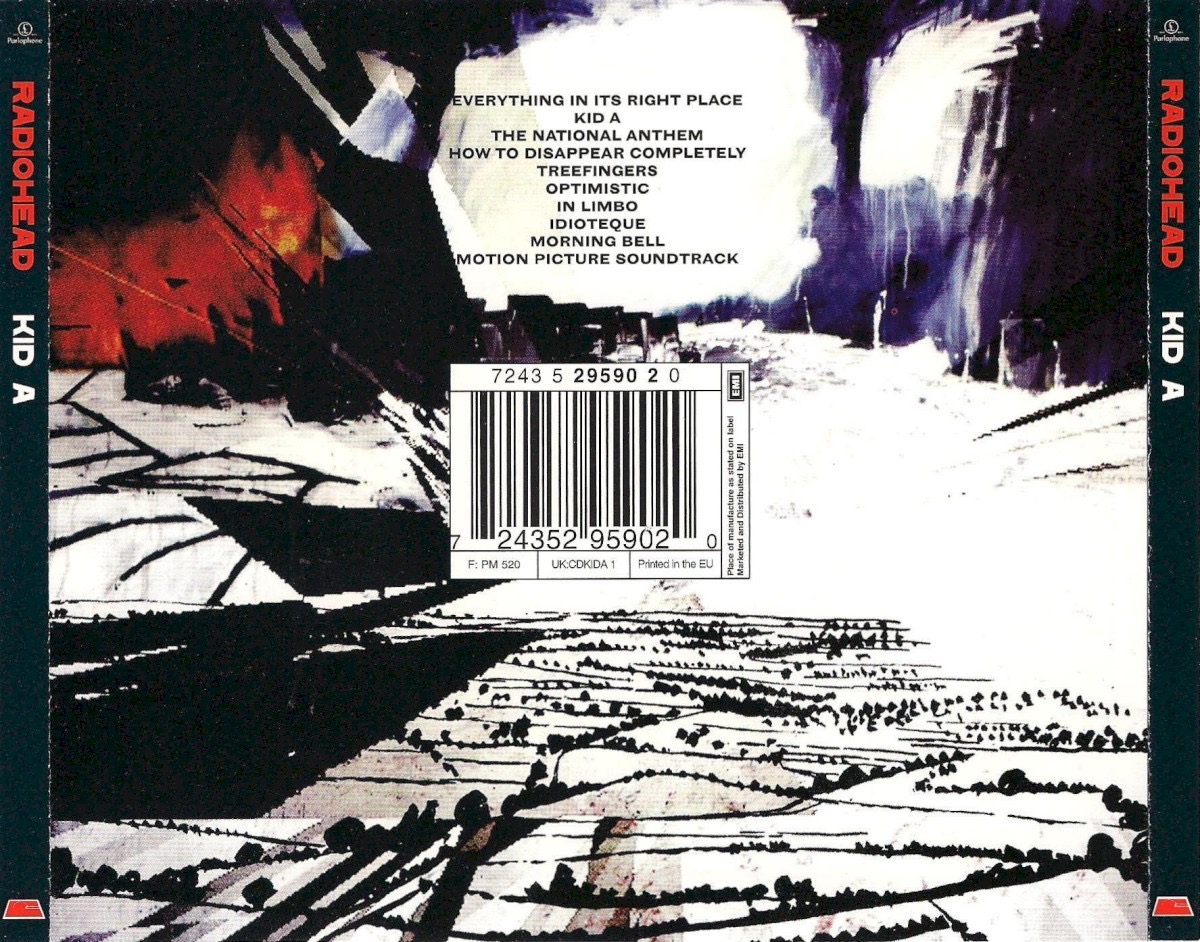
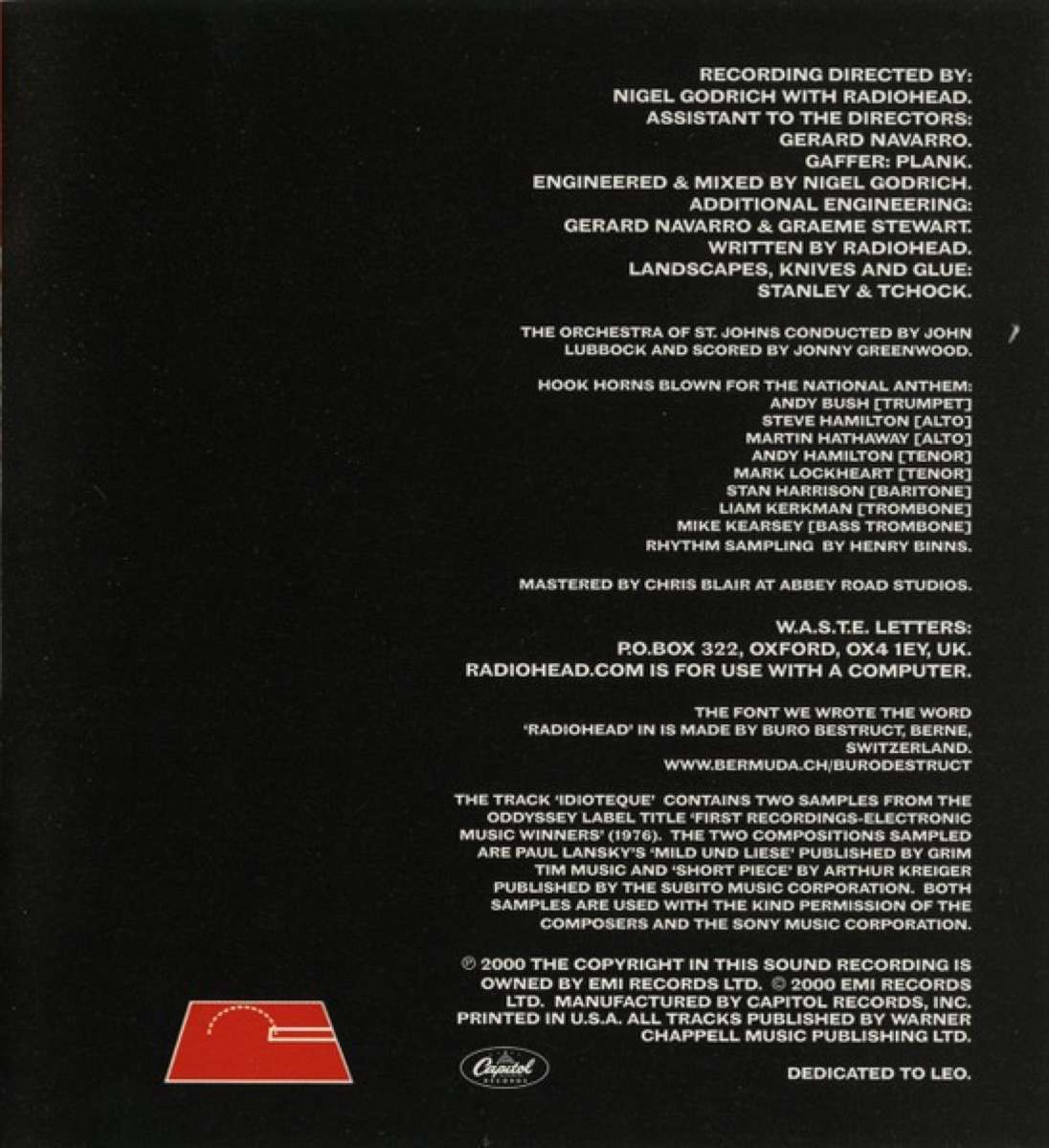
Recording was all but done that week. The running order settled once “Everything in Its Right Place” was chosen to open it; the rest, Smith was told, followed. Ten tracks went on Kid A, three of them with guitars anyone would notice, and the rest went towards Amnesiac. Chris Blair mastered it at Abbey Road. The credits say the recording was directed by Godrich with Radiohead, with Gerard Navarro as assistant to the directors and someone called Plank as gaffer.
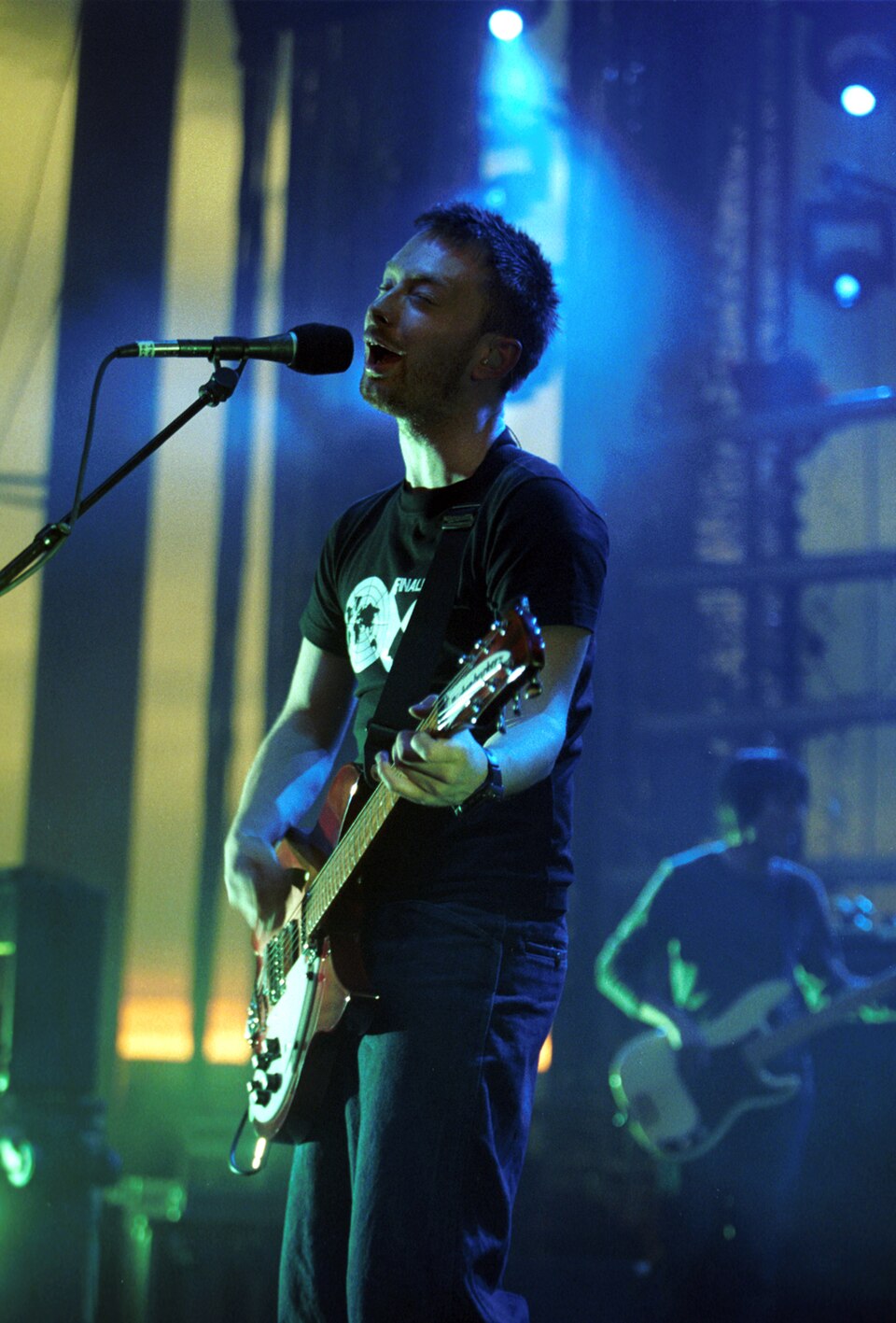
photo
Photo: Goldberg · CC BY-SA 2.0 · Wikimedia Commons
1999–2000
landscapes, knives and glue
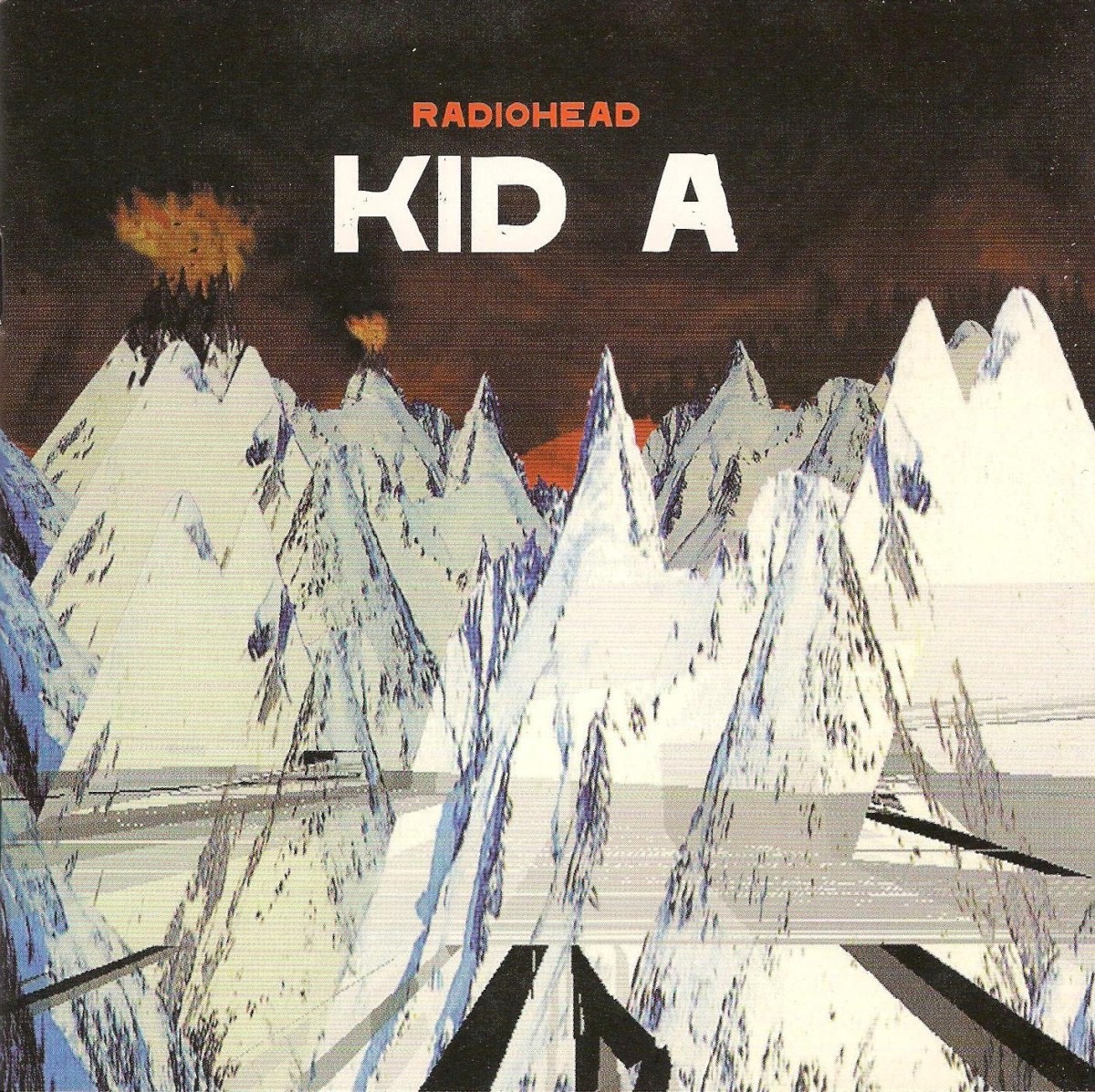
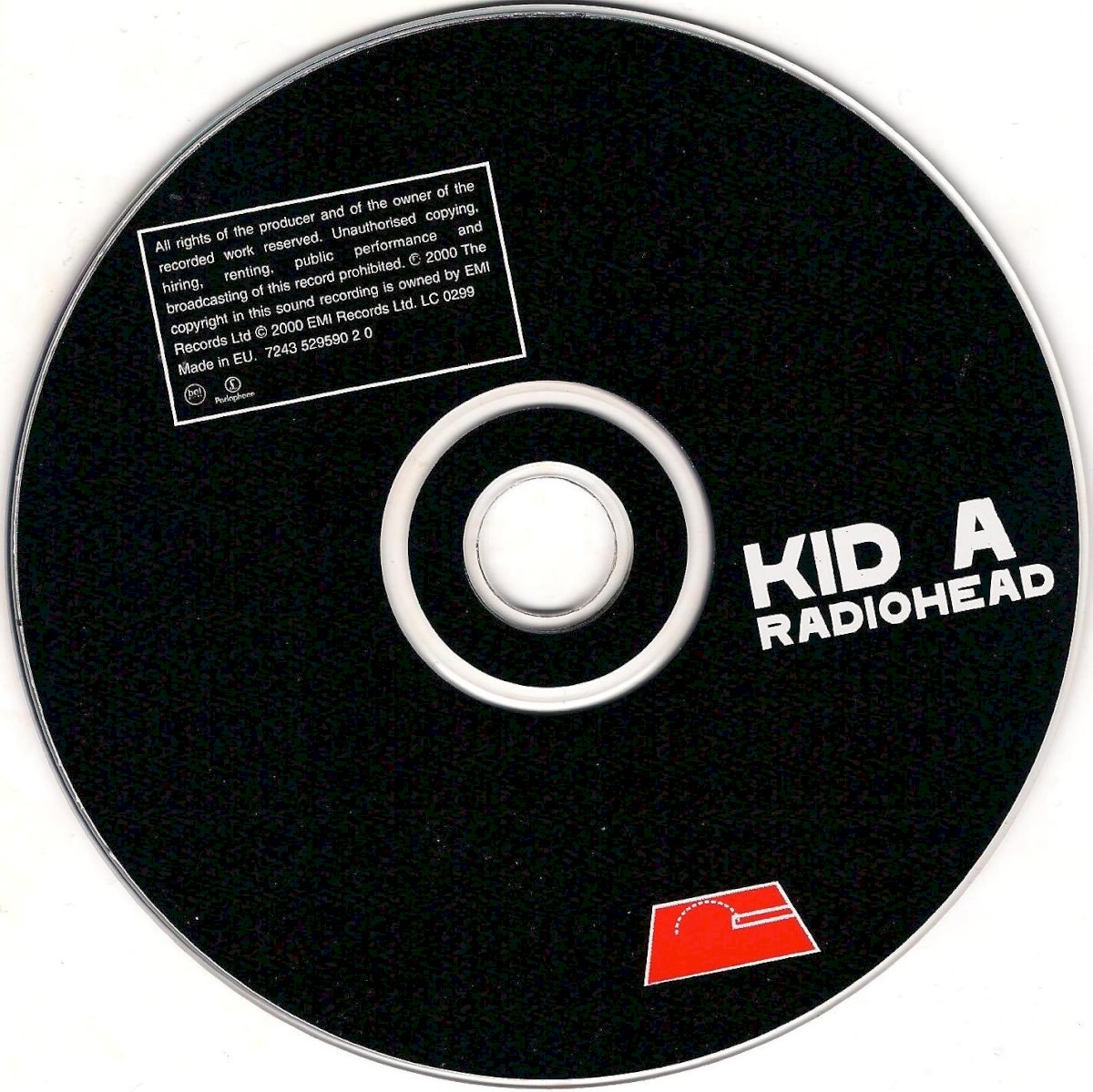
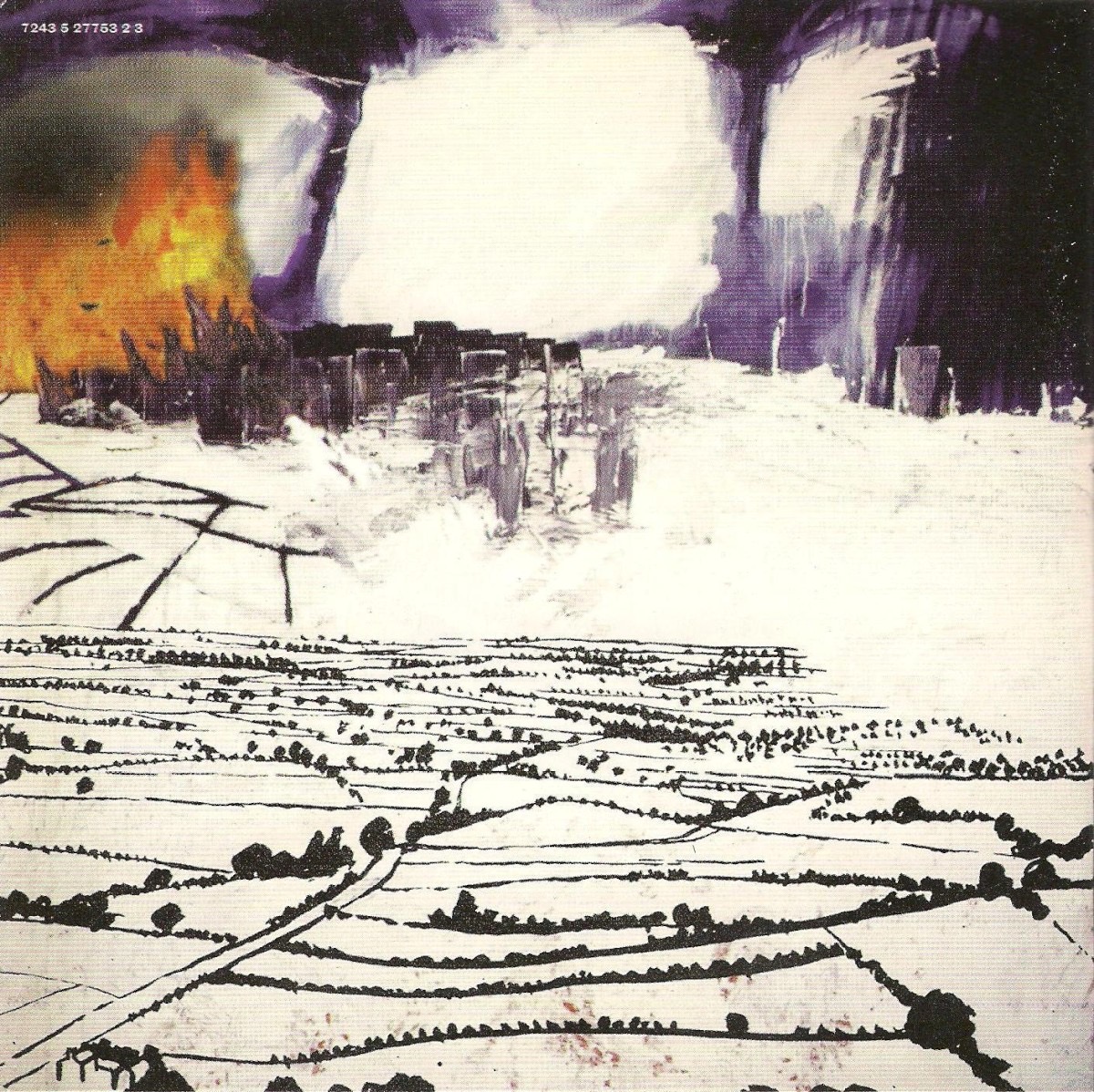
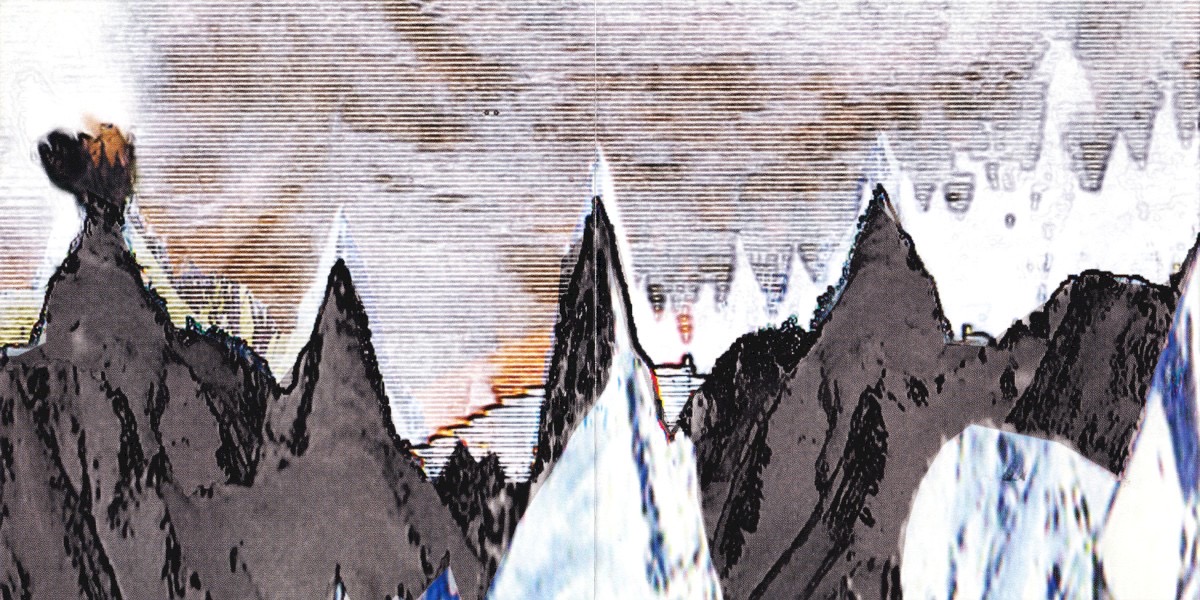
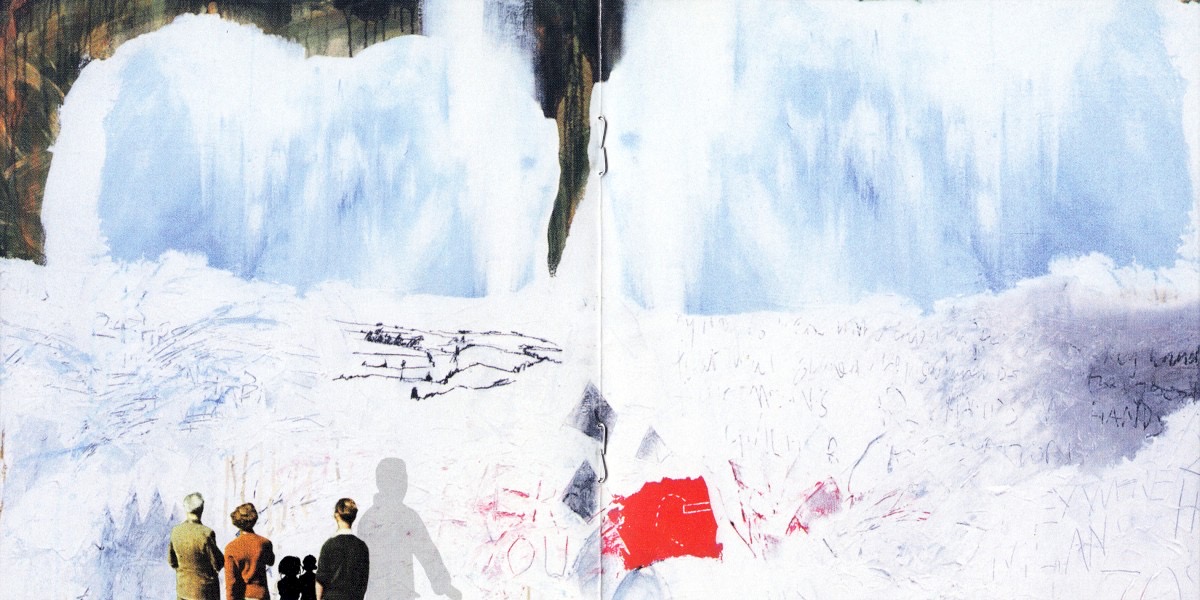
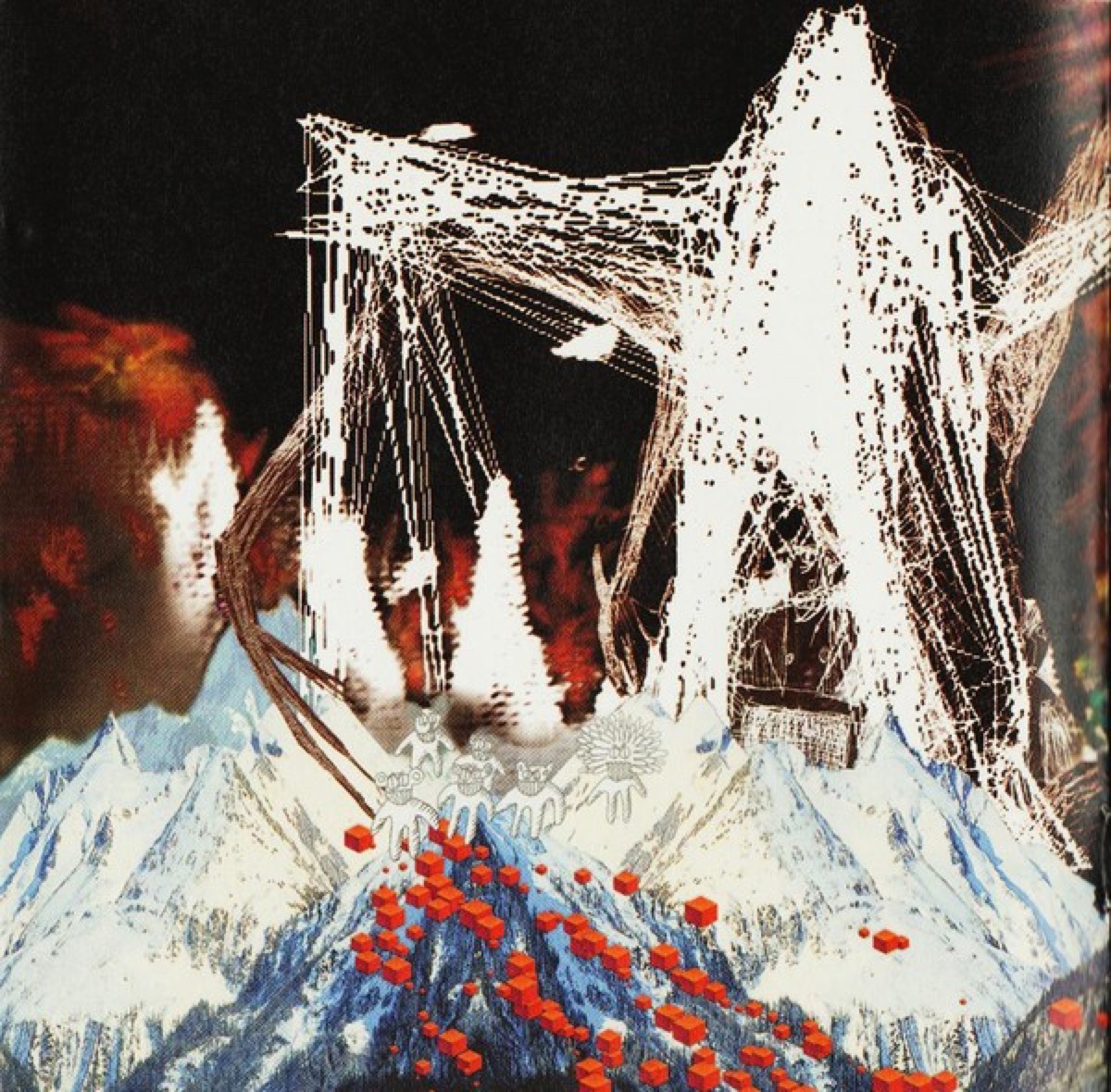
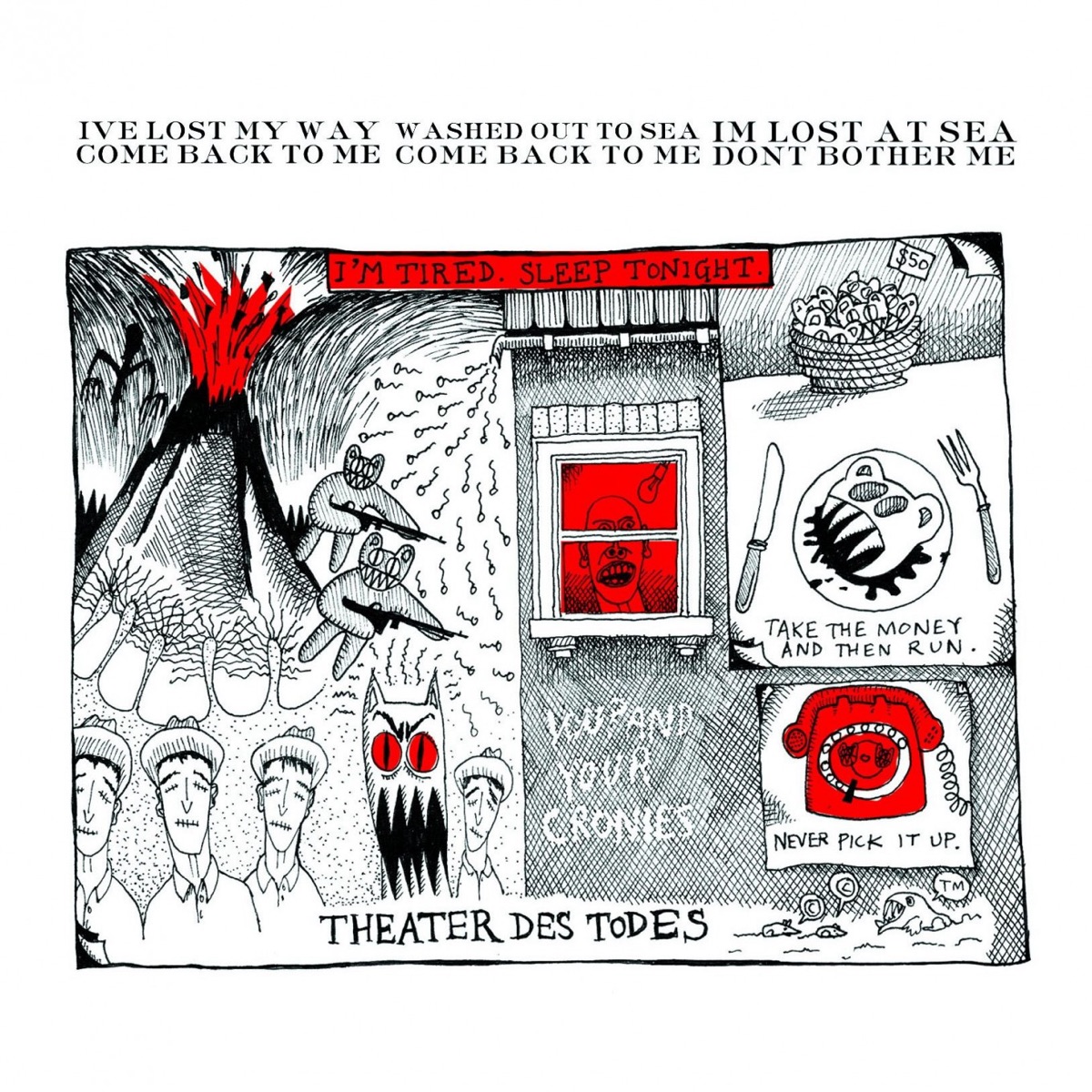
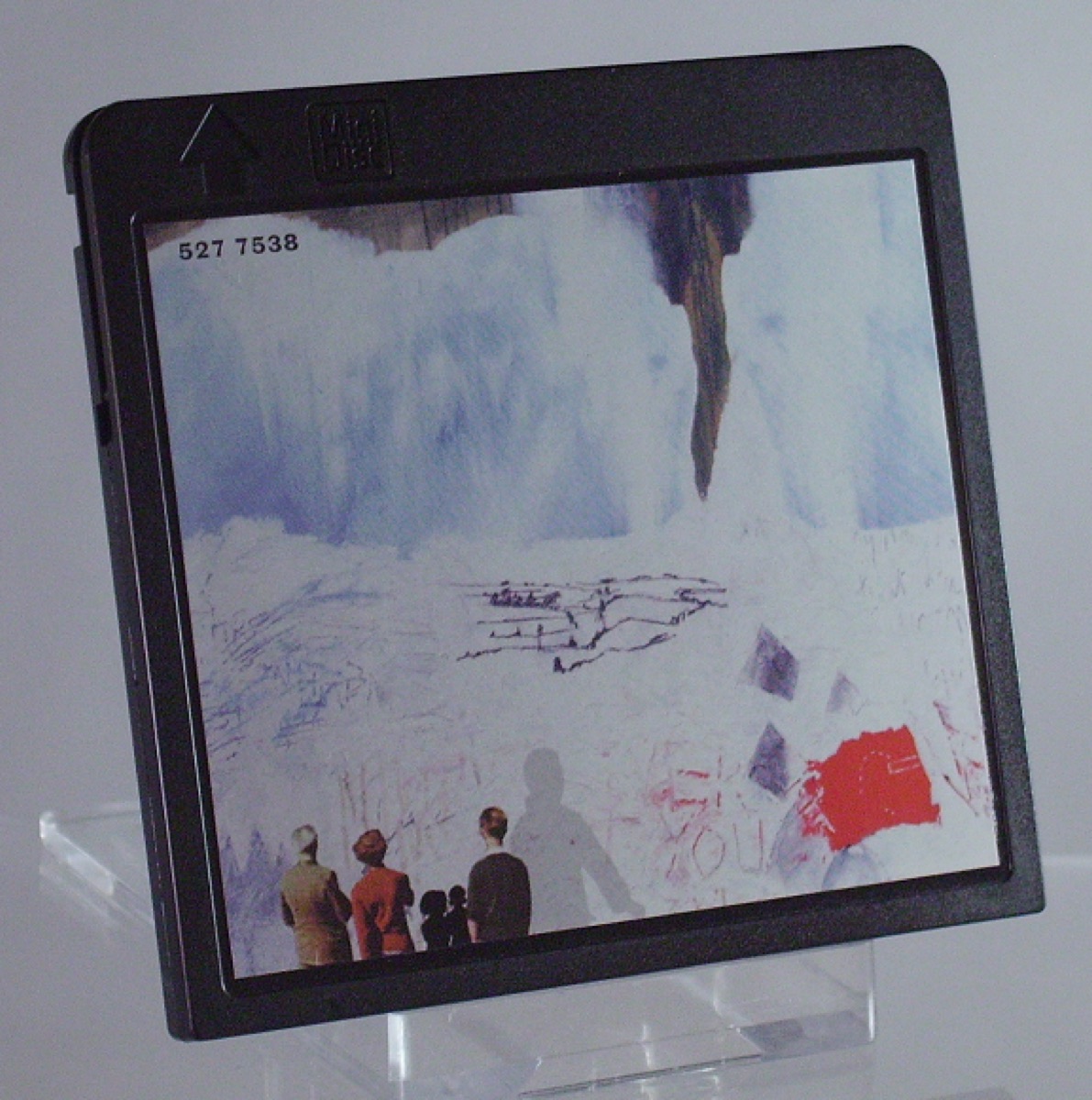
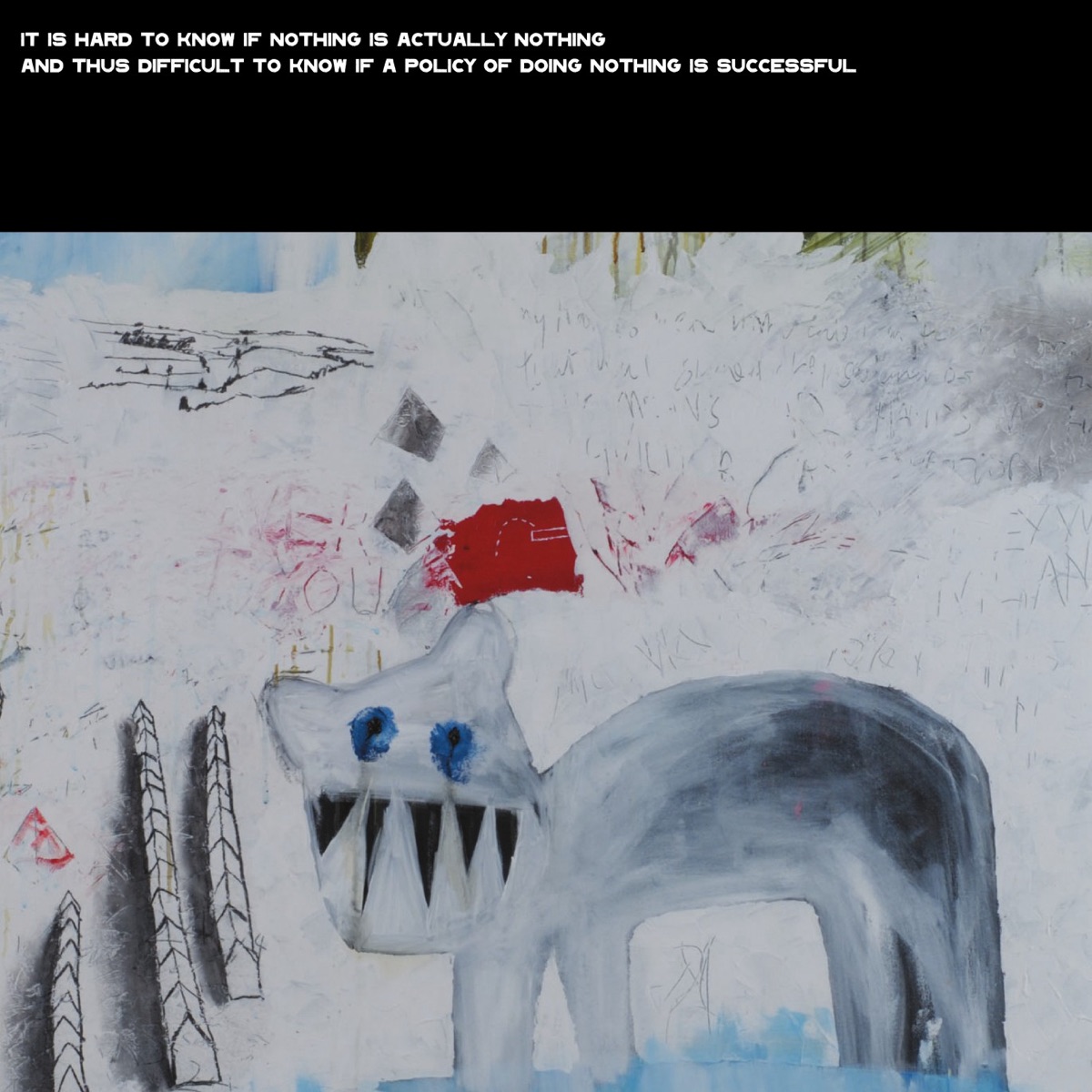
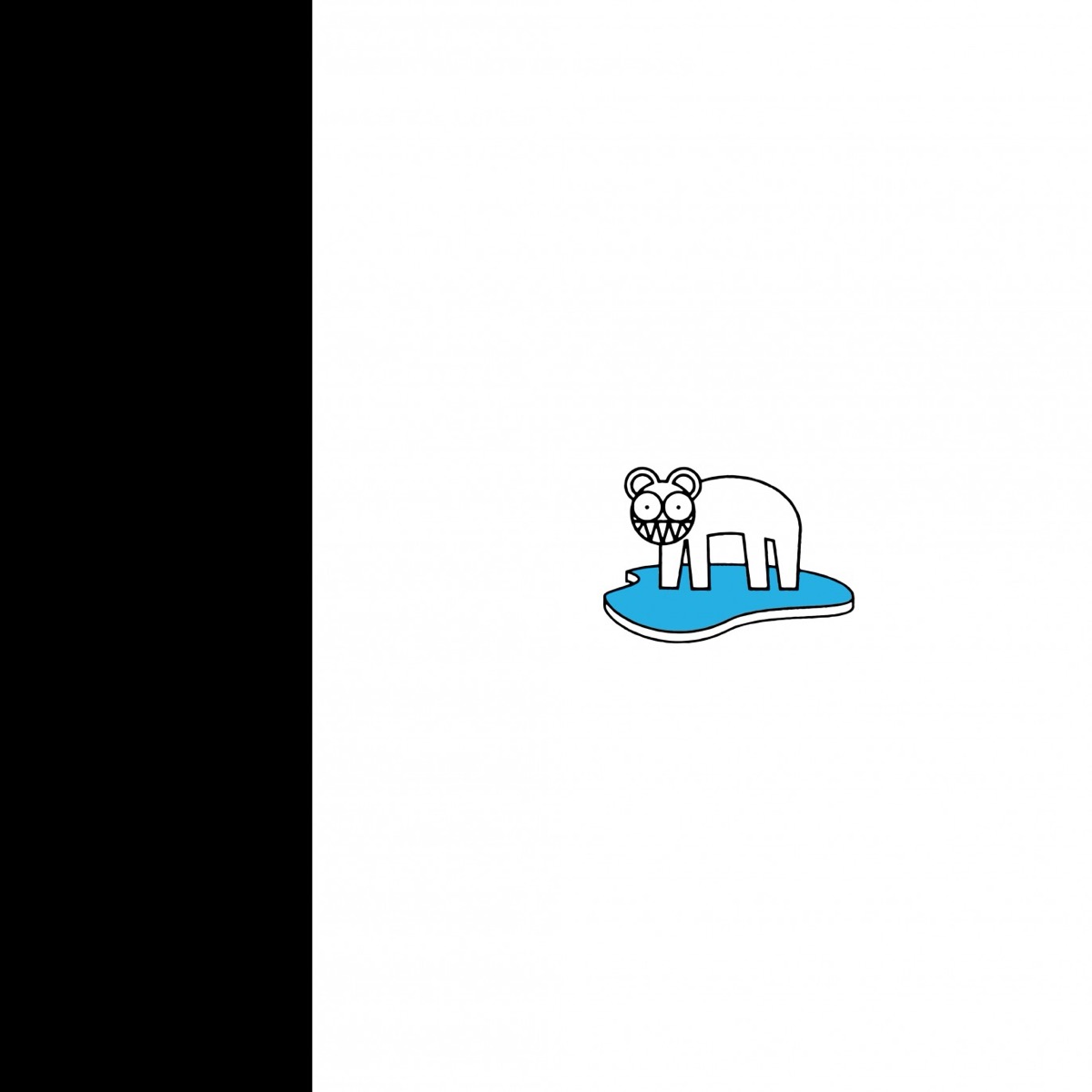
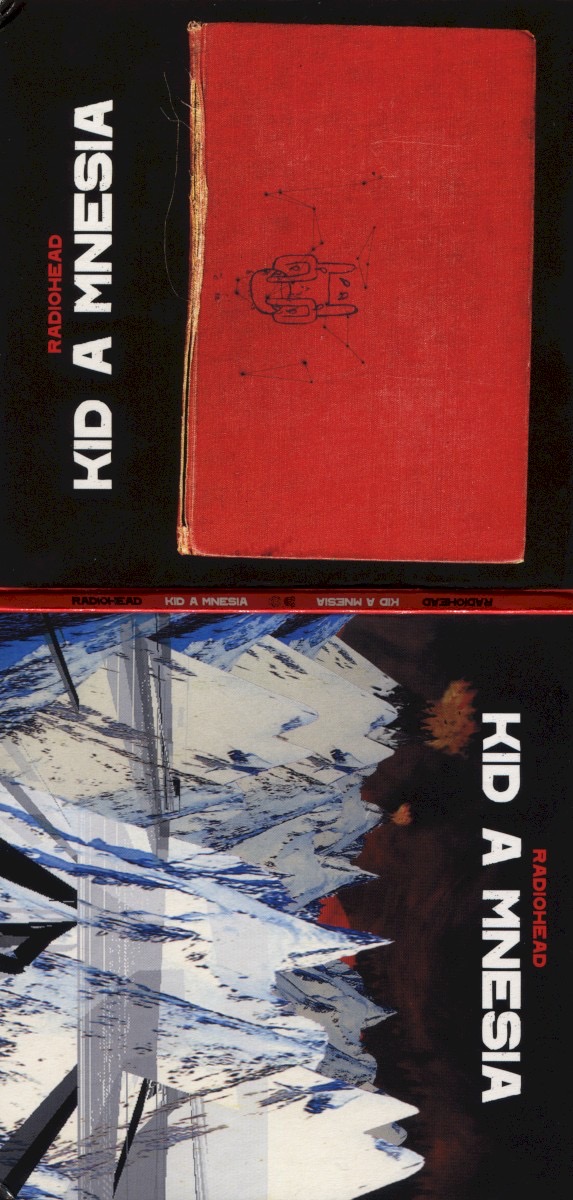
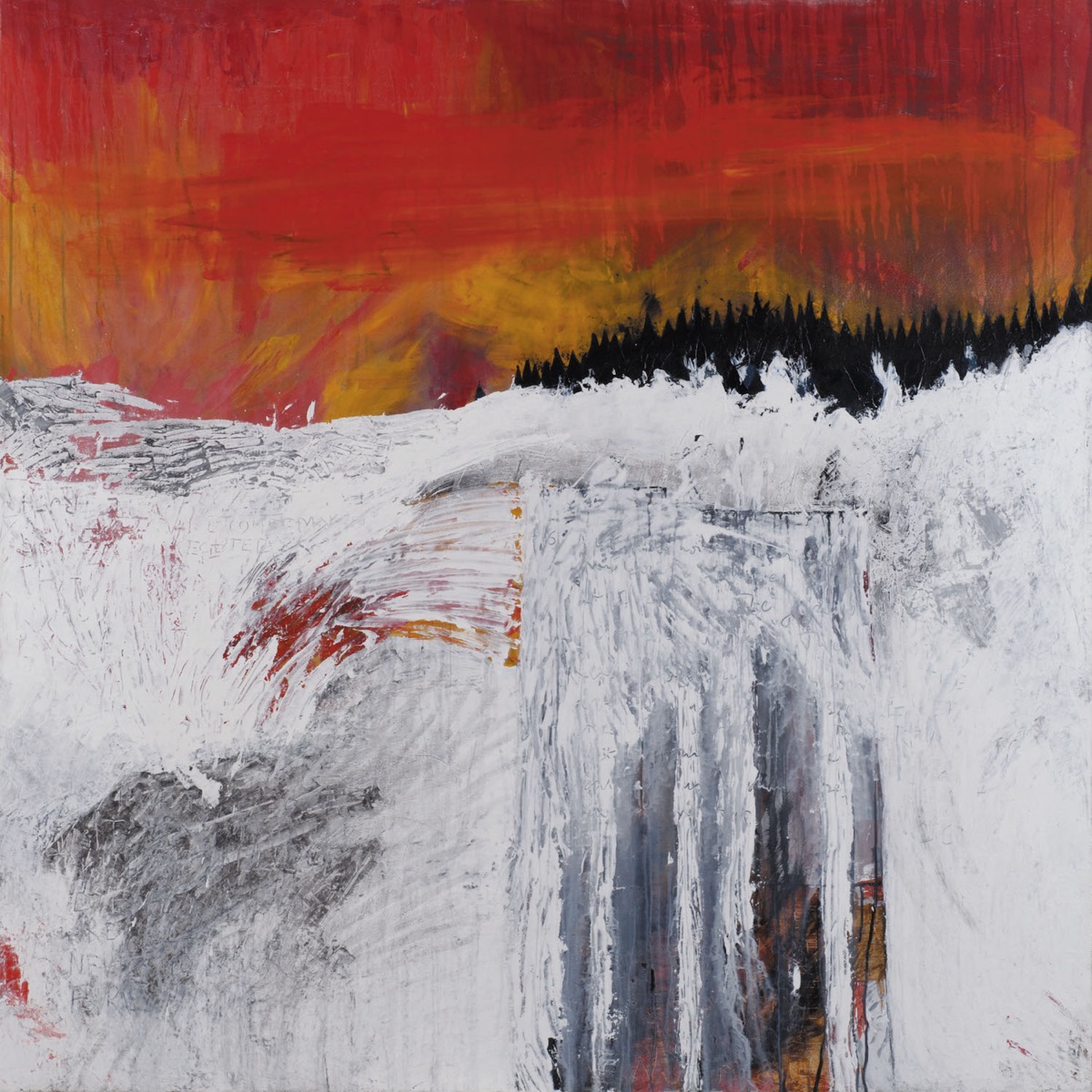
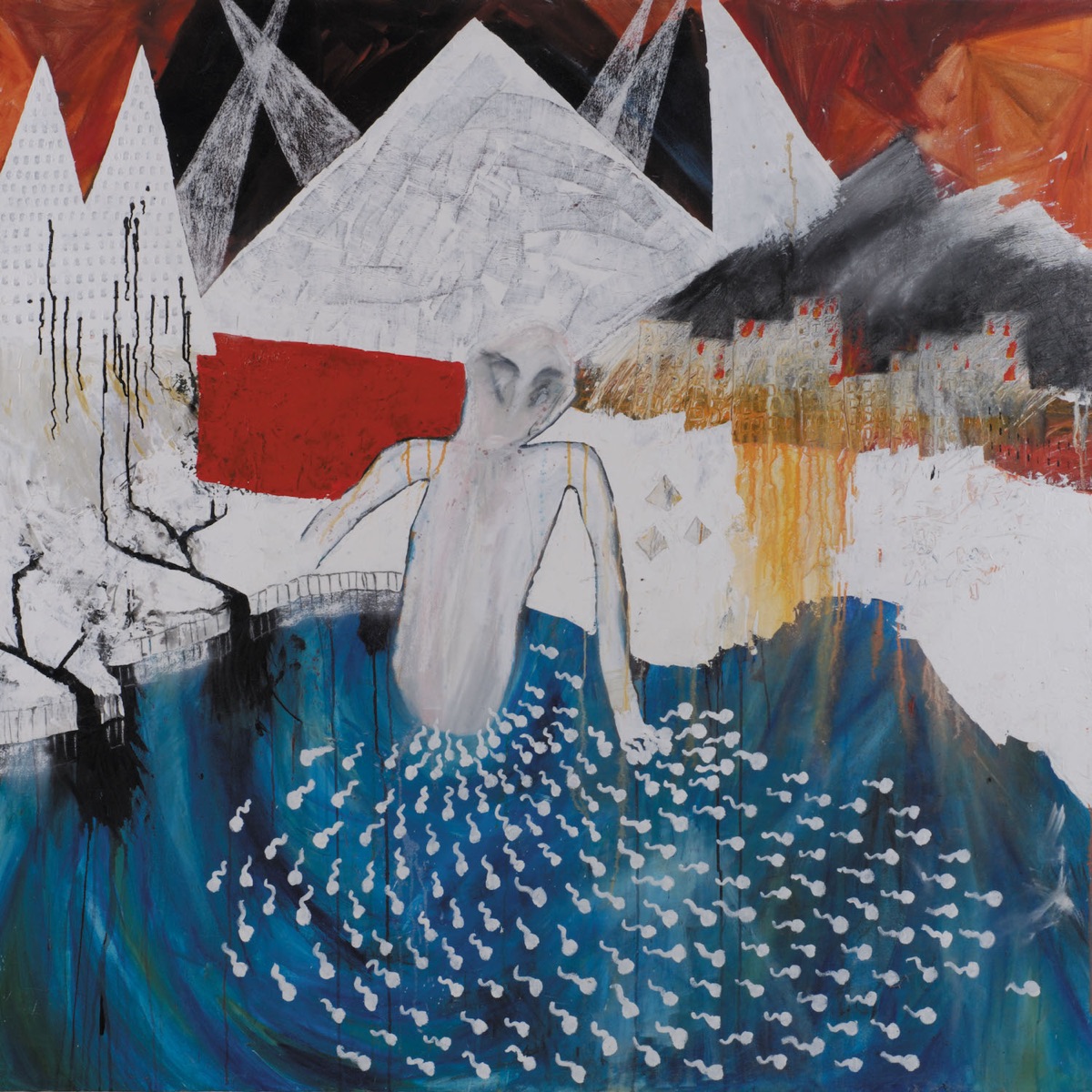
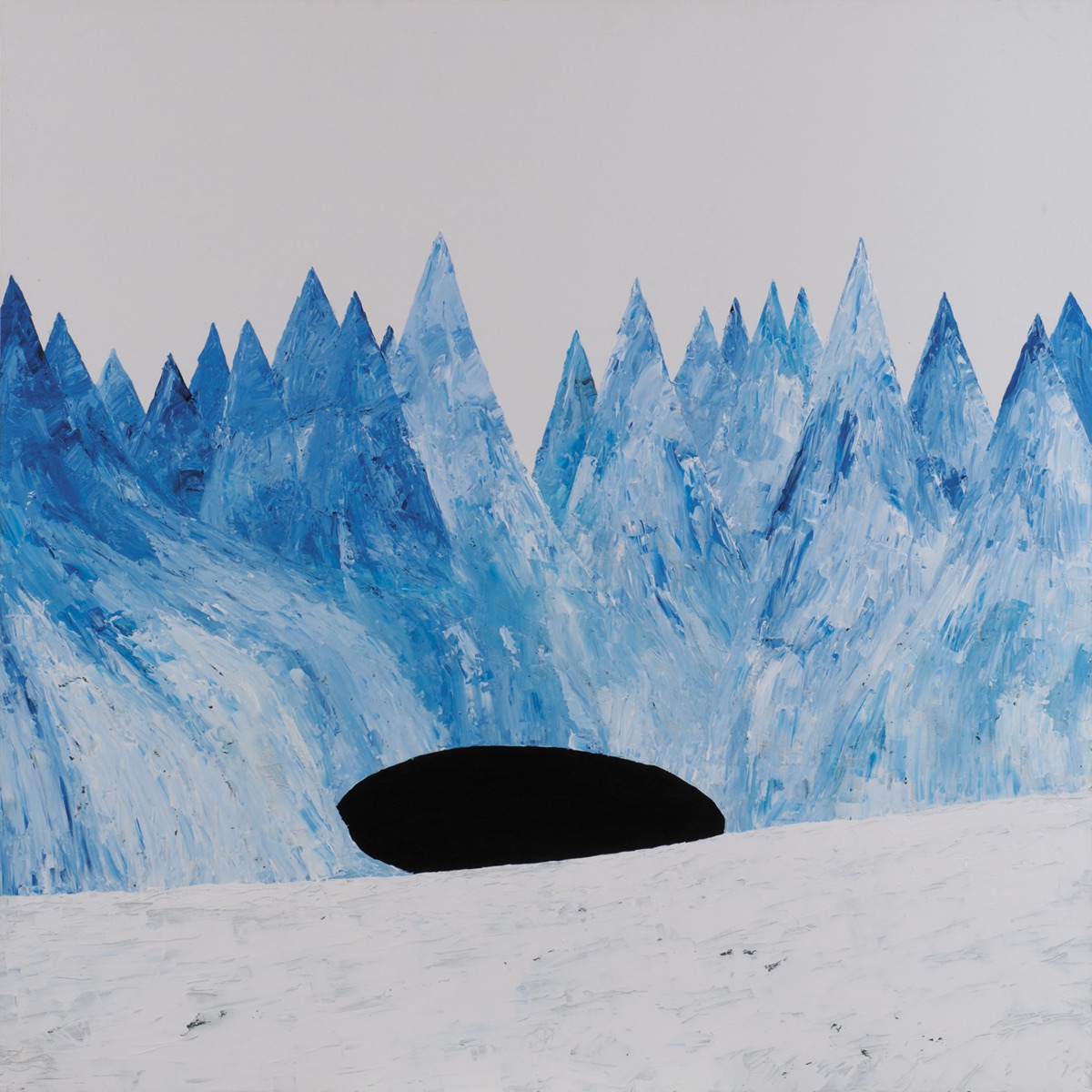
Stanley Donwood had made the band's sleeves since 1994 with Yorke, and until now they had worked in collage, photography and the scanner. For Kid A he bought six-foot canvases and painted with knives and sticks, thickening the surface with Artex, and Yorke photographed the results and worked on them in Photoshop. Donwood told NME in 2013 that he went mental. The mountains came out of the Worldwatch Institute's figures on melting ice, which the pair could not stop reading, and out of a photograph from the Kosovo war: a square metre of snow littered with what an army leaves behind. The red swimming pool on the spine and the disc comes from Alan Moore and Bill Sienkiewicz's Brought to Light, which measures the dead of state terror in pools of blood. The bears began as a bedtime story Donwood told his daughter, about toys who eat the grown-ups who threw them away.
Yorke and Donwood made far more covers than one record could use, with different pictures, titles and typefaces. Donwood told Christie's how it was settled.
We were exhausted and could no longer think clearly.
stanley donwood · christie's, 20 september 2021
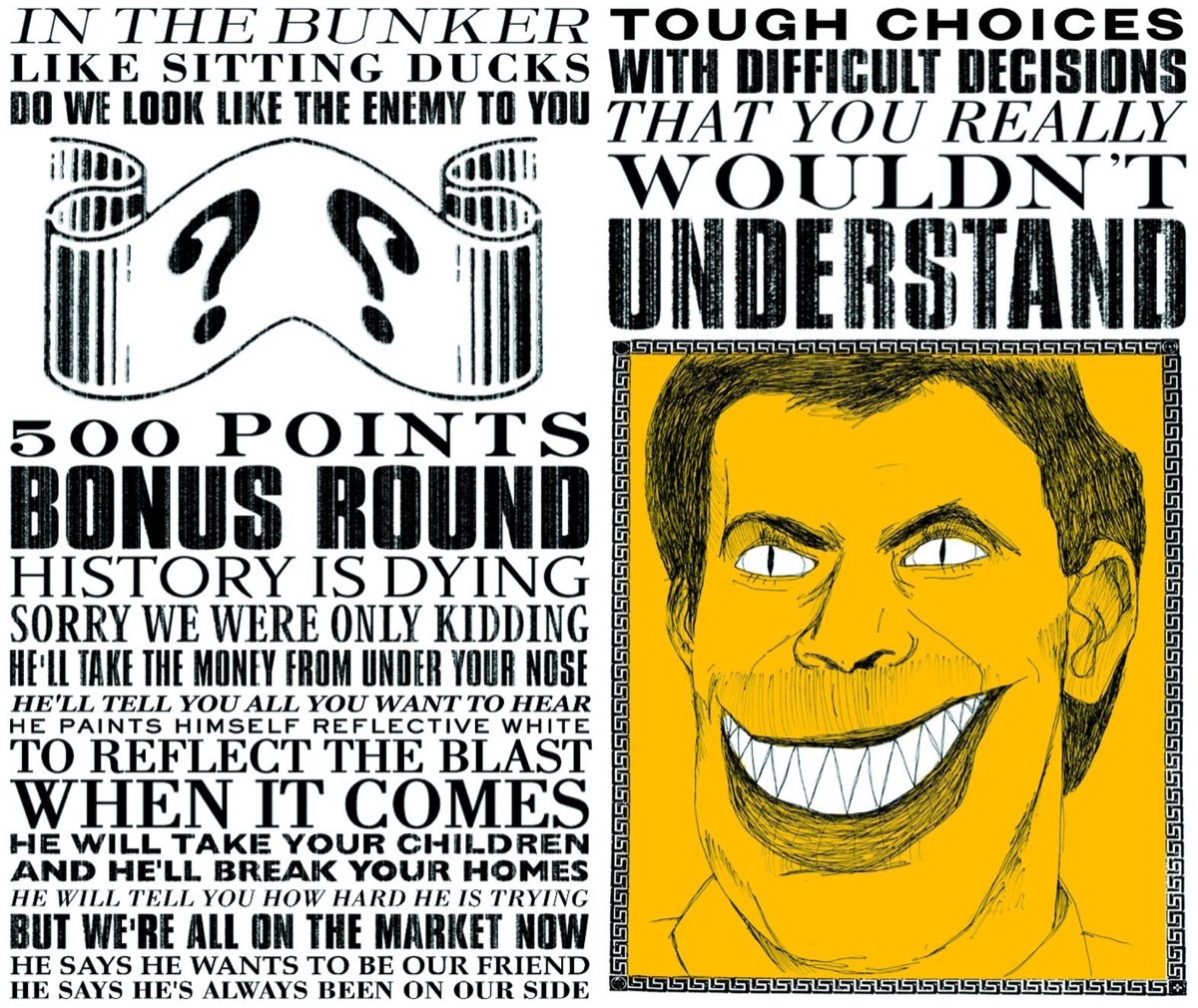
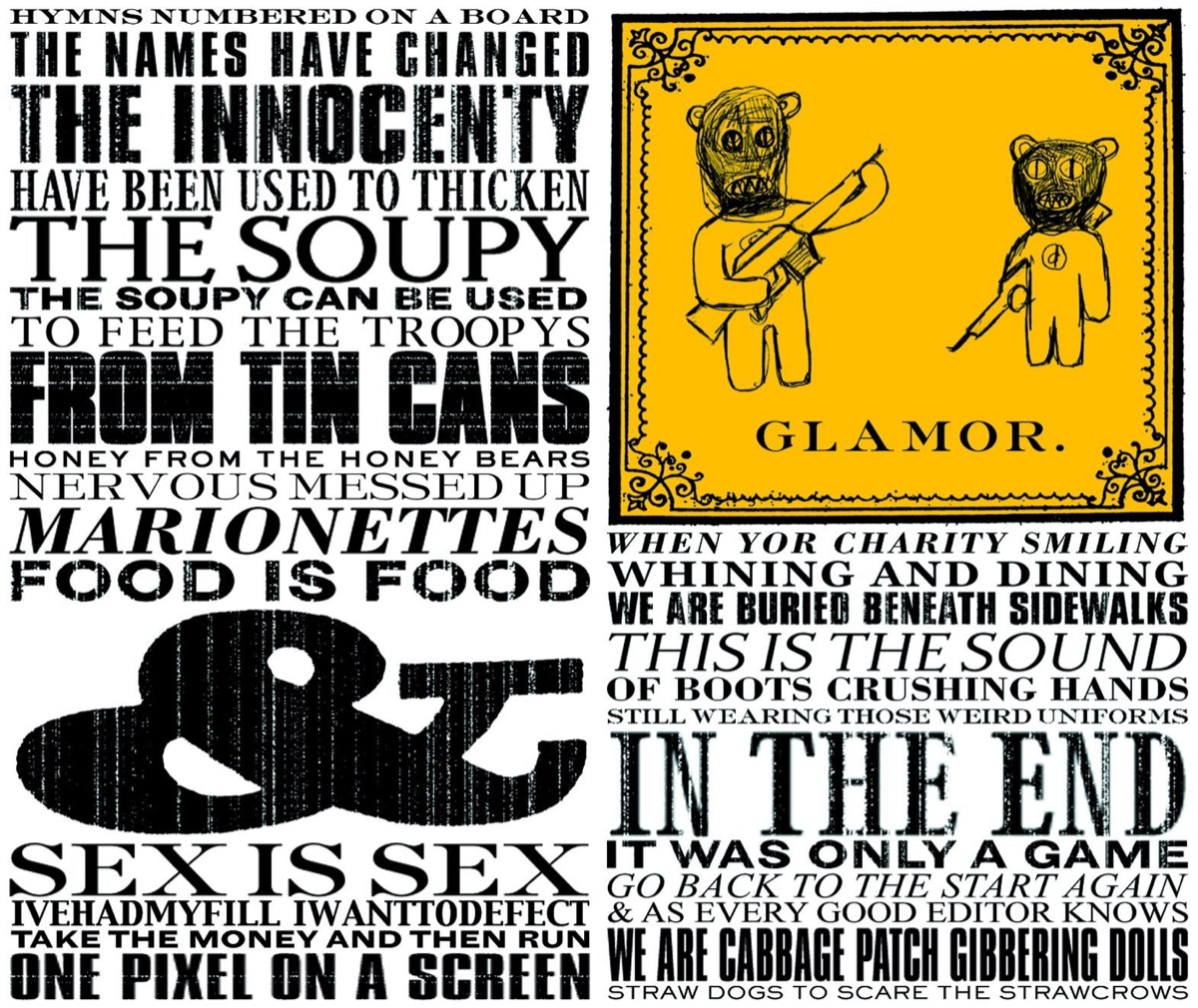
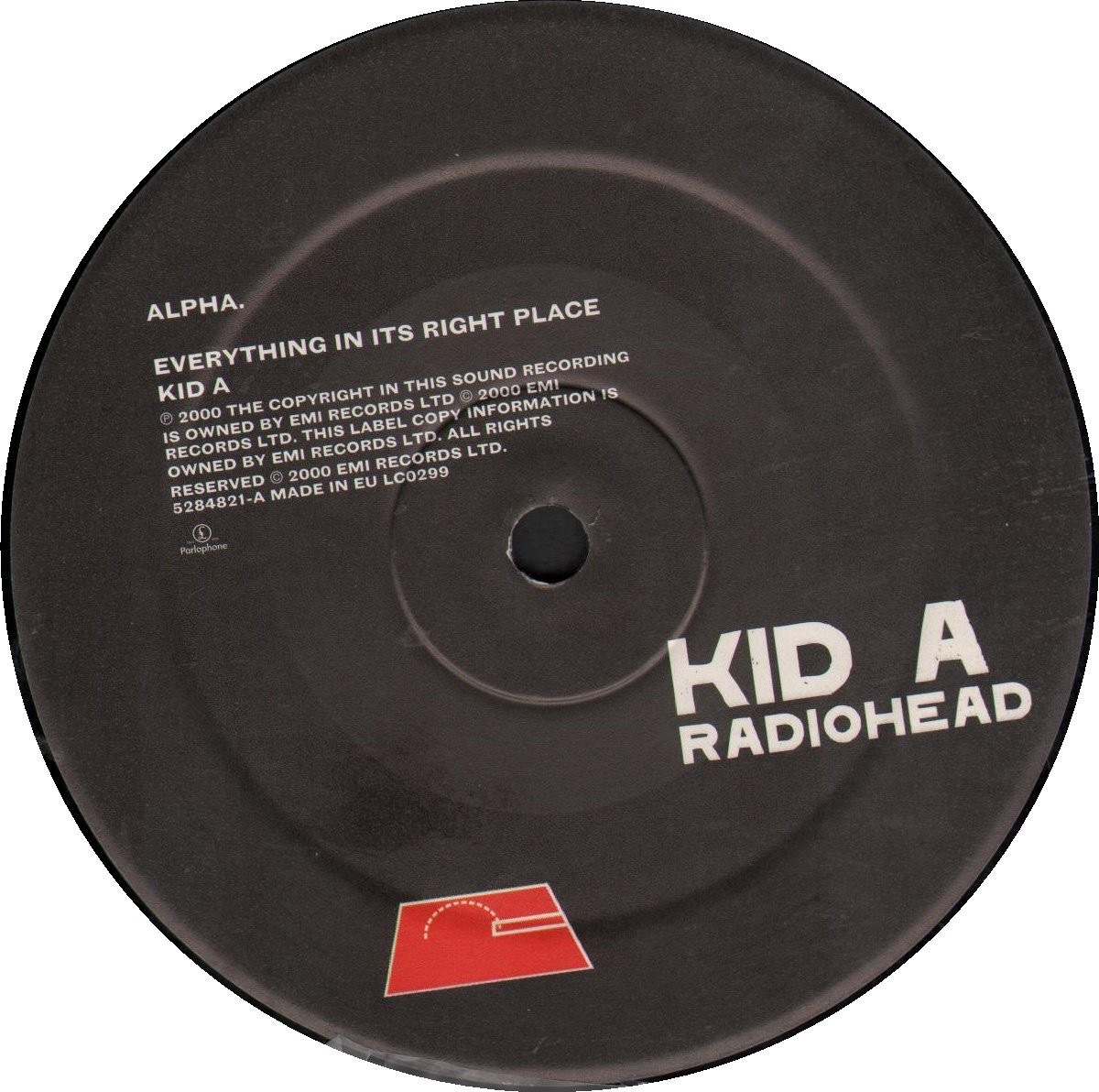
They taped every version to the kitchen cupboards and the fridge and went to bed. By morning the right cover was obvious, and it was called Kid A. The sleeve credits “landscapes, knives and glue” to Stanley and Tchock, Yorke's name for himself in the artwork, and thanks Buro Destruct of Berne for the font they wrote the band's name in. There are no lyrics. Behind the tray of the first pressings sat a second, hidden booklet of slogans in poster type, bears with guns and a grinning face that NME and the Guardian both read as Tony Blair; the credits end “Dedicated to Leo”, and NME took Leo to be the Blairs' son, born that May. In America a limited edition came as a hardback, Kid A: Book and Compact Disc, with Donwood's paintings and a page of statistics on the world's retreating glaciers. The double ten-inch vinyl names its sides Alpha, Beta, Gamma and Delta.
The title came out by degrees. Colin Greenwood told nme.com backstage at the Royal Festival Hall on 1 July 2000 that Kid A was a very good guess. On the band's message board on 31 July Yorke dedicated it to the first human clone, and bet that it had already happened.
jun–oct 2000
no single, no video, a tent
The band went on the road before the record was out. The tour opened in the Roman theatre at Arles on 13 June 2000, rain called off the next night at Vaison-la-Romaine, and the new songs reached Napster within hours of each show. Colin said on Newsnight that by the time they reached Israel in July the audience knew the words.
There would be no single and no video. In their place came the blips, animations of ten to 40 seconds made by Chris Bran and Shynola from Donwood's paintings, for television ad breaks, MTV and the web. Capitol built the iBlip, a small player any site could carry, and more than a thousand sites took it. Nobody got an advance copy. Critics heard the album once, on headphones someone else controlled; Capitol's executives heard it in full on a bus from Hollywood to Malibu; and on 5 September 600 people in 3-D glasses heard it at the Sony IMAX at Lincoln Square in New York, to underwater footage. The whole thing was on Napster three weeks before release anyway. Asked by Q for a photo shoot, the band sent portraits with their eyes recoloured and their skin smoothed, and Q put them on posters and projected them onto the Houses of Parliament.
People who thought we were a guitar band, you're going to have to rethink that.
ed o'brien · billboard, 16 september 2000
The British and European shows were played in a big top built for the band, holding 10,000 and carrying no sponsors' names, with Clinic in support. It stood in Victoria Park in London for three nights from 23 September, then Glasgow Green, and Kid A came out on the middle night at Victoria Park in Warrington.
oct 2000
number one, twice
It was released by Parlophone on 2 October and by Capitol in America the next day. In Britain it sold 55,000 on the first day, by BBC News's count more than the rest of the top ten together, and went in at number one. EMI recalled 150,000 European CDs on release day after a mastering error, and a fan site quoted by the BBC said they opened with 40 seconds of Pearl Jam playing live. In America it entered the Billboard 200 at number one on more than 207,000 copies. None of their first three albums had been higher than 21.
It just doesn't mean anything. It's just la-la.
thom yorke · mtv.com, october 2000
O'Brien compared the British number one to winning the FA Cup. The band played Roseland in New York on 11 October, “The National Anthem” and “Idioteque” on Saturday Night Live three days later, then Toronto and the Greek Theatre in Los Angeles, and that was the North American tour.
The reviews split. In Melody Maker Mark Beaumont gave it one and a half stars out of five; Adam Sweeting in the Guardian gave it two. In The New Yorker Nick Hornby thought it demanded a patience people with jobs no longer have. Brent DiCrescenzo gave it 10.0 at Pitchfork, and the review did as much for the site as for the record. Spin called it the band's bravest album and their best. Robert Christgau gave it an A minus and called it dinner music. Drowned in Sound gave it four out of ten, then took the score back nine years later and gave it ten. In February 2001 it won the Grammy for Best Alternative Music Album and was nominated for Album of the Year. Yorke told Rolling Stone that December that hiding the record from everyone before release had been a mistake. Our view is that it was the campaign's best argument: a record sent out with no single, no video and no review copies, which opened at number one in both countries, had made the music's case for it.
2001–2026
afterlife
The other half of the sessions came out as Amnesiac eight months later. EMI reissued Kid A as a double LP in 2008 and as two- and three-disc Collector's Editions in August 2009, without the band's involvement and without remastering. When the catalogue moved to XL in 2016 it went back out on vinyl, on a pair of twelve-inch records for the first time. Pitchfork and Rolling Stone each named it the best album of the 2000s, and in 2020 Rolling Stone put it at 20 in its 500 greatest albums, up from 428 in 2003.
For the 21st anniversary the band paired it with Amnesiac and a third disc of the sessions, Kid Amnesiae, as Kid A Mnesia, released by XL on 5 November 2021. Six of Donwood's canvases from 1999 to 2001 hung at Christie's in London that October before they were sold, among them “Residential Nemesis”, which went for £137,500. A physical exhibition planned for the V&A died in the pandemic and came out instead on 18 November 2021 as a free download, the Kid A Mnesia Exhibition, which insists it is not a game. In October 2025 British cinemas screened Murnau's Nosferatu with Kid A and Amnesiac as its score. In April 2026 the exhibition finally got a building, Motion Picture House, which opened in a bunker under the Coachella grounds and moved on to the Brooklyn Navy Yard.
Track five, the one without words, gave this site its name.
on film
Why the swerve after OK Computer worked.· Middle 8watch on youtube →
videos(11)
the sleeve
the booklet (8)
the art and the editions
.png)
the press
the press release
from W.A.S.T.E. · Radiohead
dated sep 2021
two 12” half-speed cut black vinyl pressings of KID A and Amnesiac along with a 12” of KID AMNESIAE, 12 tracks of half-remembered, half-forgotten sessions & unreleased material
the reviews
2/5
The Guardian
Adam Sweeting · 29 sep 2000
read it →Even listeners raised on Krautrock or Ornette Coleman will find Kid A a mystifying experience.
10.0
Pitchfork
Brent DiCrescenzo · 2 oct 2000
read it →must be the greatest band alive, if not the best since you know who
9/10
Spin
Simon Reynolds · oct 2000
read it →Kid A is not only Radiohead's bravest album but its best one as well
4/5
Rolling Stone
David Fricke · 12 oct 2000
read it →Kid A is a work of deliberately inky, often irritating obsession.
no mark
The New Yorker
Nick Hornby · 30 oct 2000
read it →“Kid A” demands the patience of the devoted
no mark
Q
Stuart Maconie · nov 2000
read it →Radiohead are five blokes from Oxford
no mark
The Wire
Edwin Pouncey · nov 2000
read it →caused a tsunami-sized wave of confusion
A−
The Village Voice
Robert Christgau · feb 2001
read it →Alienated masterpiece nothing--it's dinner music. More claret?
later
- looking backDrowned in Sound · Alexander Tudor · 27 mar 2009 10/10the shameful knowledge DiS awarded Kid A a scathing 4/10read →
- looking backThe Guardian · Mark Beaumont · 11 oct 2010proved me, if not wrong, then very much in the minorityread →
- looking backRolling Stone · Rob Sheffield · 2 oct 2015Kid A remains the defining moment in the Radiohead legendread →
- looking backThe Quietus · Dale Cornish · 28 sep 2020The legacy of Kid A has, if anything, improved over time.read →
- on the listsPitchfork, The Top 200 Albums of the 2000s, no. 1 · 2 oct 2009feels like the Big Album of the online ageread →
- on the listsRolling Stone, 500 Greatest Albums of All Time, no. 20 · 22 sep 2020A new, uniquely fearless kind of rock record for a new, increasingly fearful centuryread →
sources28
- Ed O'Brien, studio diary, radiohead.com, 22 July 1999 to 26 June 2000, mirrored here as Ed's Diary, for the rehearsals, 4 and 6 August, the hip-hop documentary, Godrich's method, the London mixes, the webcast and crackers, the January rule, the string scoring, 1 February and 16 April.
- David Cavanagh, “I can see the monsters”, Q, October 2000, via Wikipedia, “Kid A”, and NME's preview of 31 August 2000 (“Radioheading for rock bottom”), for Yorke's worst time, Warp, the reels in Copenhagen, the pact to split and Yorke on melody.
- Andrew Smith, “Sound and fury”, The Observer, 1 October 2000, for the Yorke quote, the month in Paris, the near split over 23 tracks and the running order.
- Thom Yorke and Stanley Donwood, extract from Kid A Mnesia, The Guardian, 4 November 2021, for Rachel Owen's advice and the drawing.
- Wikipedia, “Kid A”, citing Q, October 2000, and Nick Kent, Mojo, June 2001, for Jonny and Colin Greenwood's doubts; Lauren Zoric, “The Friday interview: Thom Yorke”, The Guardian, 22 September 2000, for the tent.
- NME, “Radiohead's next OK for Y2K”, 21 March 1999, and the band's announcement list, 1 May 1999, for Batsford Park from 12 April and the management's timetable.
- Tom Seabrook, “Colours in my head: the making of Kid A and Amnesiac”, Record Collector, August 2013, for Paris, two weeks at Medley and Batsford as a 17th-century house.
- Kid A sleeve and booklet, Capitol CDP 7243 5 27753 2 3 and Parlophone CDKIDA 1, 2000, scans via the Cover Art Archive, for the credits, the font, the dedication and the hidden booklet; Discogs, master release 21501, for the Book and Compact Disc edition and the vinyl side names.
- Wikipedia, “Kid A”, for the barn studio, the split into two groups, Dorchester Abbey's distance from the studio, Chris Blair, the artwork sources (Worldwatch, Kosovo, Brought to Light), the Q portraits from Andrew Harrison's account in Q, August 2020, the 2009 reissues and the decade lists.
- Stanley Donwood, interviewed by Lucy Jones, NME, 27 September 2013, for the knives and sticks.
- “Christie's will partner with Radiohead's Thom Yorke to present artworks by Stanley Donwood”, Christie's press release, 20 September 2021, for the kitchen and the quote; Stanley Donwood, “How to disappear completely”, slowlydownward.com, 26 September 2021, for the six paintings.
- Simon Vozick-Levinson, Rolling Stone, 3 November 2021, for the sale of “Residential Nemesis”.
- Creative Review, October 2000, for the bears, the blips and their makers.
- Keith Perry, “Radiohead album lays into Blair”, The Guardian, 9 October 2000, and NME, “Just 'Kid'ding, Tony”, 10 October 2000, for the hidden booklet.
- NME, “Radiohead: 'Kid..' on!”, 4 July 2000, for Colin Greenwood; NME, “Radiohead turn to clone”, 1 August 2000, for the dedication.
- The live archive here, for Arles, Vaison-la-Romaine and the tent dates; NME, “Napster nabs 'Kid..'”, 12 September 2000, for Newsnight; NME, “Radiohead regain support”, 8 August 2000, for Clinic.
- NME, “Gee whizz!”, 24 August 2000, relaying Chris Hufford in Music Week, for no singles or videos.
- Joe Lynch, “20 years ago, Radiohead's Kid A changed the way albums were marketed”, Billboard, 2 October 2020, for O'Brien's quote from Billboard, 16 September 2000, and the earlier US peaks.
- Steven Hyden, “How Radiohead's Kid A kicked off the streaming revolution”, Grantland, 2015, for the bus to Malibu; Wikipedia for the iBlip figures.
- NME, “New Yorkers like new Yorke”, 6 September 2000, for the IMAX playback.
- BBC News, “'Difficult' Radiohead album is a hit”, 4 October 2000, for the first-day sales and the recall.
- Variety, 11 October 2000, for the American first week; NME, “'Head spinning”, 17 October 2000, relaying mtv.com and BBC London Live, for Yorke and O'Brien.
- Mark Beaumont, “Radiohead's Kid A: still not much cop”, The Guardian, 11 October 2010; Adam Sweeting, “Mourning glories”, The Guardian, 29 September 2000; Nick Hornby, “Beyond the pale”, The New Yorker, 30 October 2000; Brent DiCrescenzo, Pitchfork, 2 October 2000; Spin, October 2000, republished 2 October 2015; Robert Christgau, Consumer Guide, robertchristgau.com; Alexander Tudor, “Radiohead's Kid A: the DiS re-appraisal”, Drowned in Sound, 27 March 2009.
- Recording Academy, 43rd Grammy Awards.
- David Fricke, “People of the Year: Thom Yorke”, Rolling Stone, 14 December 2000.
- Rolling Stone, “The 500 Greatest Albums of All Time”, 22 September 2020; Pitchfork, “The top 200 albums of the 2000s”, 2 October 2009.
- The Quietus and DIY, 7 September 2021, for Kid A Mnesia; Alex McLevy, The A.V. Club, 19 November 2021, for the exhibition and the V&A.
- NME, 5 June 2025, for Nosferatu; Kory Grow, Rolling Stone, April 2026, and Walter Wuthmann, Gothamist, 8 May 2026, for Motion Picture House.