Radiohead studio album · The King of Limbs era (2011)
The King of Limbs
Eight tracks built from loops of the band's own playing, announced on a Monday and out on the Friday, from Radiohead's own website.
the sessions
- May 2009Radiohead's studio, OxfordshireSessions begin with Nigel Godrich
- Jan 2010Hollywood Hills, Los AngelesThree weeks in a house made into a studio
- 24 Jan 2010Music Box at the Fonda, Los AngelesRecording paused for the Haiti benefit
- 14 Feb 2011thekingoflimbs.comAnnounced with five days to go
- 18 Feb 2011radiohead.comDownload out a day early
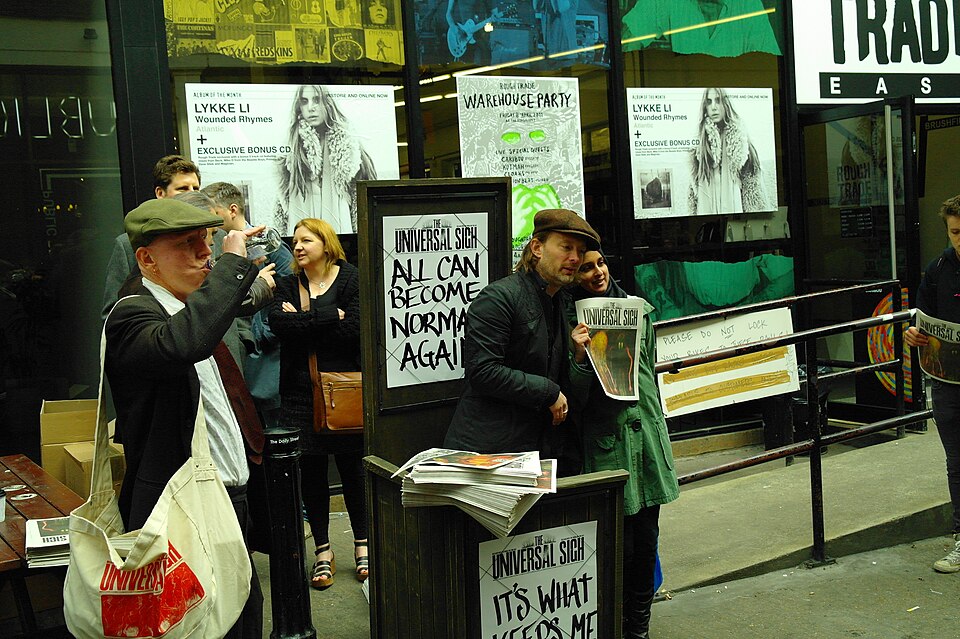
- 28 Mar 2011Rough Trade East, LondonCD and vinyl in shops; The Universal Sigh handed out
- 9 May 2011thekingoflimbs.comNewspaper album due to ship
- 24 Jun 2011Worthy Farm, PiltonFirst show, a surprise Glastonbury set
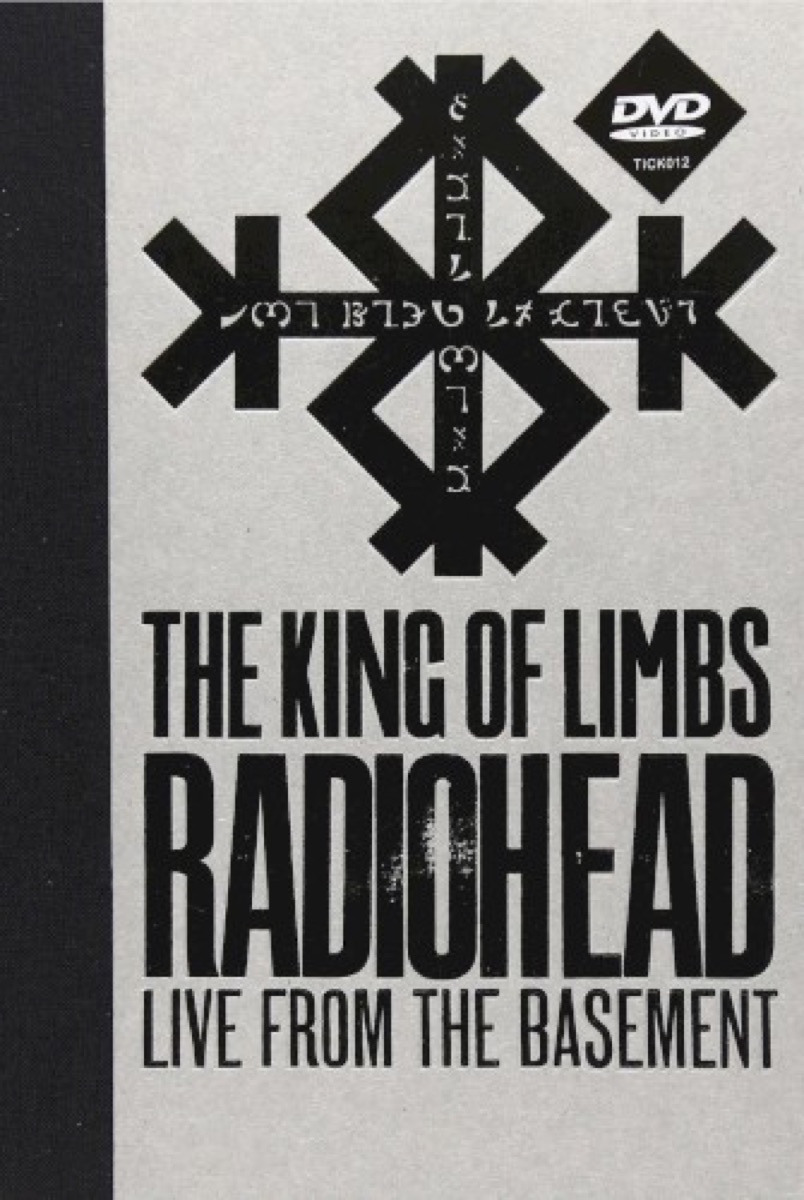
- 1 Jul 2011Maida Vale Studios, LondonThe whole album filmed for From the Basement
2009
never that way again
Colin Greenwood said at the Great Escape in Brighton in May 2009 that Radiohead had gone into the studio with Nigel Godrich the week before. He described the new material as a box of bricks tipped out on the floor and picked through, and the sessions as noisy, chaotic and fun. Godrich, asked by The Quietus a month later, said it was going great and that he had nothing else to report.
That summer an interview in The Believer had Thom Yorke saying nobody in the band wanted to take on another long-playing record. Ed O'Brien told NME in October, “We were misquoted. We will be making an album!” In December, on Dead Air Space, the band's blog, he looked back ten years to Kid A, a record he was hugely proud of, though “it wasn't a fun place to be”, and said the new music ought to sound unlike the old.
Why they wanted a new way of working came out the following June, when O'Brien talked to Adam Buxton on BBC 6 Music. In Rainbows had taken three years and had not been enjoyable to make. He called the band's studio manner a war of attrition and said “House of Cards” had been recorded six times. At the end of it the five of them agreed never to work that way again.
photo
Photo: martin_vmorris · CC BY-SA 2.0 · Wikimedia Commons
2009–10
a turntable each
The new way started with Godrich's hobby. A DJ friend in Los Angeles had got him playing records at parties, he got Yorke into it too, and the two of them decided turntables were an instrument. Godrich proposed a two-week test in which everyone in the band would play a turntable instead of a guitar or drums.
And that two-week experiment ended up being fucking six months.
nigel godrich · rolling stone, 8 june 2017
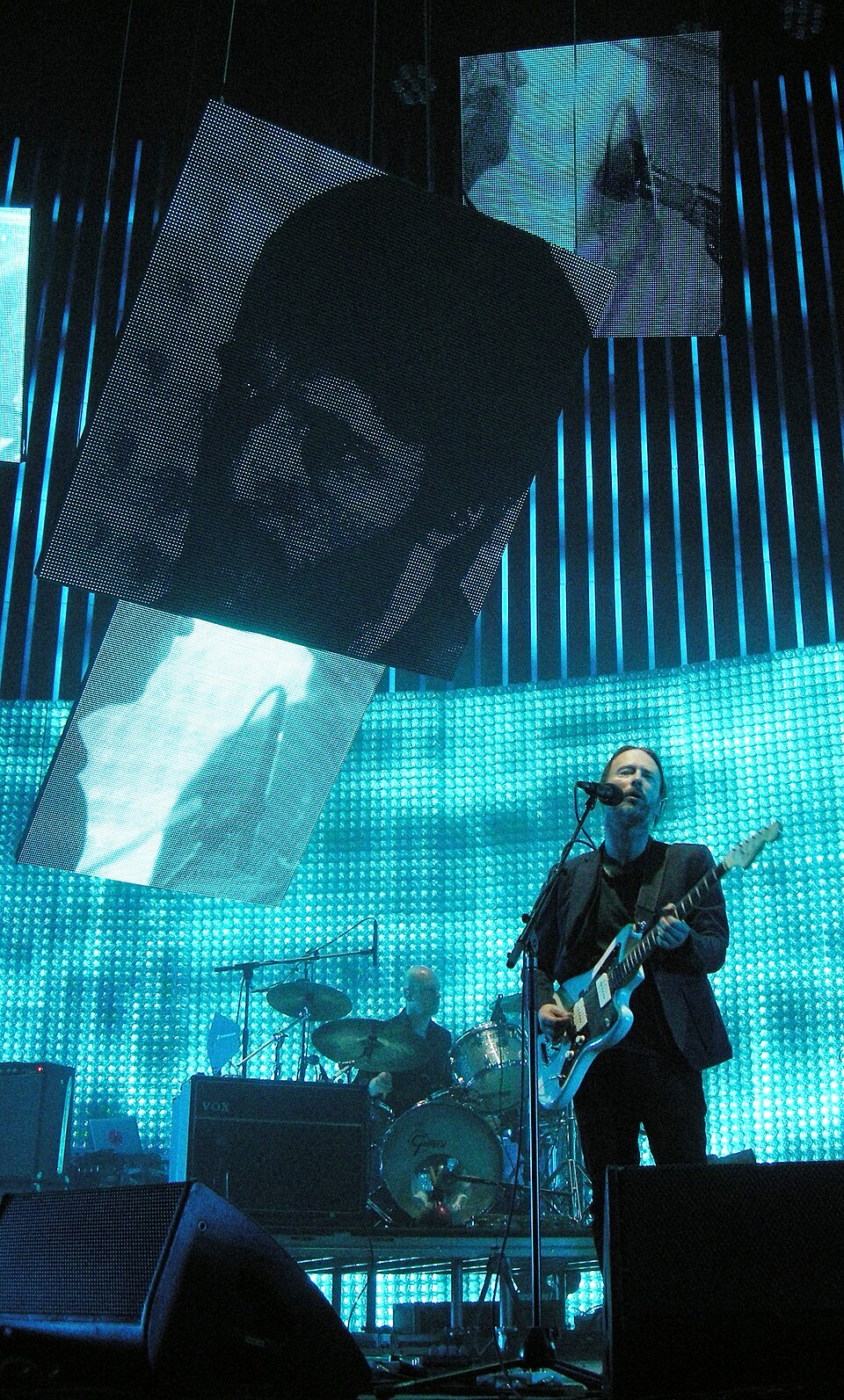
Each member recorded parts on his own, and the drums, bass and guitars on the record are all samples of that playing, cut up, looped and layered in a program Jonny Greenwood wrote himself. Chris DeVille at Stereogum reports that Jonny described it as a wonky, rubbish version of Ableton Live. Jonny told Rolling Stone they had wanted neither guitars and chord sequences nor a computer, but “a third thing, which involved playing and programming”.
O'Brien told NPR the first session ran about five weeks and was “really like kids in kindergarten”. Nobody could pile on ideas; everybody had to play less and listen to the others, which he said a band can forget how to do. Nothing was vetoed outright. An idea was tried, then judged against the track. Yorke wrote his melodies over the loops afterwards, compared the cutting-down to editing a film and called the whole method a big gamble.
photo
Photo: Ian T. McFarland from Los Angeles, USA · CC BY-SA 2.0 · Wikimedia Commons.jpg)
jan 2010
the hollywood hills
For three weeks in January 2010 the band worked in Los Angeles, in a house in the Hollywood Hills that the engineer Bryan Cook had turned into a studio. Godrich, by one guest's account, chose the city to get away from the English winter. The band lay in the sun at first, until heavy rain drove them indoors to work.
That guest was Jia-Rui Cook, a Los Angeles Times writer, whose blog described the wrap party on Saturday 30 January: Priuses and Minis in the drive, Beck, Salma Hayek and Danger Mouse round a pool once used by Dean Martin's crowd, and Yorke running the music from an iPhone, skipping forward to the Rolling Stones. The post was taken down soon afterwards.
On Sunday 24 January they broke off to play a benefit for Oxfam's Haiti earthquake appeal at the Music Box at the Fonda. The tickets were auctioned, the night raised $572,754, and Yorke swore when he read out the figure. He told the crowd it had been “a very interesting way to break up recording”.
Bryan Cook is thanked on the sleeve for “additional assistance”. So, with “a big thank you very much indeed”, is Drew Barrymore, and the Guardian asked in March 2011 whether that meant the house had been hers. Ten years later DeVille wrote that it was.
photo
Photo: Ian T. McFarland from Los Angeles, USA · CC BY-SA 2.0 · Wikimedia Commons.jpg)
2010
weeks, not months
The album was close all year and never finished. In June O'Brien told Buxton the band were “in the heart of the record”, a few weeks from the end, and that it had to come out in 2010. In July Phil Selway said they had believed it done more than once, missed a string of deadlines and stopped until later in the summer.
In September Colin wrote in an essay for Index on Censorship that they had “just finished another group of songs” and were wondering how to release them. A week later Selway told the Canadian Press that when the band met again that Monday they might throw the lot out and go back to the drawing board. In November an Italian interview had Jonny saying the album was nearly done and a big tour would follow. He corrected it on Dead Air Space: they were still in the studio, nobody had thought about touring, and “the plan is to have no plan”.
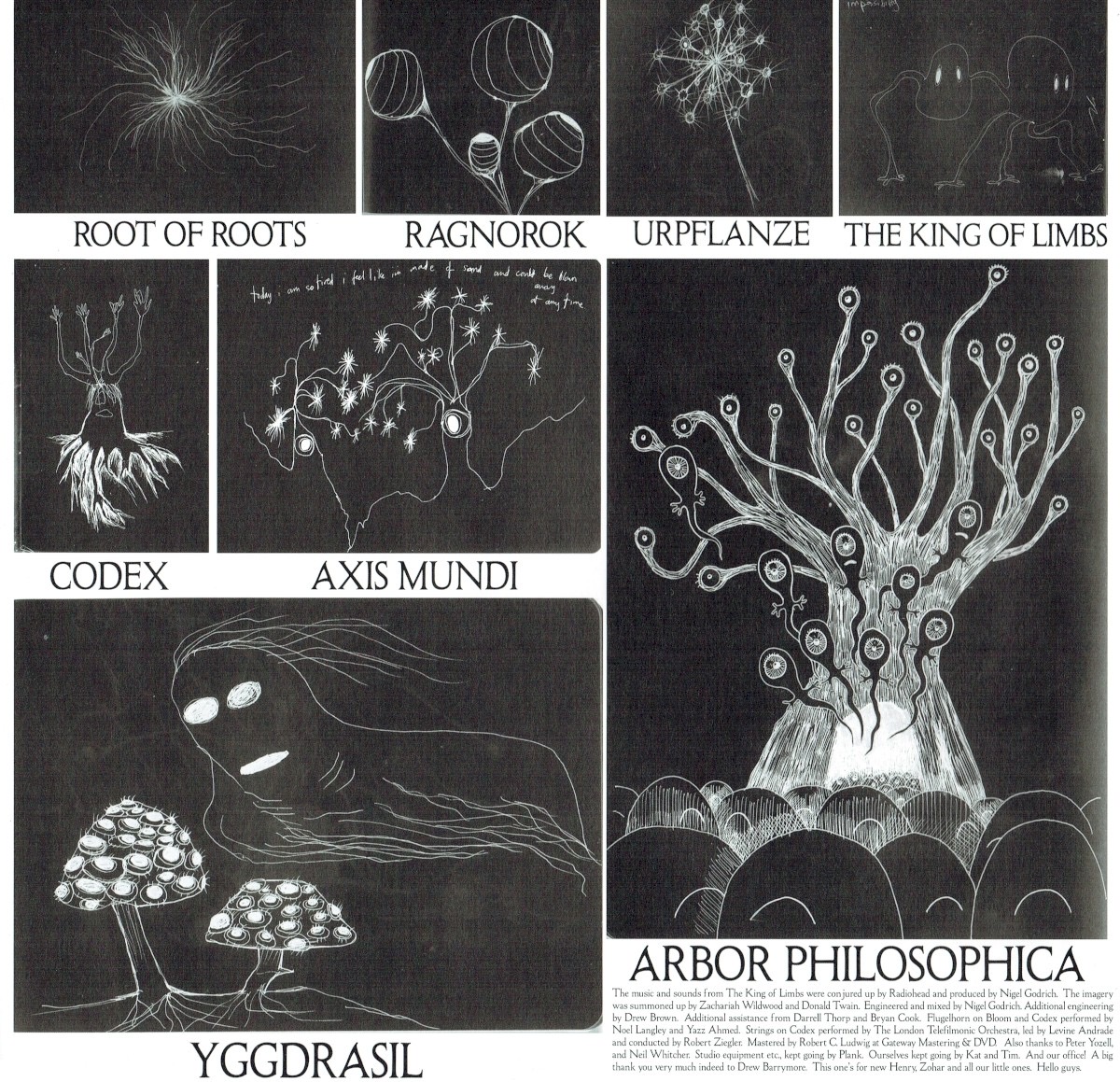
Work ended in January 2011. Godrich engineered and mixed it, with Drew Brown on additional engineering and Darrell Thorp beside Bryan Cook on assistance, and Bob Ludwig mastered it at Gateway. The credits are written in the band's own register: the music “conjured up by Radiohead”, the studio equipment “kept going by Plank”, and a last line for the members' children, “Hello guys.”
photo
Photo: Javier Mejia Garcia · CC BY-SA 3.0 · Wikimedia Commons.jpeg)
the sleeve
painted over
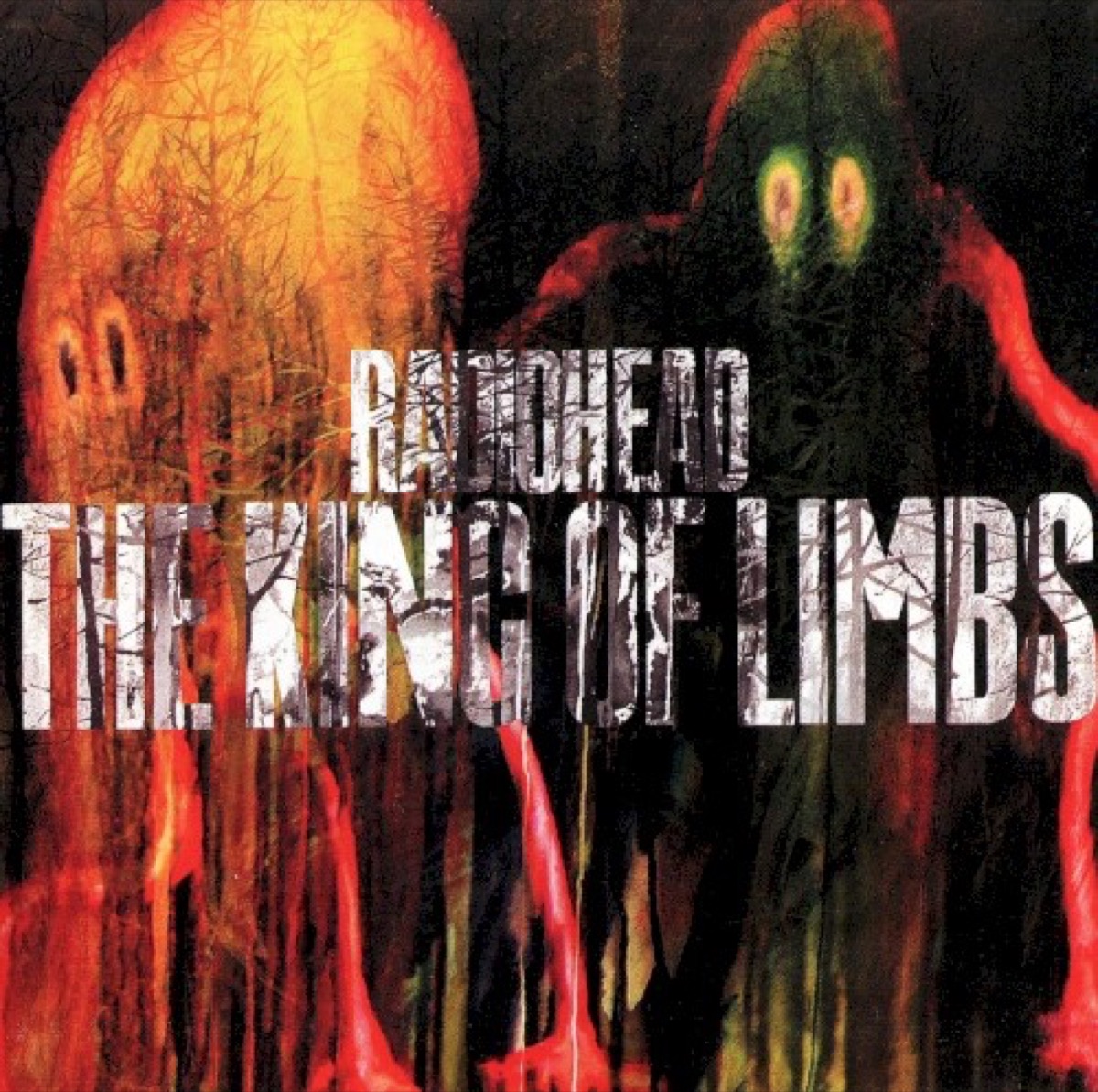
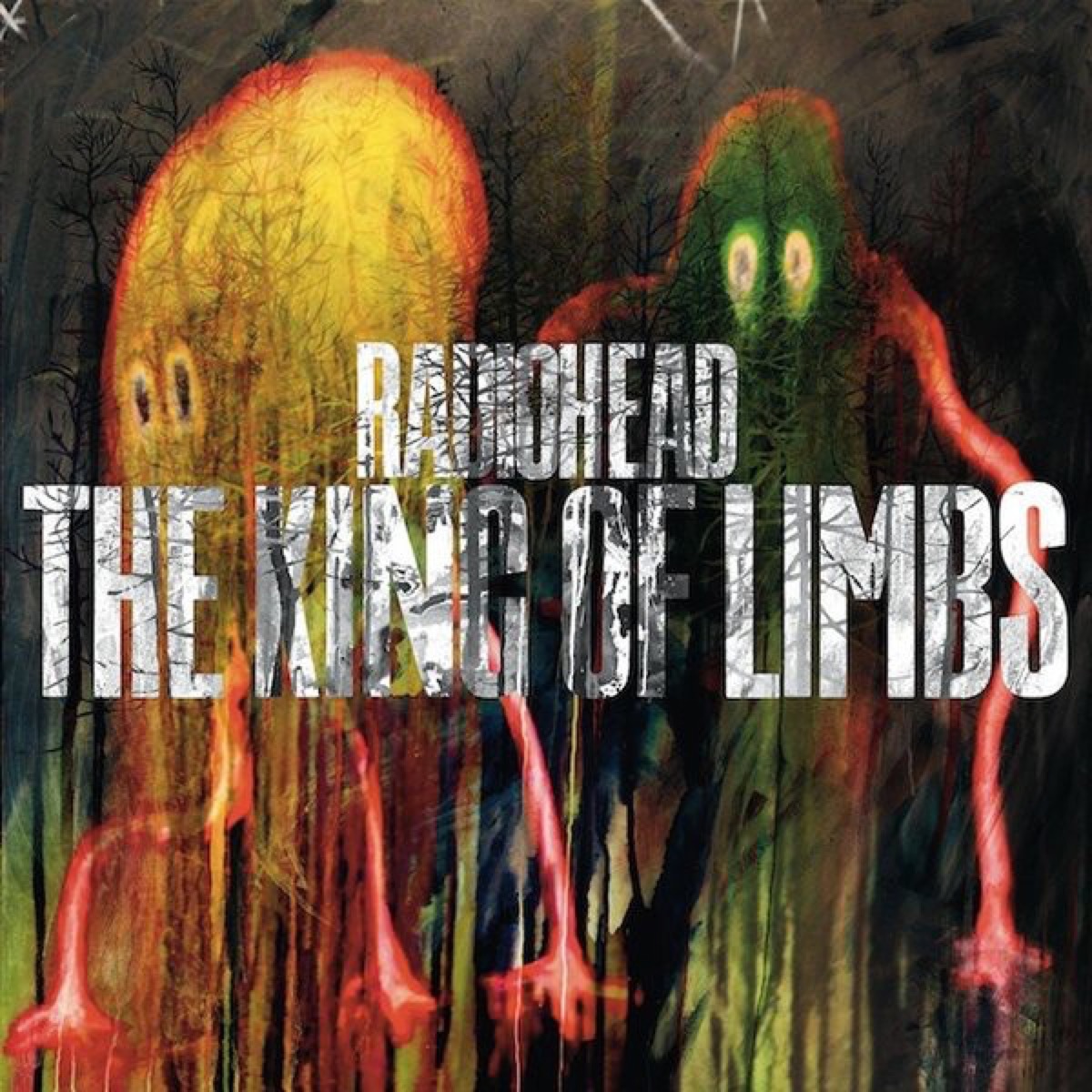
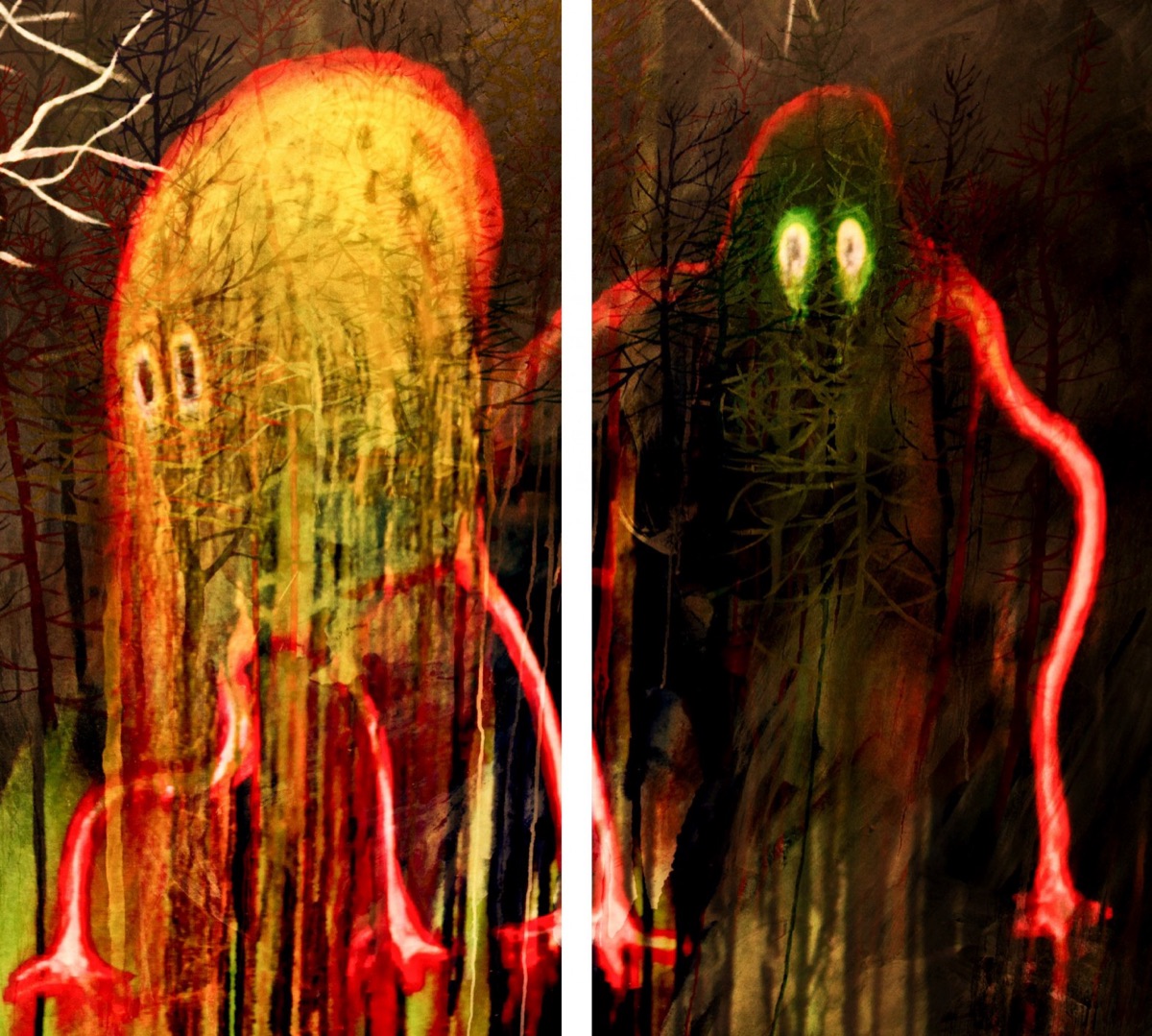
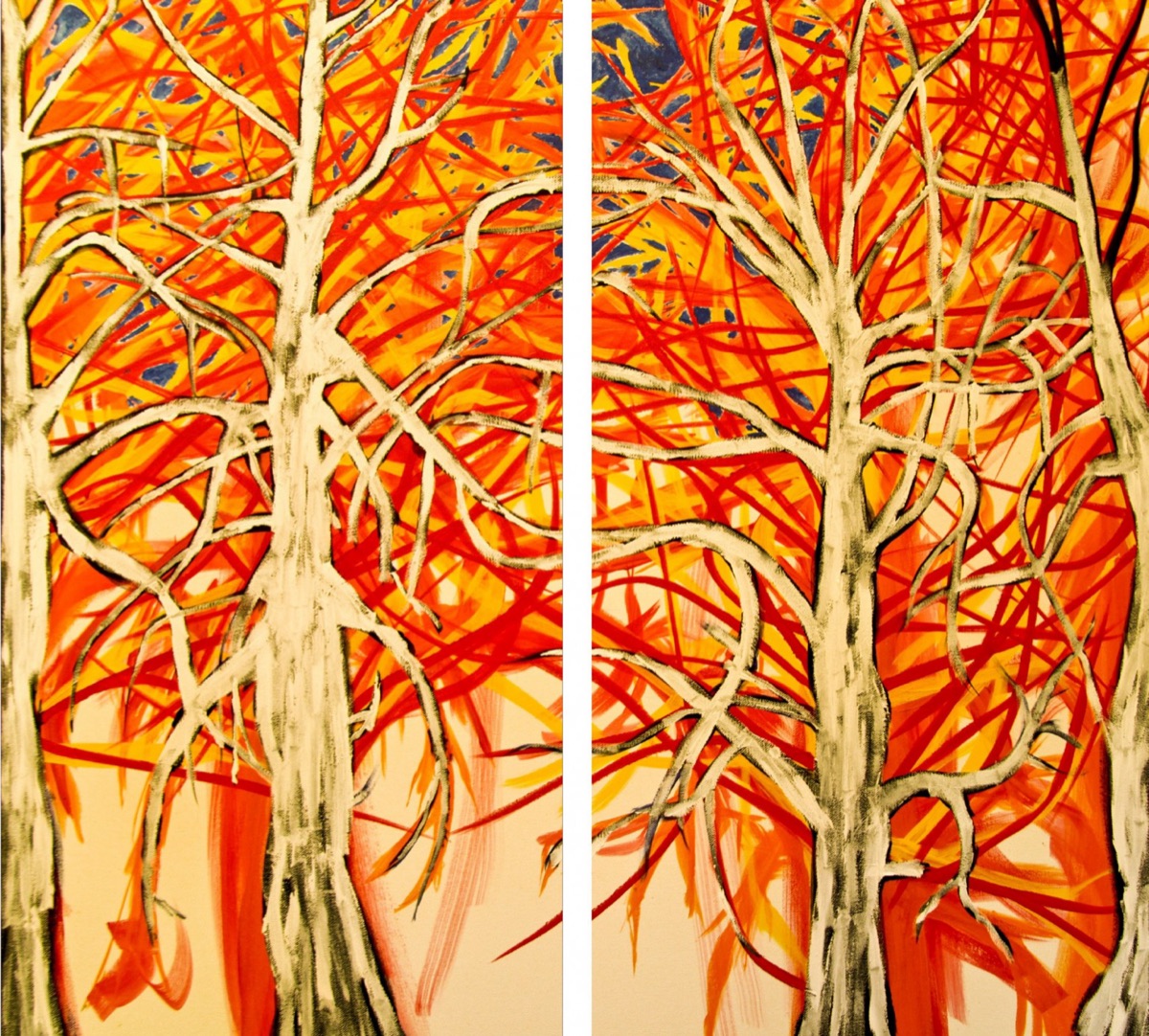
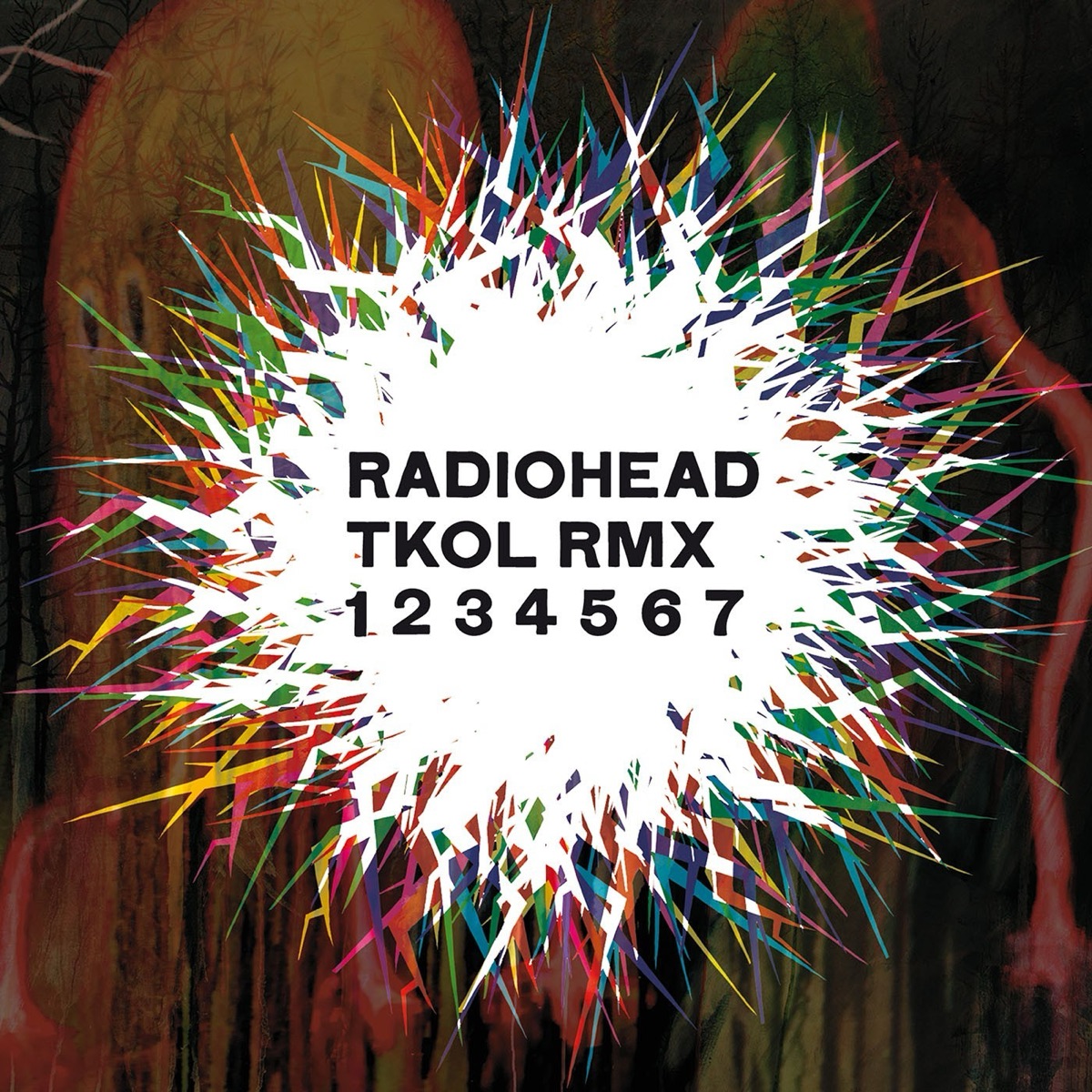
Stanley Donwood works next to the band while they record, and his first idea for this one was portraits. He started oil paintings of the five in the blurred, photographic manner of Gerhard Richter, and told NME in 2013 that he had never painted in oils and was not Gerhard Richter, so they were “just a series of painted disasters”. When he heard an early draft of the music it made him think of forests, and he painted coloured trees over the portraits. Asked which member was underneath the cover, he could not remember.
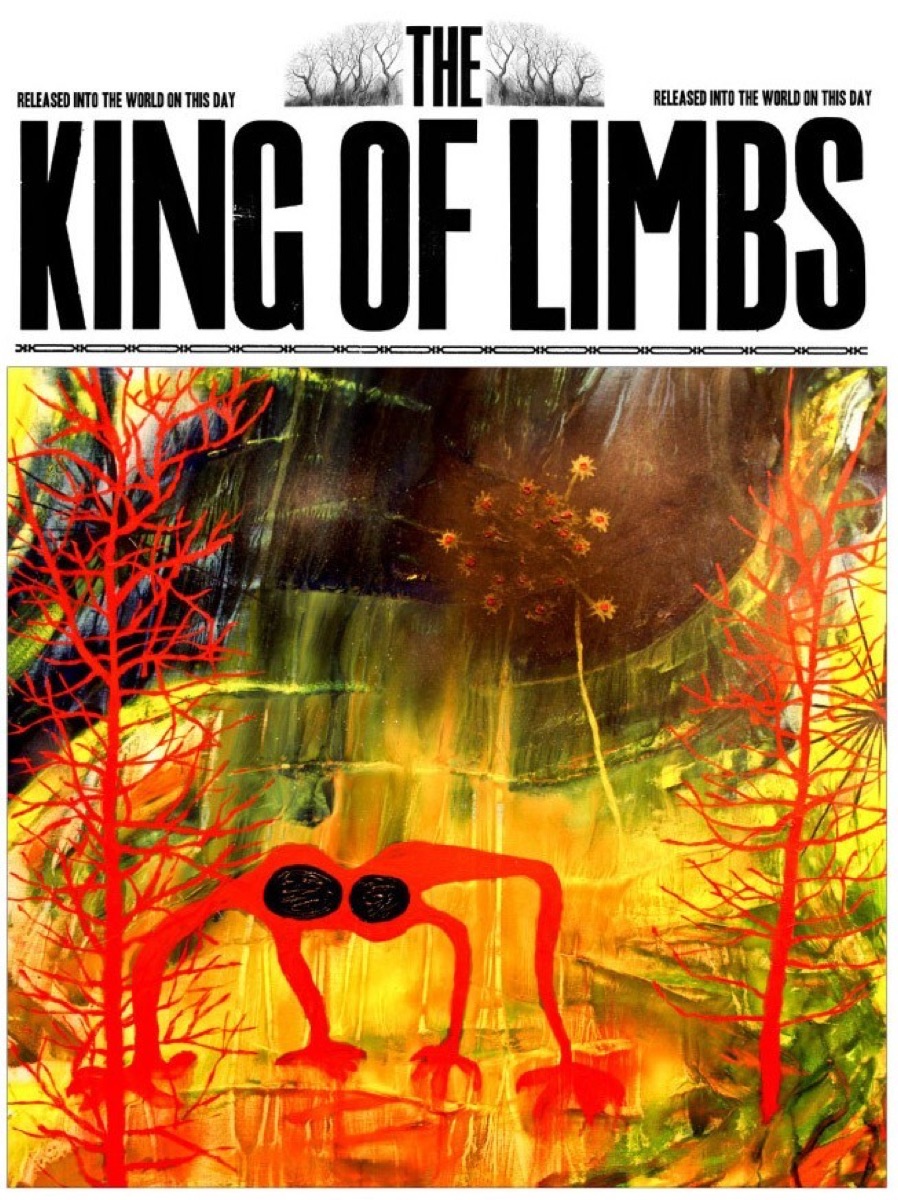
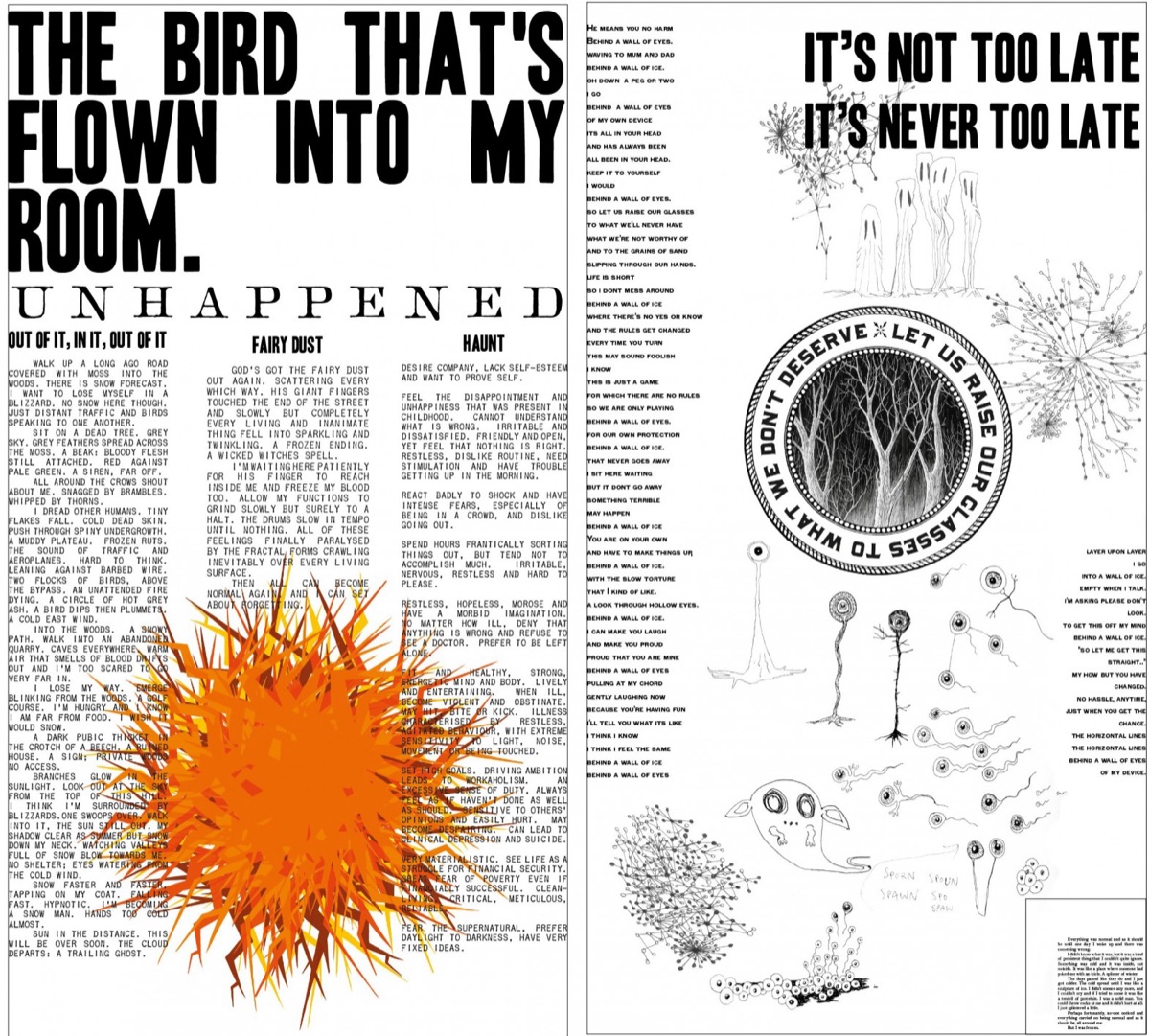
He told Jon Severs of PrintWeek that the shufflings and bangings he heard in the studio became somewhere he could almost step inside, and reminded him of old church ceilings painted with colours that arch and twist into one another. The sleeve credits the pictures to Zachariah Wildwood and Donald Twain, the names he and Yorke took for this record; Wildwood, Elephant reported in 2020, came off a gravestone somewhere in Sheffield. The inside of the CD fold names eight trees beside its drawings, from Yggdrasil and “Ragnorok” out of Norse myth to Goethe's Urpflanze, with “Codex” and “The King of Limbs” among them.
The CD itself is a card wallet printed in a single colour, which was the point. Donwood had hated CDs since his first sleeves for being so small.
If we could have made it any worse we would have done.
stanley donwood · printweek, via pitchfork, 1 may 2011
The care went into the special edition, sold as the first “newspaper album”: two clear 10-inch records, a CD, big sheets of artwork and 625 small pieces, wrapped in coloured oxo-degradable plastic. Donwood wanted something “almost not existing”, against the In Rainbows box, which he said was heavy enough to kill someone with. He had left a newspaper in the sun and watched it yellow and fall apart, and someone had left a pile of late-1960s International Times and Oz at Colin's house in the country. The typefaces came from American newspapers of the 1930s depression, gathered by the H. P. Lovecraft Historical Society. One sheet was more than a hundred tiny squares printed on blotting paper, of the kind that once carried LSD; he said he did not think that had been done as a marketing ploy before.
The package was up for a Grammy at the 2012 awards. The art directors on the nomination are Donald Twain and Zachariah Wildwood.
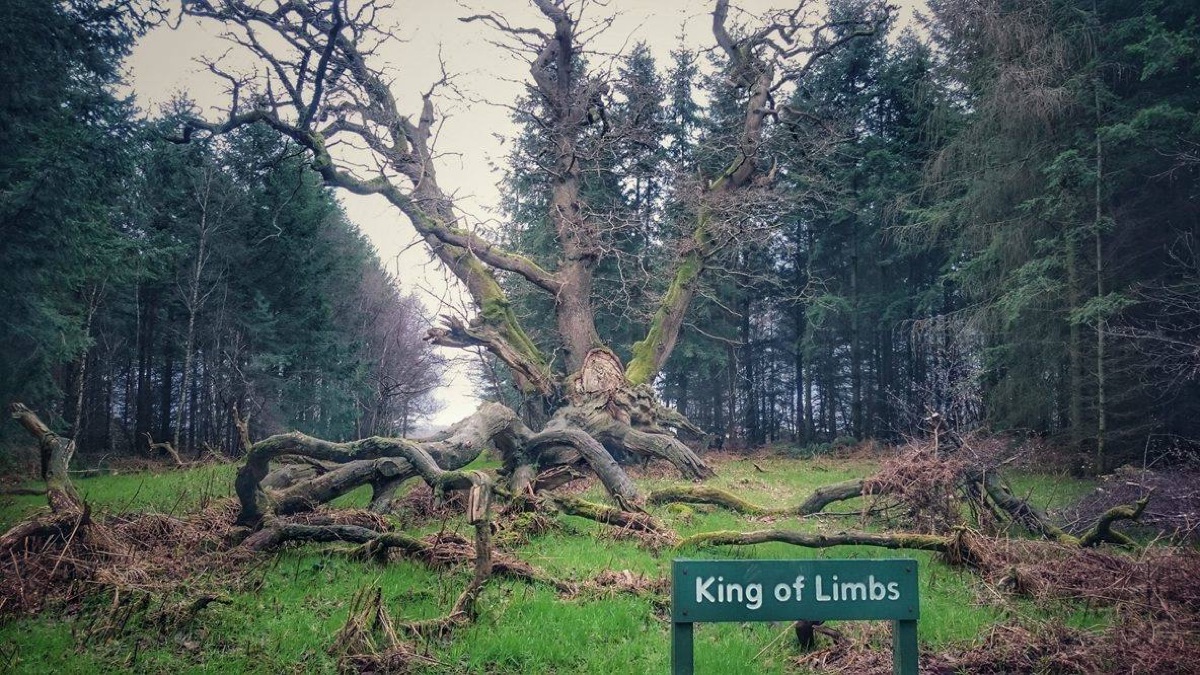
The title is a tree too, the King of Limbs, an old oak in Savernake Forest in Wiltshire, a few miles from Tottenham House, where part of In Rainbows was recorded. O'Brien, as DeVille quotes him, offered another reading, “Rhythm is the king of limbs!”
14–18 feb 2011
five days' notice
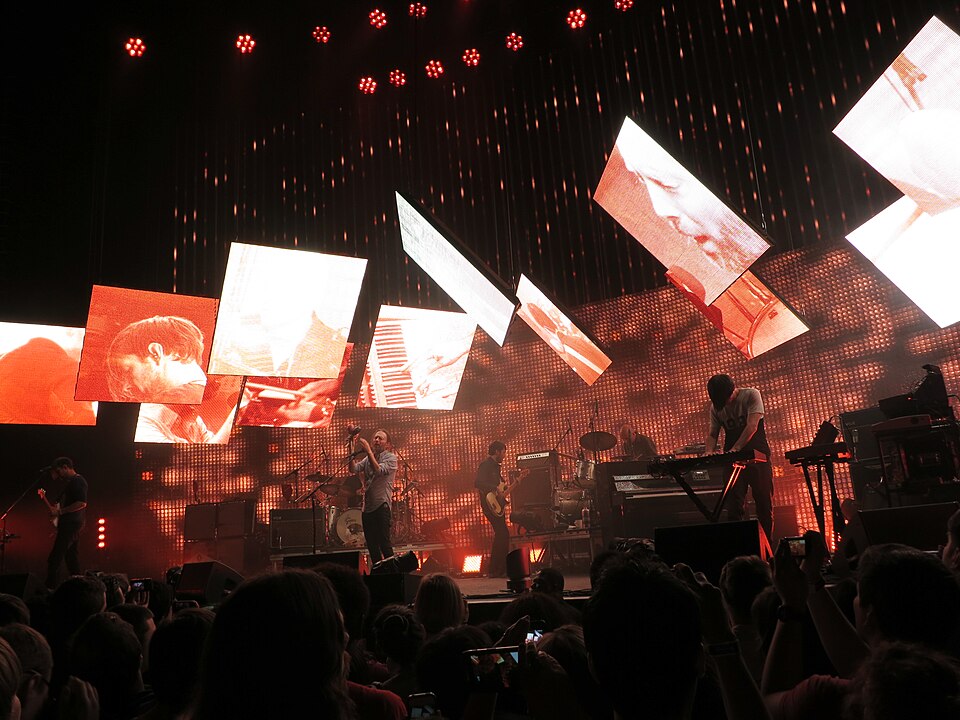
Radiohead announced The King of Limbs on Monday 14 February 2011, with orders taken at thekingoflimbs.com and the download due that Saturday. It went out under Ticker Tape, the company the band set up to release it, with XL Recordings, TBD in North America and Hostess in Japan lined up for the shops, as for In Rainbows. This time the price was fixed: £6 for MP3s, £9 for WAV files, and £30 or £33 for the newspaper album, due to ship on 9 May. Nobody had a tracklist until a Japanese pre-order page put the album at eight songs and was quickly changed.
It came out on Friday 18 February instead. XL's email said that with everything ready on the website the band had decided not to wait, and O'Brien posted “It's Friday… It's almost the weekend… It's a full moon…” on Dead Air Space. The download site buckled, the Guardian's live blog was still waiting for its copy at 10.23, and the “Lotus Flower” video went up on YouTube the same morning. An event planned for Hachiko Square in Shibuya, Tokyo, was called off over security worries.
There were no interviews, no shows and no publicity. When NPR finally asked why, in October, Yorke said “we didn't want to explain it” and O'Brien said “we didn't feel like it”.
photo
Photo: haiderzs · CC BY 2.0 · Wikimedia Commons
28 mar 2011
the universal sigh
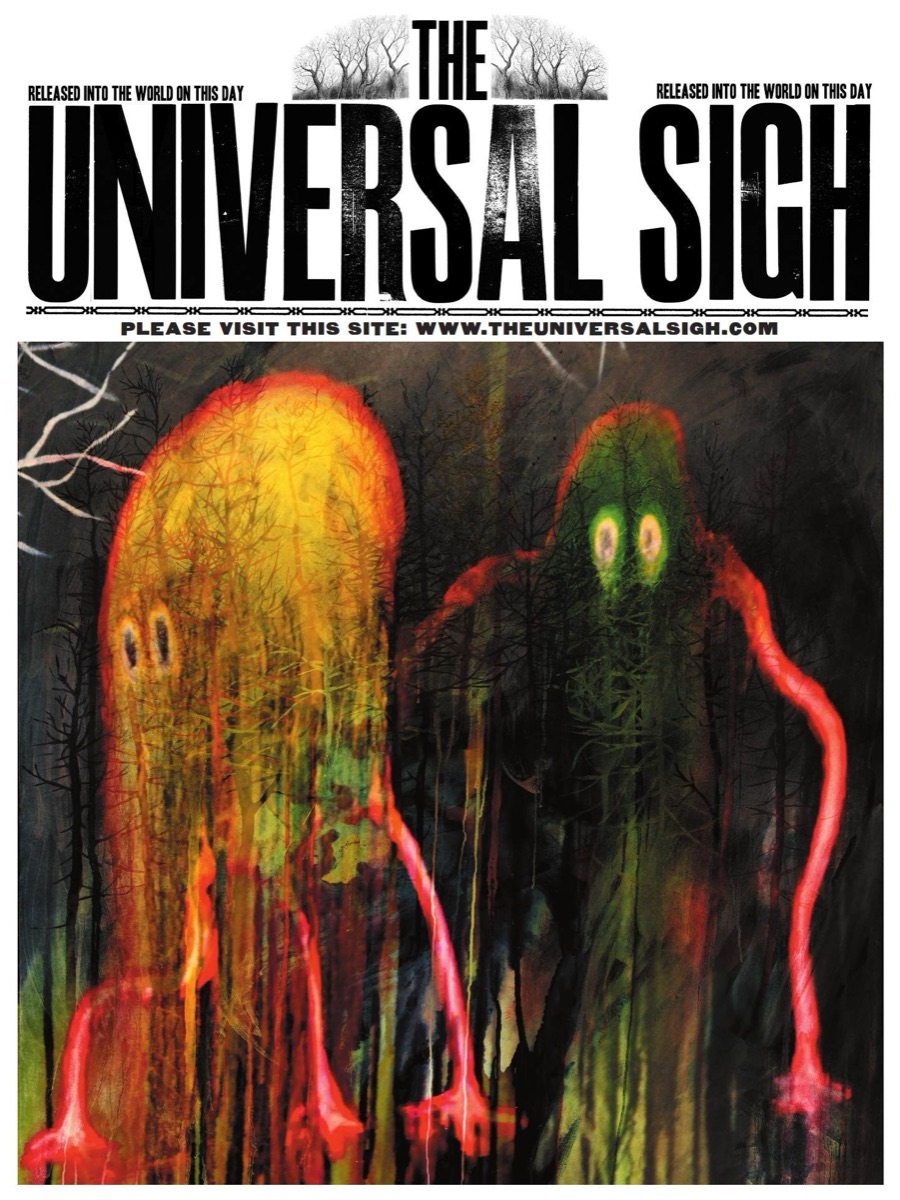
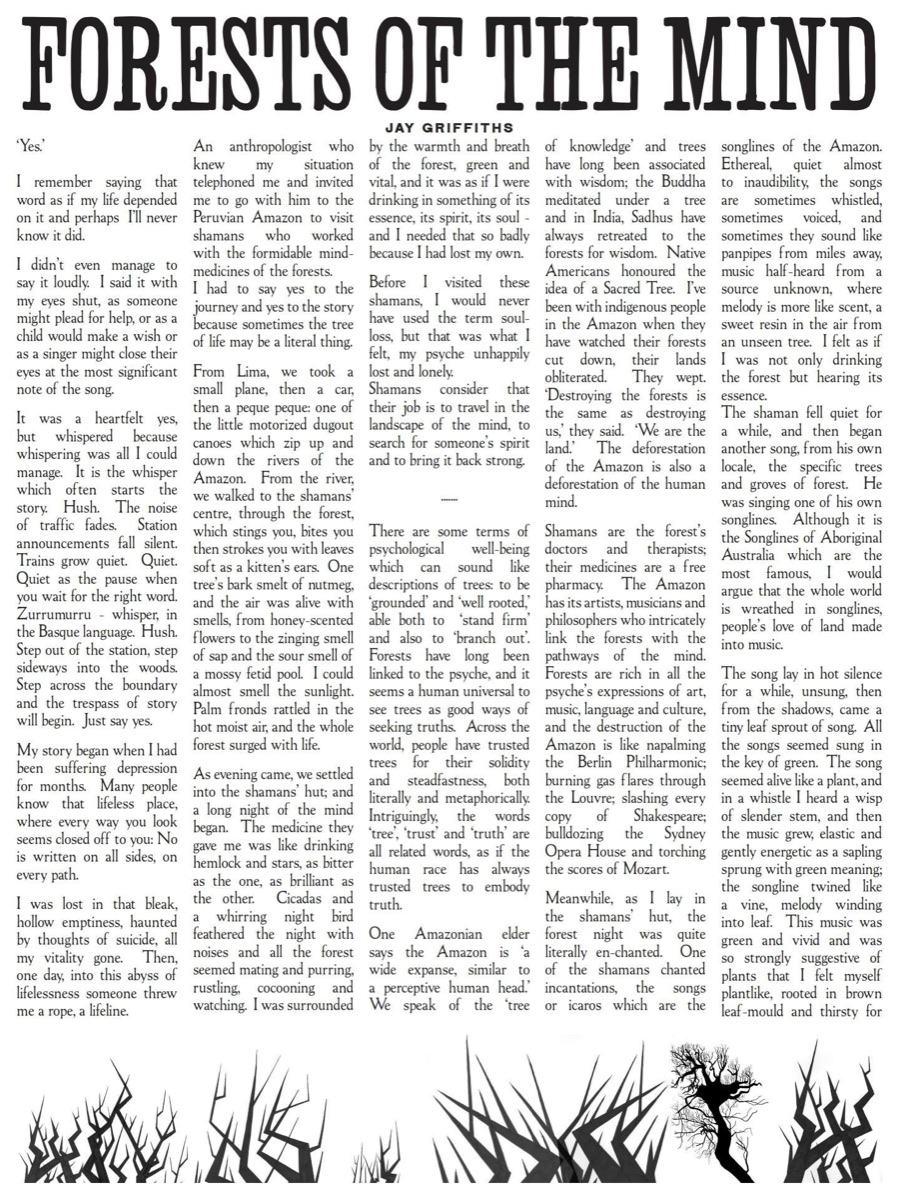
The CD and 12-inch reached shops on 28 March, and the band marked the day with a newspaper of their own. The Universal Sigh was 12 pages, free, and handed out from midday by what their website called “newspaper delivery people”, in cities in more than twenty countries, “until we run out!” It carried the band's words and drawings with new writing by Robert Macfarlane and Jay Griffiths, who said she had been given almost no instructions beyond the subject.
The London stall was on Dray Walk, outside Rough Trade East, and two of the vendors were Yorke and Donwood. Remi Graves, queuing for Cherwell, reckoned about fifteen minutes went by before word got round who was handing out the papers. In November 2025 W.A.S.T.E. remade the paper as a sewn zine.
The newspaper albums began reaching buyers in early May. The novelist Ian Rankin's did not. He had paid £30 in February. After weeks of automated replies and no answer from the band's Twitter accounts, The Quietus found out for him that it had been signed for at 3.05pm on 9 May, and the courier's subcontractor gave him the name of the person who signed, Macrury.
When I sought Macrury, Macrury wasn't there.
ian rankin · the quietus, 8 june 2011

photo
Photo: anyonlinyr · CC BY 2.0 · Wikimedia Commons
2011
divisive
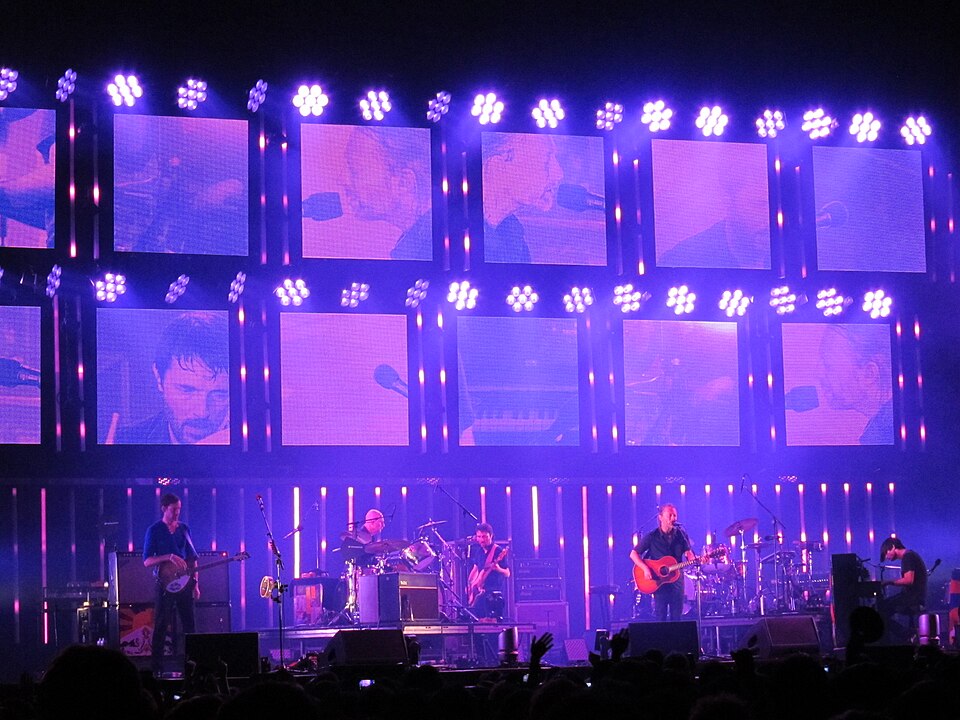
The retail edition went in at number seven in Britain, the first Radiohead album since The Bends to miss the top and the end of a run of five number ones. In America it entered the Billboard 200 at six with 69,000 copies and climbed to three the following week. On vinyl it was untouchable. It sold 20,771 copies in Britain in the first half of 2011, more than any other LP; the best-selling vinyl album of the same months a year earlier, Paul Weller's Wake Up the Nation, had sold 1,446.
By April 2012 it had sold 307,000 copies in American shops, the band's first album not to go gold there, and their manager Bryce Edge said some fans simply had not known it was out. The 300,000 to 400,000 downloads sold from the band's own site were in no chart at all.
Financially, it was probably the most successful record they've ever made, or pretty close. -- chris hufford · rolling stone, 26 april 2012 The reviews were good and puzzled. Mark Pytlik gave it 7.9 in Pitchfork and predicted it would go down as the band's most divisive record. Alexis Petridis in the Guardian heard Bowie's Low in its shape, the experiments and the songs in separate halves, except with the hard part first. Andy Gill in the Independent heard dubstep crossed with the composer Nico Muhly, and Robert Christgau, who gave it two stars, found it more fun than Brian Eno's records of the moment. Metacritic averaged its reviews at 80. The Guardian put it 27th among the albums of the year, and it was up for five Grammys and won none of them.
Yorke saw the cost of the surprise. A few months after the release a friend, Phil Costello, once of Capitol, told him the record was “gone, just gone”, and Yorke told David Fricke that putting it out that way had been amazing, “but then it didn't feel like it really existed.”
photo
Photo: kudumomo · CC BY 2.0 · Wikimedia Commons
2011–12
two drummers
They did not tour it at first. Jonny said they thought it might not be playable, and Yorke wanted to go straight back into the studio. Selway brought in Clive Deamer, who had drummed with Portishead and Get the Blessing, and early in 2011 the two of them took the loops apart to see which drum parts two people could play.
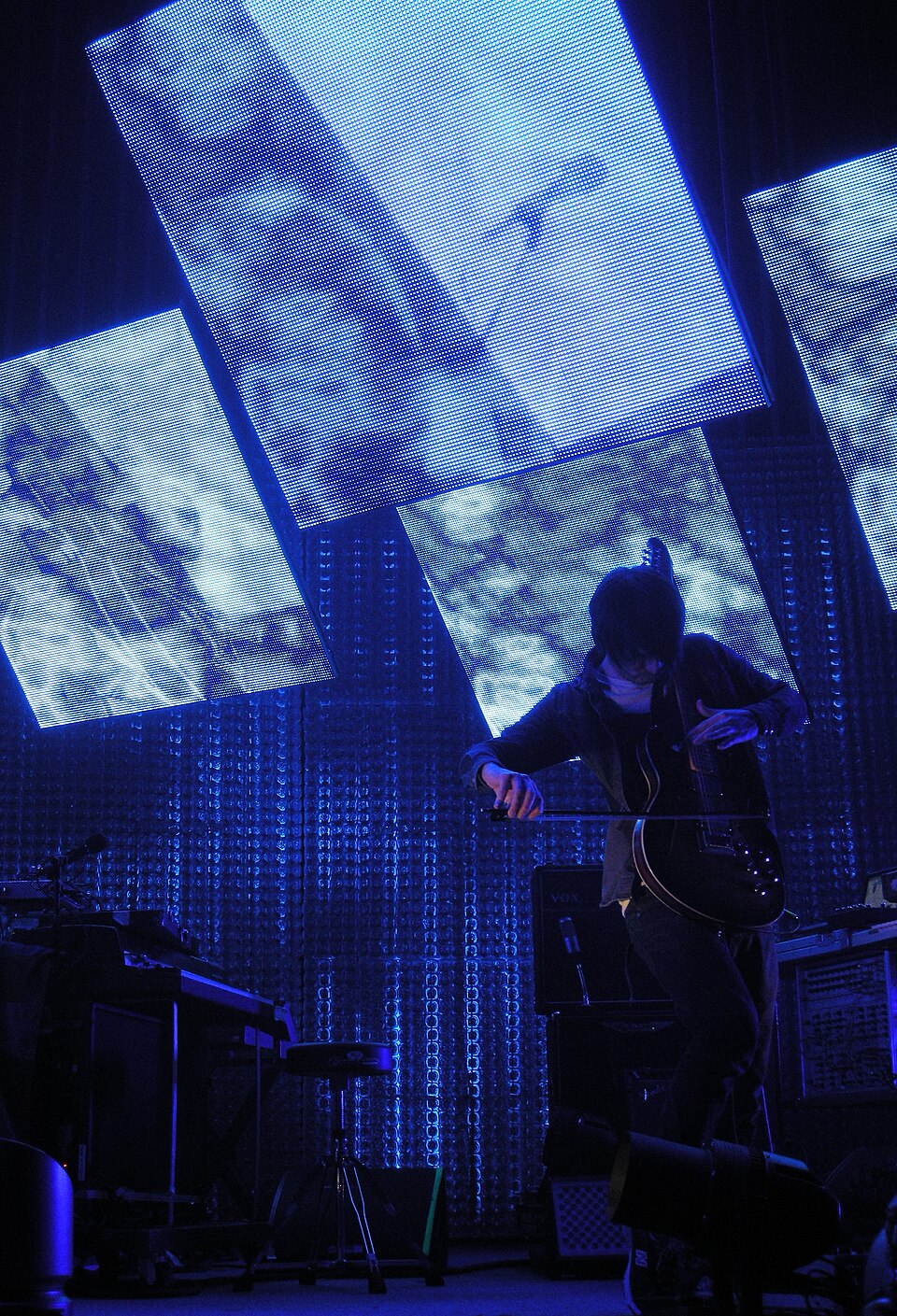
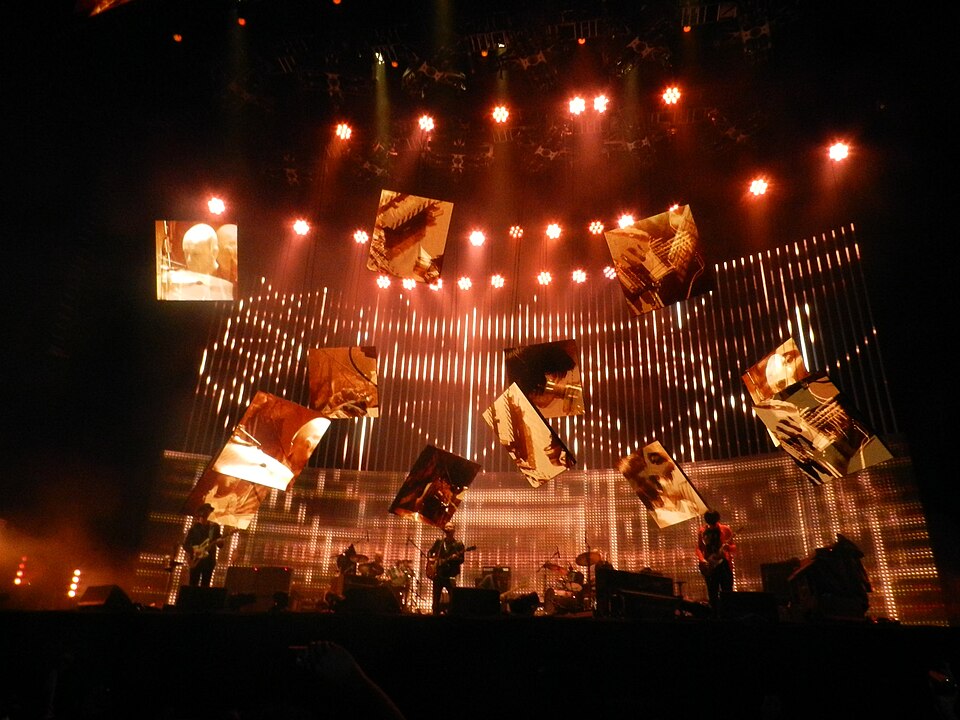
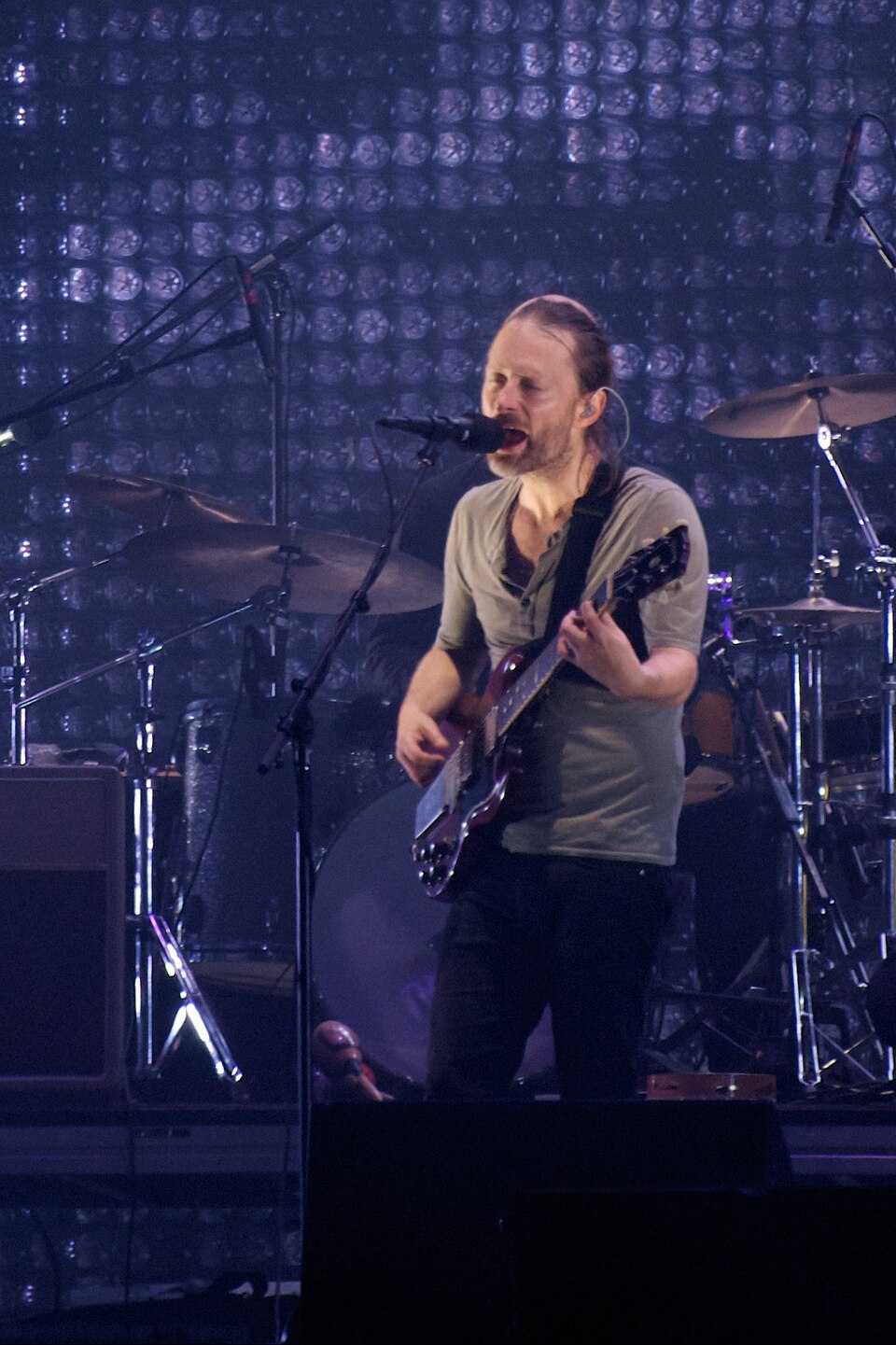
The six-piece's first show was a set on Glastonbury's Park stage on 24 June 2011, confirmed only that morning. A week later, on 1 July at Maida Vale, they played the whole album for Godrich's From the Basement, with “The Daily Mail”, “Staircase” and “Supercollider” added, and BBC Worldwide sold the film round the world. It is the best case anyone has made for these songs, six people playing by hand loops that were never meant to be played. “Supercollider” and “The Butcher” had already come out for Record Store Day. From July a run of remix 12-inches by Caribou, Four Tet, Jamie xx and others went out, gathered as TKOL RMX 1234567 in October. Digital Spy put the delay to one of them down to the fire at Sony's warehouse in Enfield during the August riots. September was New York: the season premiere of Saturday Night Live, an hour of The Colbert Report and two nights at the Roseland Ballroom.
The world tour opened in Miami on 27 February 2012. It was stopped in June, when the stage collapsed before the show at Downsview Park in Toronto and killed the drum technician Scott Johnson, and it went on from Nîmes in July. O'Brien told Mexico's Reactor FM in 2012 that the record had taken them out of the dark place they had been in since OK Computer.
Once we released the album we felt like we were out of that tunnel.
ed o'brien · reactor fm, 2012
photo
Photo: Andrea Mancini · CC BY 2.0 · Wikimedia Commons
after
fifth, then forty-ninth
In February 2014 the band released PolyFauna, an app made with the studio Universal Everything out of the King of Limbs sessions and Donwood's sketchbooks; Yorke said it came from an interest in early computer-life experiments and the imagined creatures of the subconscious. XL reissued the LP in 2016.
At ten years old it was still the record people argued about. Chris DeVille at Stereogum opened his anniversary piece by calling it the band's most divisive album, and blamed the running order, which piles the most difficult songs up front and saves the easiest for the end. Jordan Blum at Consequence wrote that it was not their greatest outing and was still a representative piece of the Radiohead puzzle.
Rolling Stone, which had named it the fifth best album of 2011, put it 49th on a list of the 50 most disappointing albums ever made in October 2024, and added in the same entry that it is “friggin' great”.
on film
The case for their most divisive record.· Poetic Waxwatch on youtube →
videos(8)
the sleeve
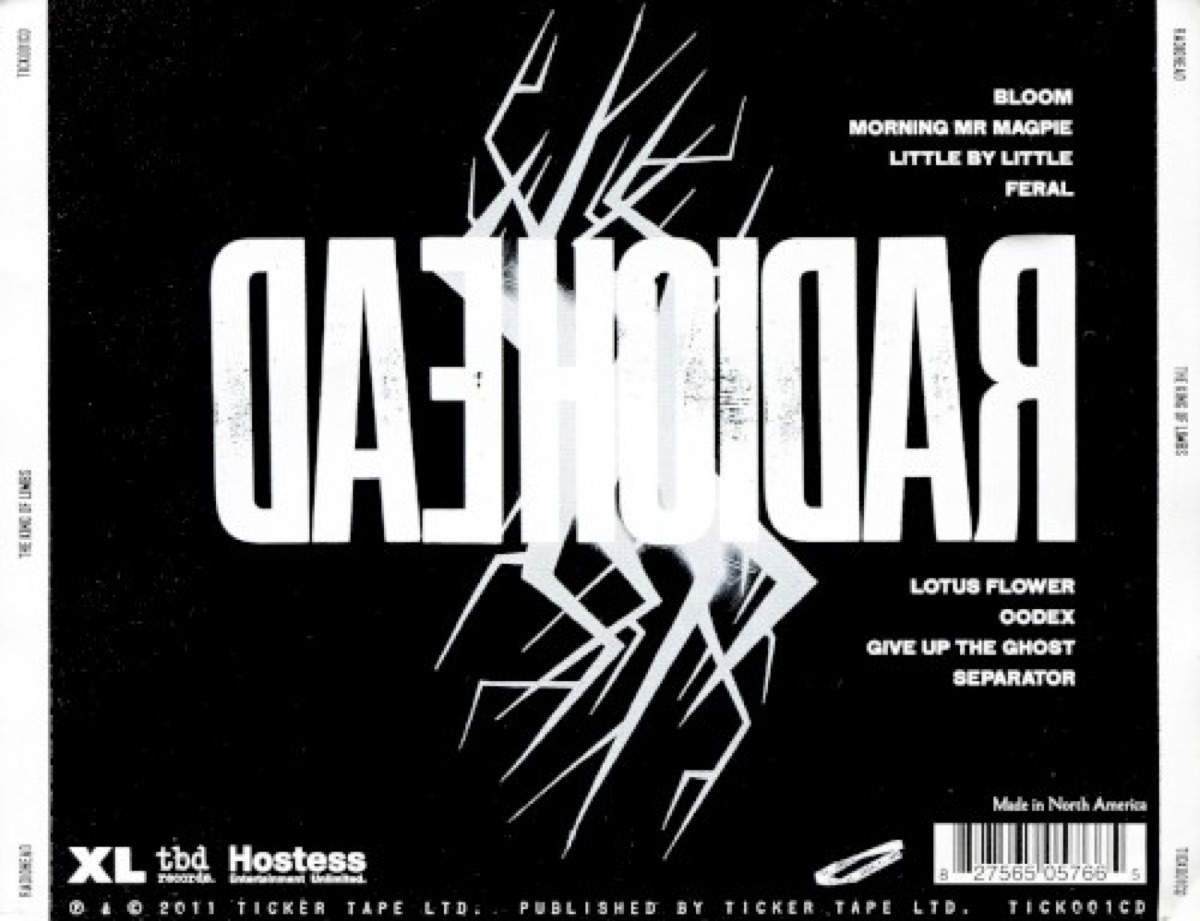
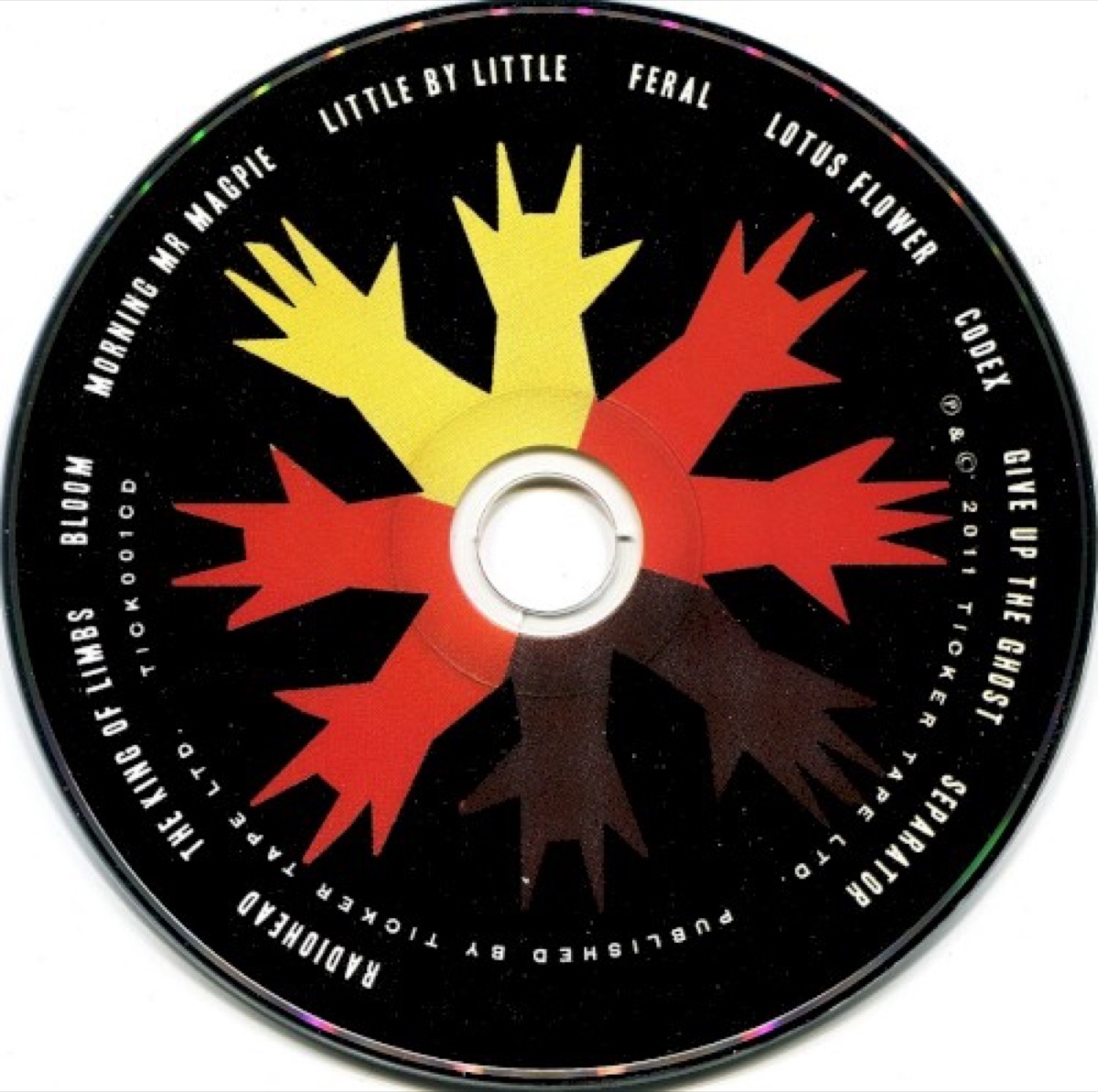
the booklet (2)
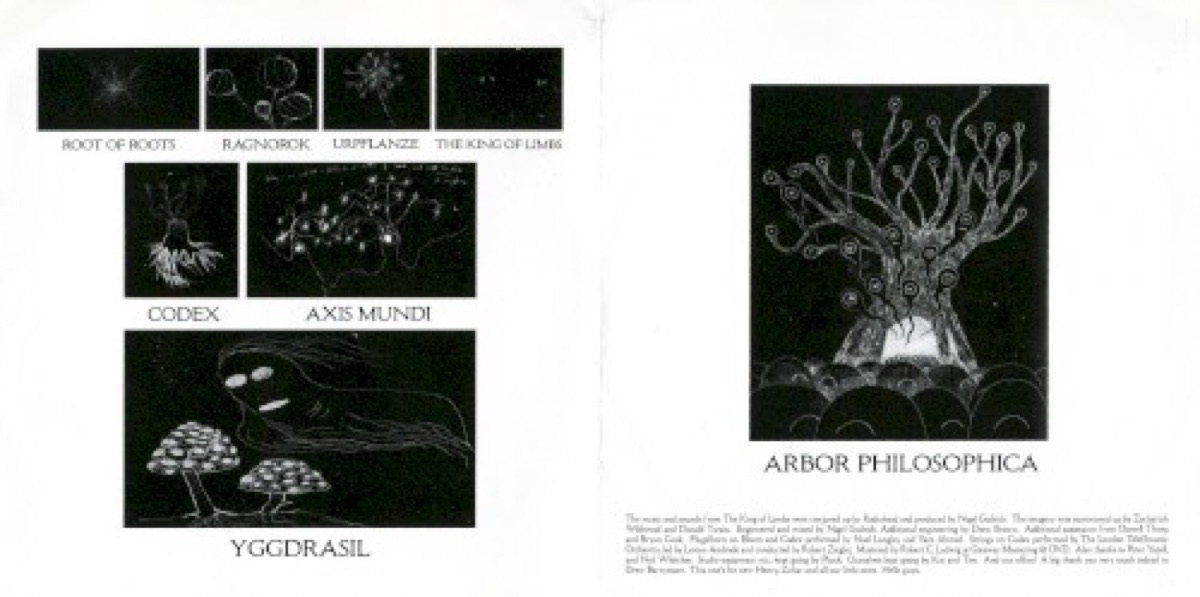
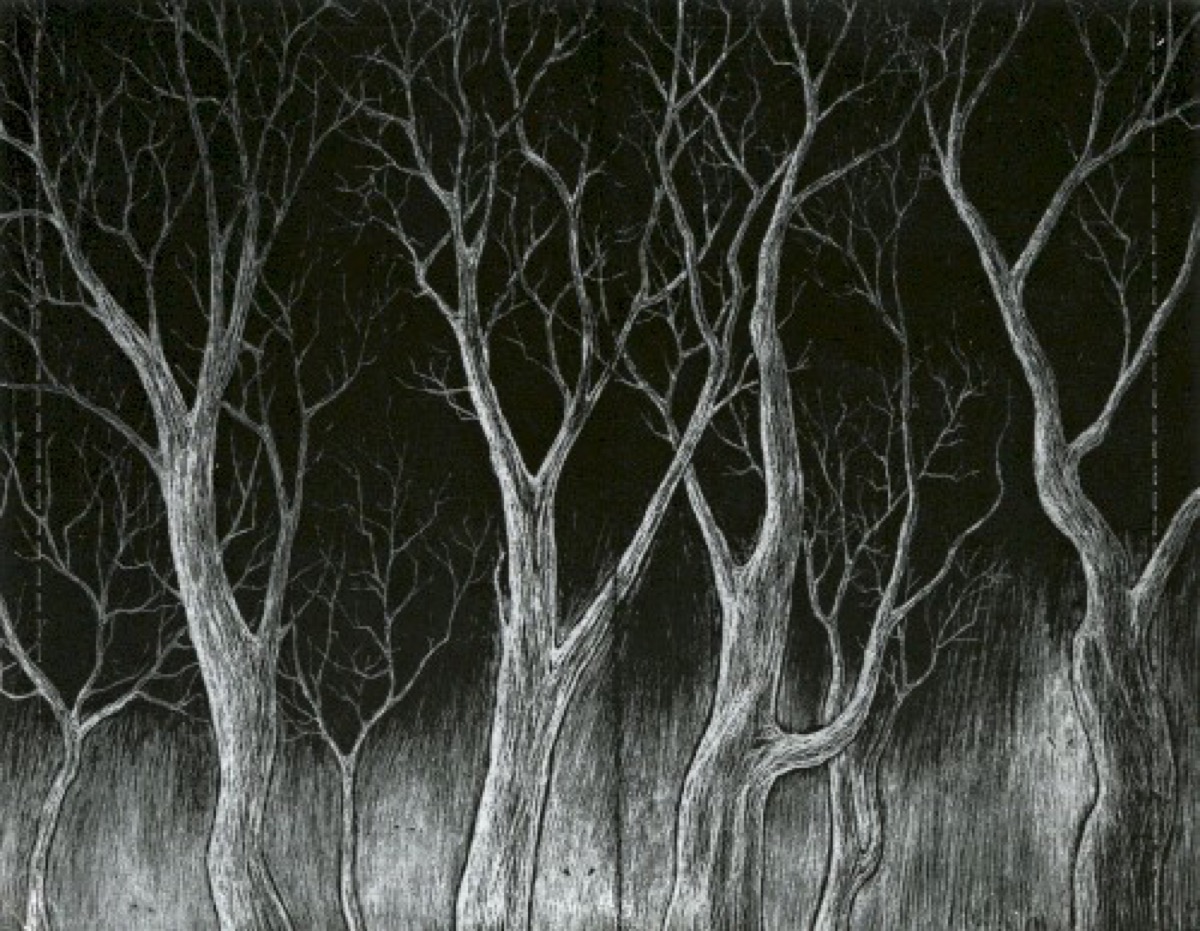
the art and the editions



the press
the press release
from XL Recordings
dated 18 feb 2011
With everything ready on their website, the band decided to bring forward the release by a day rather than wait until the planned date of Saturday, Feb 19 to deliver the music.
the reviews
no mark
The Quietus
Ben Graham · 19 feb 2011
read it →a thing of beauty, it has something to say, and it works
4/5
The Independent
Andy Gill · 19 feb 2011
read it →sounds like the bastard offspring of dubstep and Nico Muhly
B+
The A.V. Club
Steven Hyden · 22 feb 2011
read it →the band has made its most subliminal record
no mark
Spin
Chris Martins · 22 feb 2011
read it →the throbbing current of Afrobeat that propels more than half the album
7.9
Pitchfork
Mark Pytlik · 24 feb 2011
read it →still likely to go down as Radiohead's most divisive record
4/5
The Guardian
Alexis Petridis · 24 feb 2011
read it →structured not unlike David Bowie's Low
4/5
Rolling Stone
Jon Dolan · 24 feb 2011
read it →Radiohead's funkiest record, and one of their most elusive
7/10
NME
Luke Lewis · 26 feb 2011
read it →a record to respect for its craft, rather than worship for its greatness
★★
Robert Christgau, Consumer Guide
Robert Christgau · 2011
read it →So much more fun than Eno these days
later
- looking backStereogum · Chris DeVille · 18 feb 2021the fussiest, most greyscale music of the band's careerread →
- looking backConsequence · Jordan Blum · 18 feb 2021a crucial and representative piece of the inimitable Radiohead puzzleread →
- on the listsThe Guardian, The best albums of 2011, no. 27 · Tim Jonze · 1 dec 2011read →
- on the listsRolling Stone, The 50 Most Disappointing Albums of All Time, no. 49 · Andy Greene · 11 oct 2024The King of Limbs is friggin' great.read →
sources22
- The sleeve notes of The King of Limbs, Ticker Tape, 2011 (scanned on MusicBrainz and the Cover Art Archive), for the credits, the thanks to Drew Barrymore and Bryan Cook, the pseudonyms and the eight trees.
- David Fricke, “Radiohead Reconnect”, Rolling Stone, 26 April 2012, for the May 2009 to January 2011 dates, the software, Jonny's “third thing”, the US sales, Edge and Hufford, Phil Costello and Yorke, why they did not tour, Deamer and Selway.
- Andy Greene, “19 Things We Learned Hanging Out With Radiohead”, Rolling Stone, 8 June 2017, for Godrich on DJing and the turntable experiment.
- Chris DeVille, “Radiohead's The King Of Limbs came out 10 years ago today”, Stereogum, 18 February 2021, for the “wonky, rubbish” software, the Barrymore house, O'Brien's “rhythm” line and the running order.
- NPR staff and Guy Raz, “Radiohead: Everything In Its Right Place”, All Things Considered, NPR, 6 October 2011, for the five-week first session and the kindergarten; Uncut's report of the same interview, 10 October 2011, for “we didn't want to explain it”.
- The news pages here: Colin Greenwood at the Great Escape, 18 May 2009 (The Quietus, Uncut, Spin); Godrich to The Quietus, 24 June 2009; O'Brien to NME, 9 October 2009; O'Brien on Dead Air Space, 21 December 2009; the Hollywood Hills sessions, 4 February 2010 (Clash, Digital Spy, from Jia-Rui Cook's blog); the Haiti benefit, 24 January 2010 (Clash, Spin, Beats Per Minute); O'Brien on 6 Music, 20 June 2010; Selway to EW, 20 July 2010; Colin in Index on Censorship, 17 September 2010; Selway to the Canadian Press, 24 September 2010; Jonny on Dead Air Space, 12 November 2010.
- Sean Michaels, “Did Radiohead record King of Limbs at Drew Barrymore's house?”, The Guardian, 23 March 2011, for the sleeve thanks and the speculation.
- Lucy Jones, “Stanley Donwood on the stories behind his Radiohead album covers”, NME, 27 September 2013, for the Richter portraits painted over with trees.
- Jon Severs, interview with Stanley Donwood, PrintWeek, republished in Ryan Dombal, “Take Cover: Radiohead, The King of Limbs”, Pitchfork, 1 May 2011, for the church ceilings, the CD board, the newspaper, the fonts and the blotting paper.
- Emily Gosling, “Stanley Donwood Reveals What it's Really Like Working With Radiohead for 25 Years”, Elephant, 25 March 2020, for the gravestone in Sheffield.
- Universal Everything, “Polyfauna”, for the app's origins; Wikipedia, “54th Annual Grammy Awards”, for the five nominations, the art directors named on the packaging nomination and the winners.
- The news pages here: the announcement, 14 February 2011 (the prices, the labels, the oak, the Japanese listing); the release a day early, 18 February 2011 (XL's statement via Beats Per Minute, O'Brien's post, the Guardian live blog, Tokyo); the Universal Sigh giveaway, 28 March 2011 (the band's statement via Digital Spy, Cherwell, DIY, and a fan's film of Yorke and Donwood at the stall); Jay Griffiths via Clash, 31 March 2011; the remix series and the Enfield fire, June to October 2011; Glastonbury, 24 June 2011; From the Basement, 3 May 2011.
- Ian Rankin, “F.O. Computer: Why Radiohead Are Radiodead To Me”, The Quietus, 8 June 2011, for the undelivered newspaper album.
- W.A.S.T.E. store listing, “TKOL Newspaper Zine: A Universal Sigh!”, 4 November 2025, for the zine.
- Official Charts Company, Radiohead artist page, for the UK peak; Keith Caulfield, Billboard, 6 and 13 April 2011, for the US entry at six and the climb to three.
- Drowned In Sound, 28 July 2011, reporting ERA and Official Charts Company figures, for the vinyl sales and Paul Weller; Wikipedia, “The King of Limbs”, for the run of five number ones and the PolyFauna app.
- Mark Pytlik, Pitchfork, 24 February 2011; Alexis Petridis, The Guardian, 24 February 2011; Andy Gill, The Independent, 19 February 2011; Robert Christgau, Consumer Guide, 2011; Metacritic, for the reviews.
- Rolling Stone, “The 50 Best Albums of 2011”, December 2011; Tim Jonze, “The best albums of 2011: 50–11”, The Guardian, 1 December 2011, for the year-end places.
- Ed O'Brien to Reactor FM, 2012, as quoted by Rob Laing, MusicRadar, 6 March 2024, for the tunnel.
- Jordan Blum, “The King of Limbs Remains a Crucial Piece of the Radiohead Puzzle”, Consequence, 18 February 2021, for the tenth-anniversary verdict.
- Andy Greene, “The 50 Most Disappointing Albums of All Time”, Rolling Stone, 11 October 2024, for the 49th place and the fifth best of 2011.
- MusicBrainz, The King of Limbs release group, for the 2016 XL reissue (XLLP78).