Radiohead studio album · Hail to the Thief era (2003–04)
Hail to the Thief
Most of it was taped in a fortnight in Hollywood; finishing it took the rest of the winter, and the band still argue about it.
the sessions
- 22 Jul 2002Coliseu dos Recreios, LisbonThe Iberian warm-up run opens on new songs
- 1 Sep 2002Ocean Way, HollywoodFirst day of the Los Angeles sessions with Nigel Godrich
- Oct 2002–Feb 2003Radiohead's studio, OxfordshireRedoing, adding to and mixing the Hollywood tracks
- 18 Dec 2002Radiohead's studio, OxfordshireChristmas webcast with three new songs
- 24 Mar 2003Capitol Records mailing listTitle, tracklist and June release announced
- 30 Mar 2003The internetUnmixed roughs leak ten weeks early
- 17 May 2003Olympia Theatre, DublinFirst night of the tour
- 9 Jun 2003Parlophone, UKReleased; straight in at number one
- 10 Jun 2003Capitol, USReleased; number three in its first week
2001–02
no big leap
Kid A and Amnesiac had come out of 18 months in the studio, built up and taken apart again. The sixth album was meant to be the opposite. Touring America in 2001, with the electronic songs played loud on guitars, had changed how the band heard themselves, and when they talked it over afterwards, Thom Yorke told David Fricke, they found they did not want “any big creative leap or statement”.
So they went back to an older order of work. Yorke made demos and gave them to the others on CD; the band learned the songs together, played them to audiences, and only then recorded them. Chuck Klosterman, who spent a day in 2003 going from room to room at the Old Parsonage hotel in Oxford to talk to all five, wrote the method down as theirs.
NME dated the start of the preparation to April 2002. Graeme Stewart, who had worked on Kid A and Amnesiac, engineered the first sessions, and May and June went on arranging and rehearsing. This site's own page for the album, written in 2003, kept a message-board post from Yorke, from the months when fans were guessing the title might be Are You Listening? or 2+2=5. His reply, in full: “K O R R e K T ! it isnt. it never was.”
jul–aug 2002
the songs go first
Before anything was recorded, the songs went on tour. In late July and early August 2002 Radiohead played Lisbon, Porto, San Sebastián and Salamanca and headlined a night at Benicàssim, with sets full of music nobody had heard. The 2003 version of this site listed 14 new songs and a remake of “Lift” from that run. Two on its list did not make the album: “Wicked Child”, which became a B-side of “Go to Sleep”, and “Up on the Ladder”, which waited five years for In Rainbows Disk 2.
All of this was in front of audiences eight months before the invasion of Iraq. Rolling Stone's review the following June still heard it as a record of the march to war, and Vue Weekly wrote that tension over the war hung over the Los Angeles sessions.
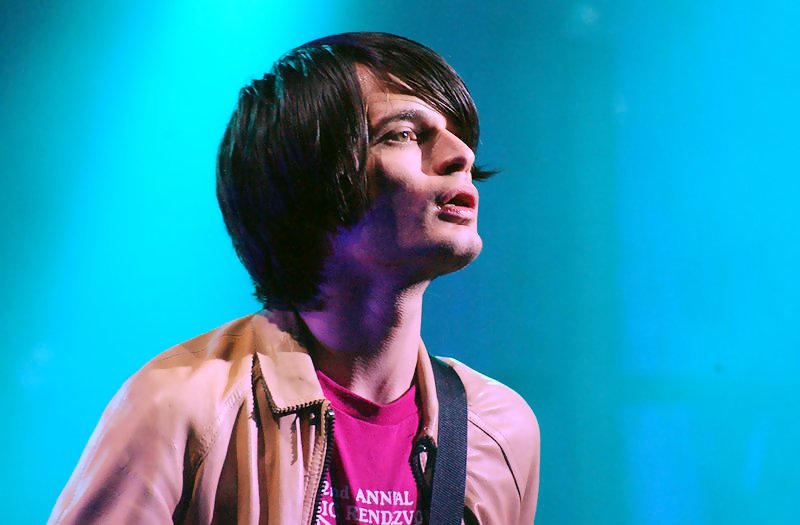
At Benicàssim Jonny Greenwood told NME where they were going next, and knew how it sounded. Los Angeles was not very “Radiohead”, he said, but they had made the last album somewhere cold in northern Europe because they thought that was who they were, and it turned out it was not.
photo
Photo: Zach Klein · CC BY 2.5 · Wikimedia Commons
sep 2002
a track a day at ocean way
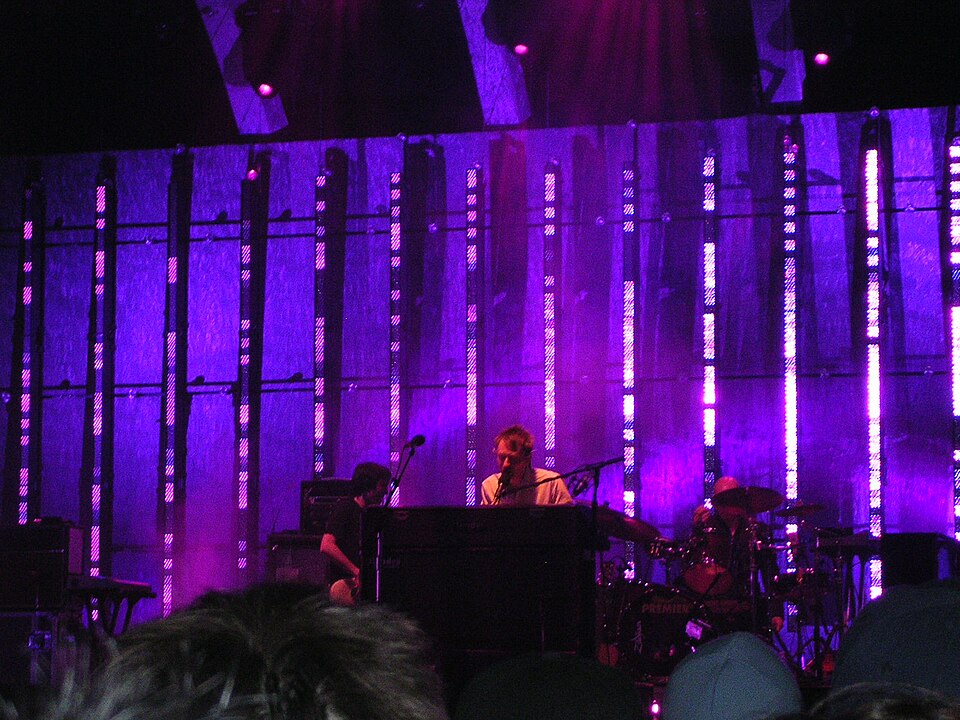
Ocean Way was Nigel Godrich's choice. He had made records there with Beck and wanted to get the band away from their usual rooms. Work started on 1 September, and that first day Jonny Greenwood posted on the band's message board while his brother put down a bass part behind him, “singing along like a loony”. A week in, his report was an instrument rota: glockenspiel all day, guitar the day before, kazoo booked for tomorrow.
The plan was a song a day, the five of them playing together, with most of the electronic parts recorded live in the room rather than added afterwards. Klosterman put the whole stay at two and a half weeks. By October Yorke was telling NME they had ten tracks that worked. Darrell Thorp engineered, and Stanley Donwood came out to Hollywood to paint; he and Yorke spent some of the time driving round Hollywood and Beverly Hills.
Godrich's clearest memory of the fortnight, ten years on, was Yorke saying, again and again, that he hated LA. Yorke's own account to Fricke was that they worked hard, went to some glamorous parties, and that the parties helped.
We don't have enough glamour in our lives. Too much news radio, not enough glamour.
thom yorke · rolling stone, 26 june 2003
oct 2002–feb 2003
the long finish
The rest happened at home, in the band's own studio in Oxfordshire. Some of the Los Angeles tracks were redone, new ones were started and others were added to. “There There” was the song they lost in Hollywood and found again at home. On 18 December they broke off to broadcast from the Oxford studio, three new songs and a Christmas cover, and Green Plastic reported that for part of it the faces on screen were George W. Bush and Saddam Hussein masks.
In January Phil Selway told NME they would have spent only eight weeks recording. That was the tracking. The mixing ran on into the new year, and so did the running order, first worked out halfway through by Selway and Ed O'Brien. Yorke told Fricke he had not been involved at the start, so the album's opening words were their pick: “you have to blame them”.
So we did a two week session and most of the meat and potatoes of the record in that time.
nigel godrich · nme, 7 june 2013
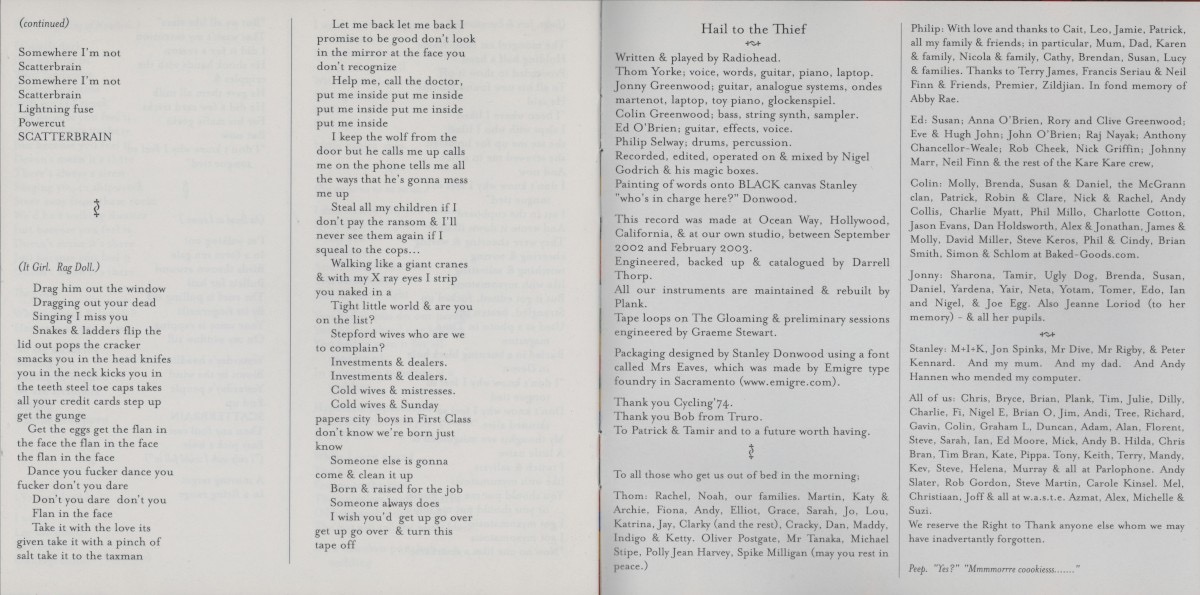
About a third of the finished album, Godrich reckoned, is the rough mixes from those Hollywood sessions. The sleeve dates the whole job September 2002 to February 2003, and its credits are a portrait of how it was made: recorded, edited, “operated on” and mixed by Godrich “& his magic boxes”, every instrument maintained and rebuilt by Plank, the tape loops on “The Gloaming” by Stewart. Among the thanks is one to Cycling '74, the company that makes Max, the software Jonny Greenwood used to cut up the band's playing.
Neither Yorke nor Selway remembers the end of it fondly. In 2025 Yorke said the recording had been good and the finishing and mixing “really hard and not fun at all”. Selway put it in fewer words.
We started quickly. Then it … had more requirements.
philip selway · uproxx, 23 february 2023
photo
Photo: Madchester at English Wikipedia · Public domain · Wikimedia Commons
2003
painting of words
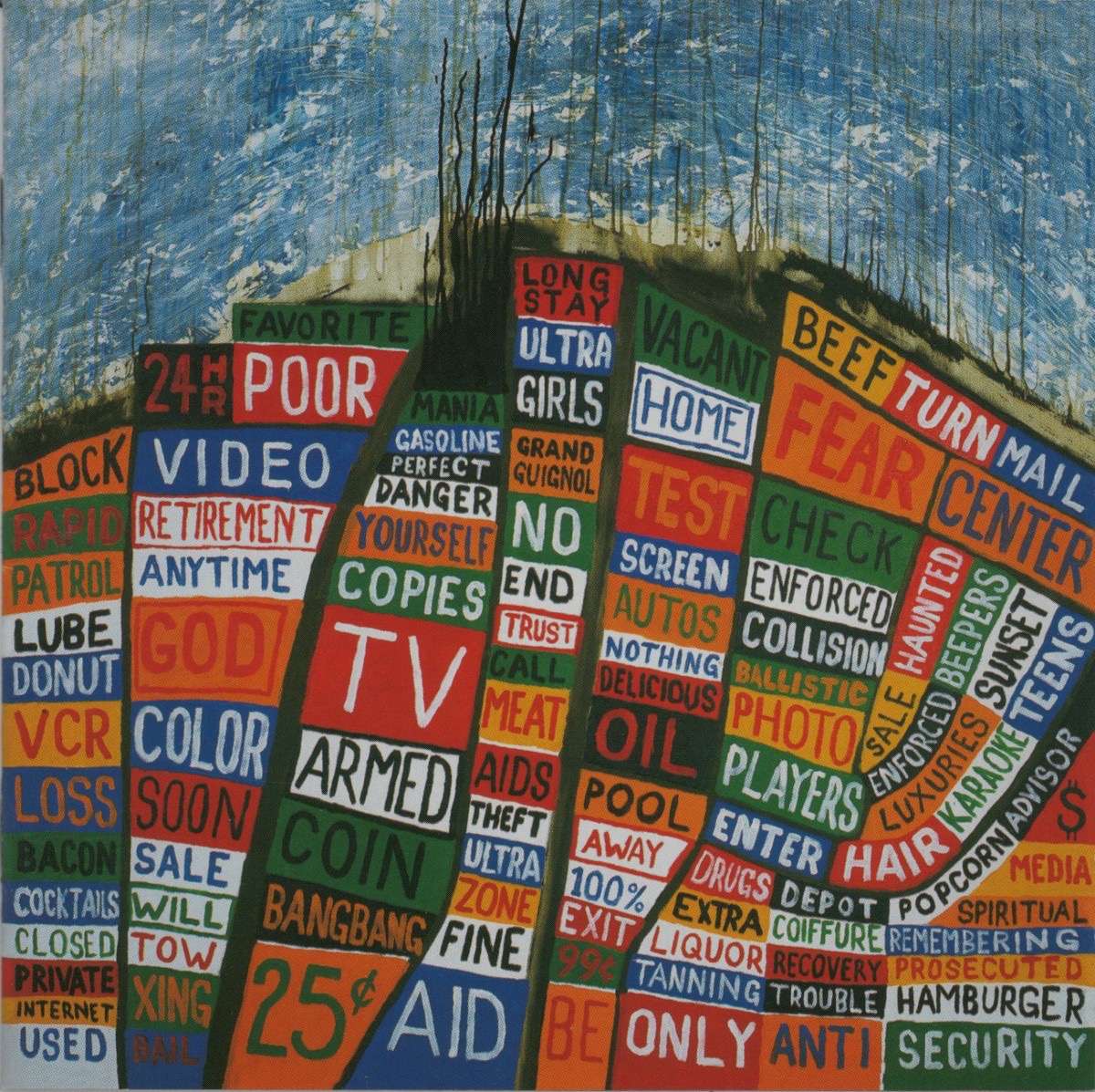
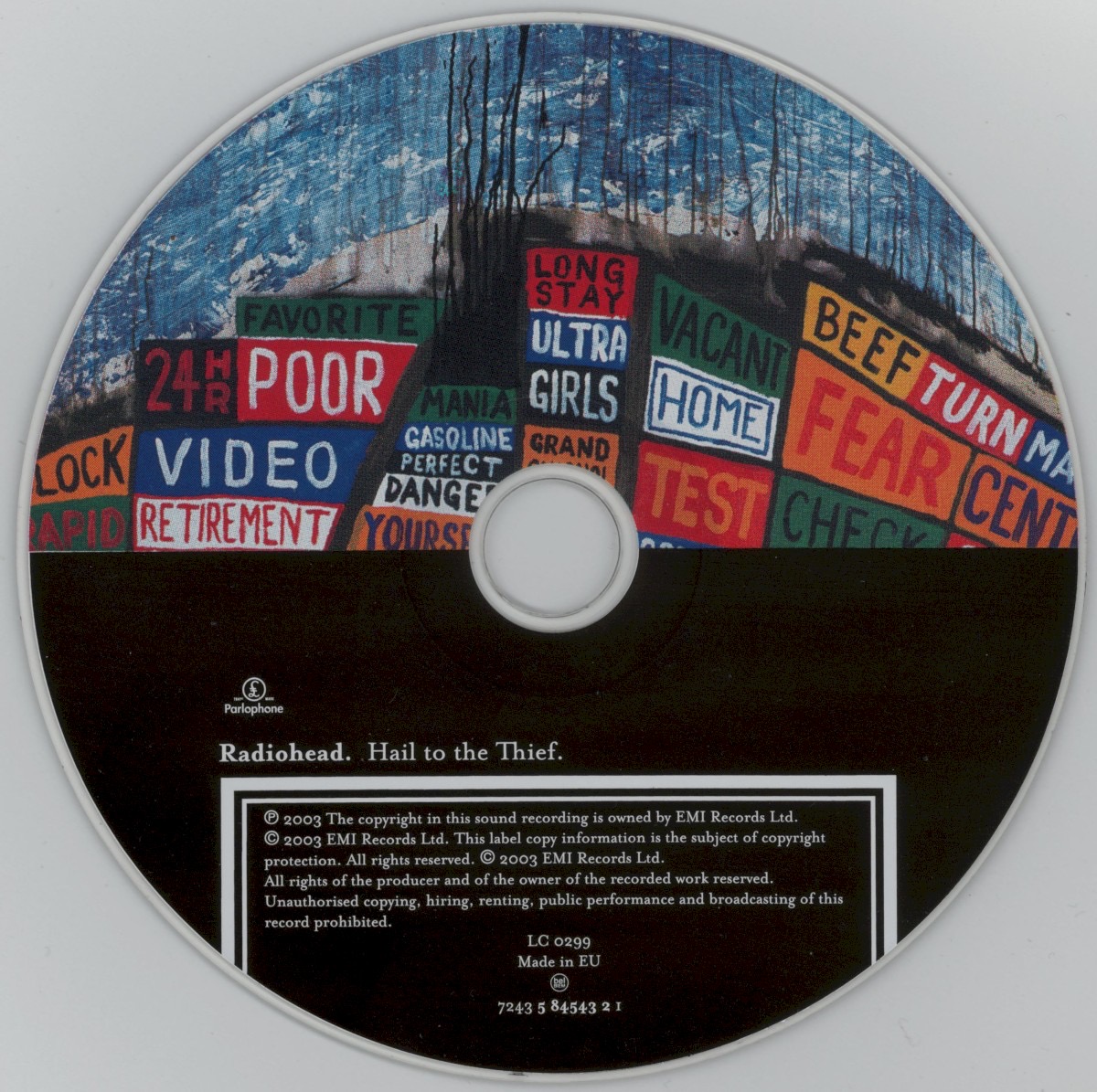
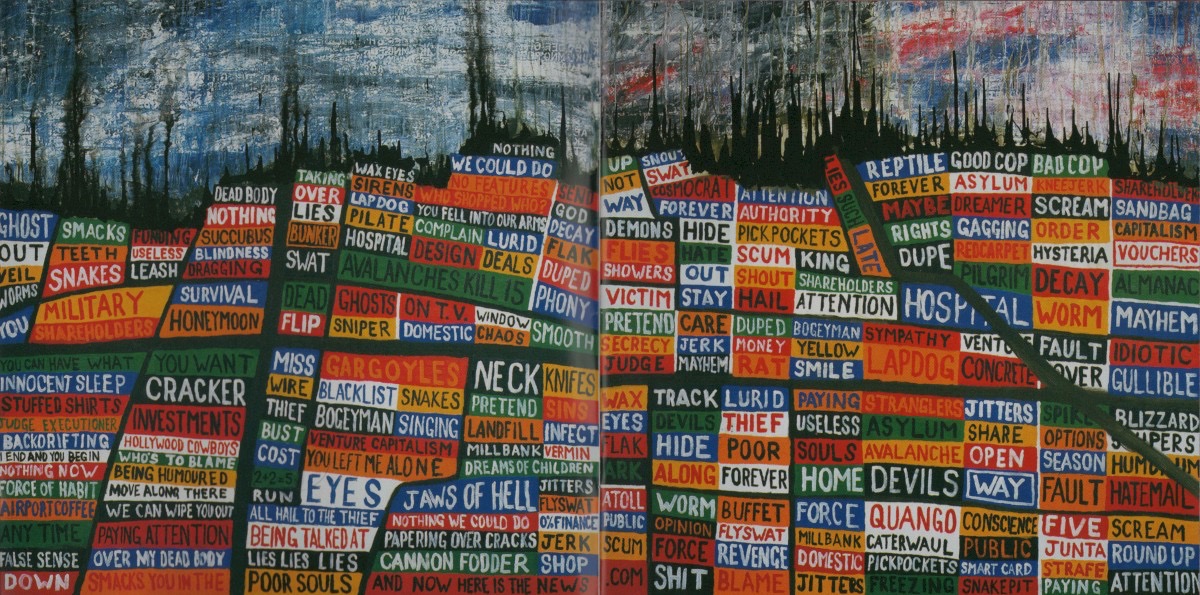
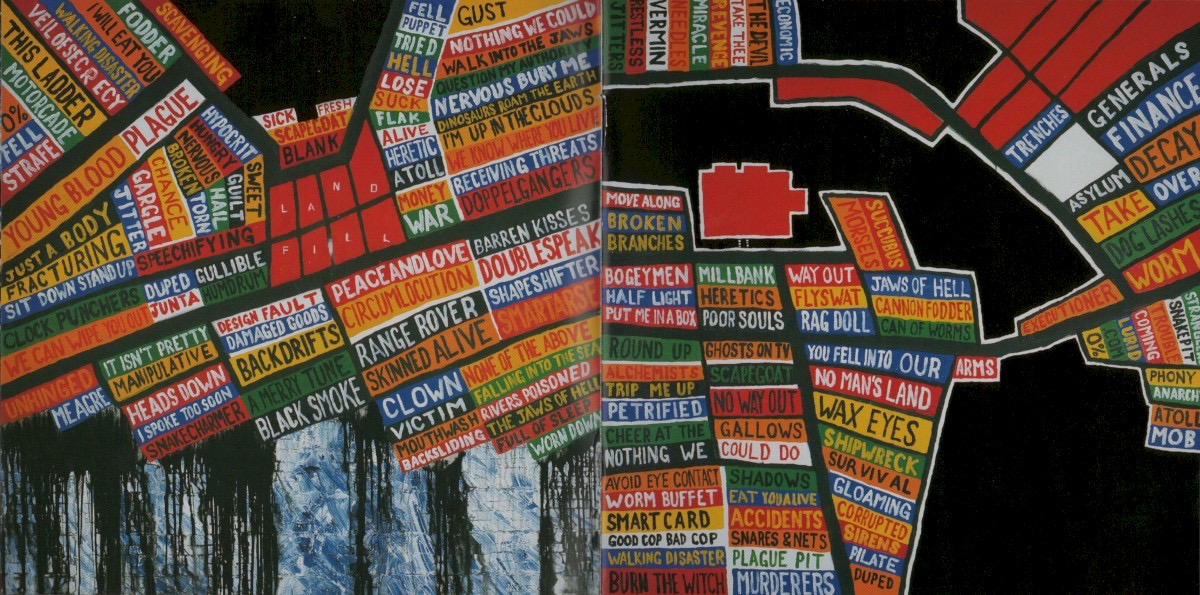
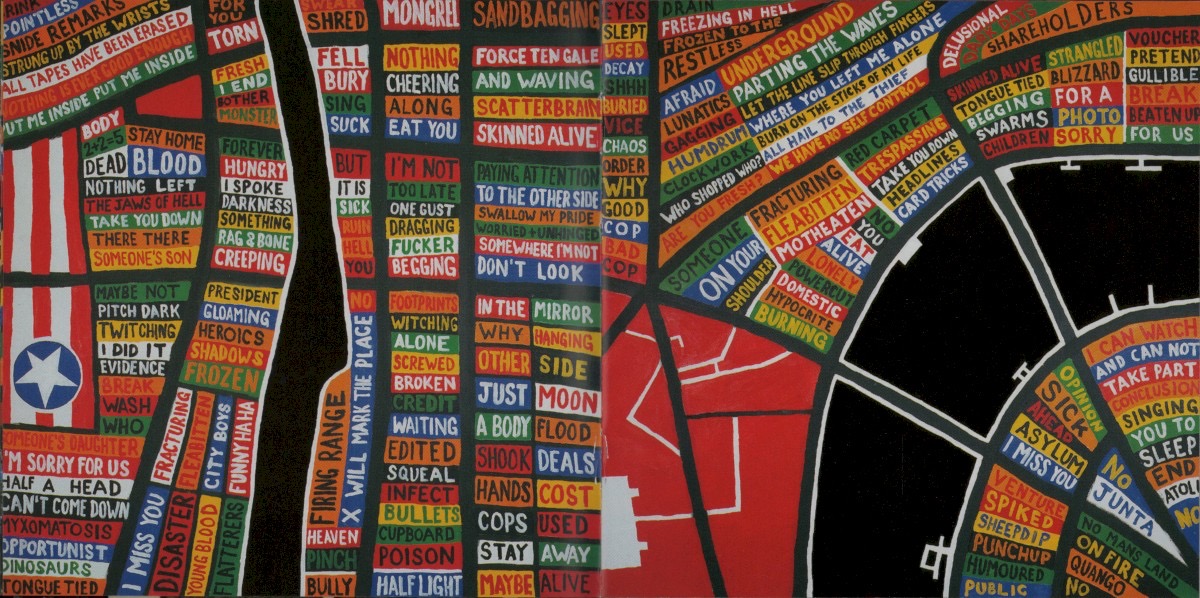
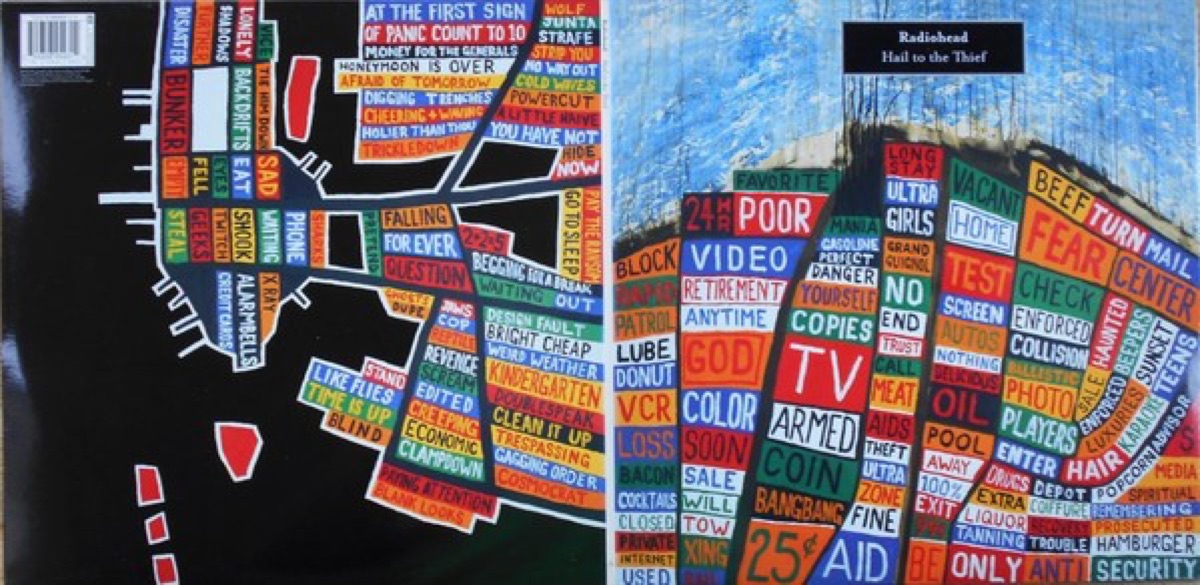
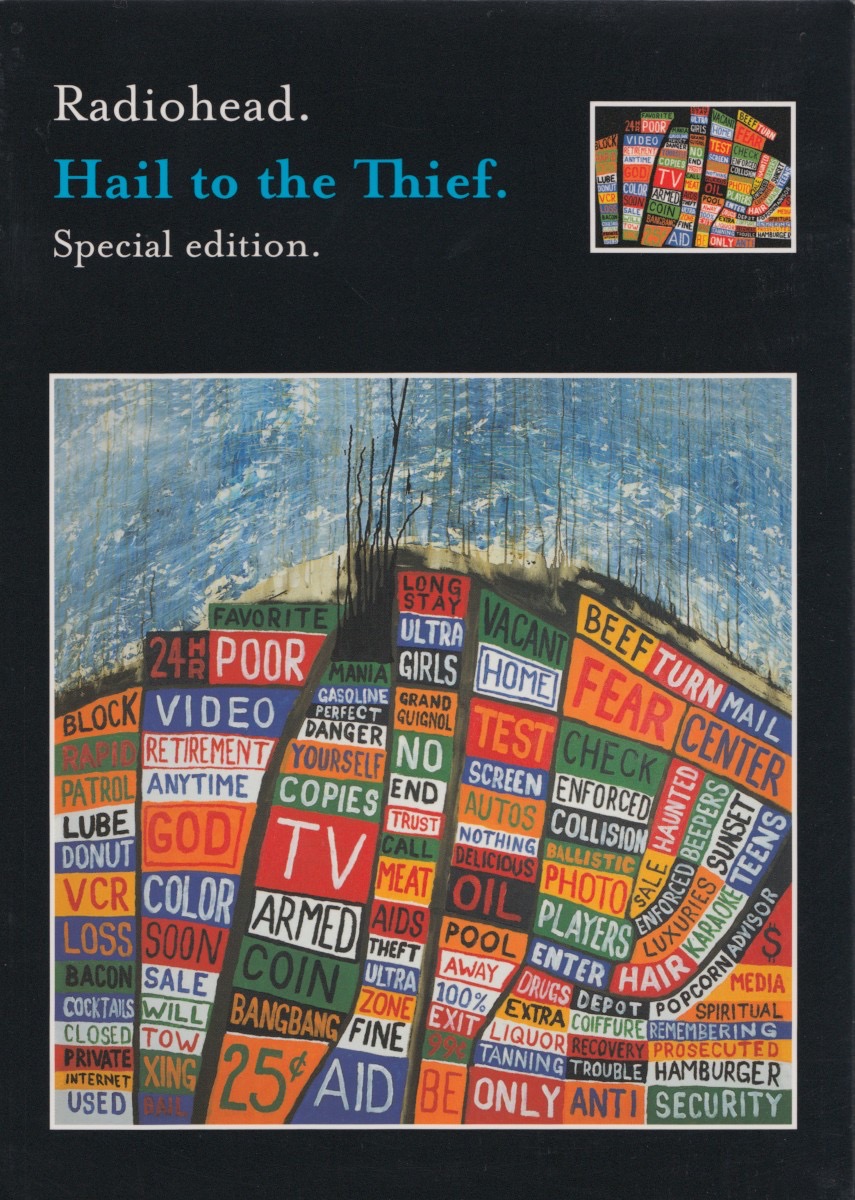
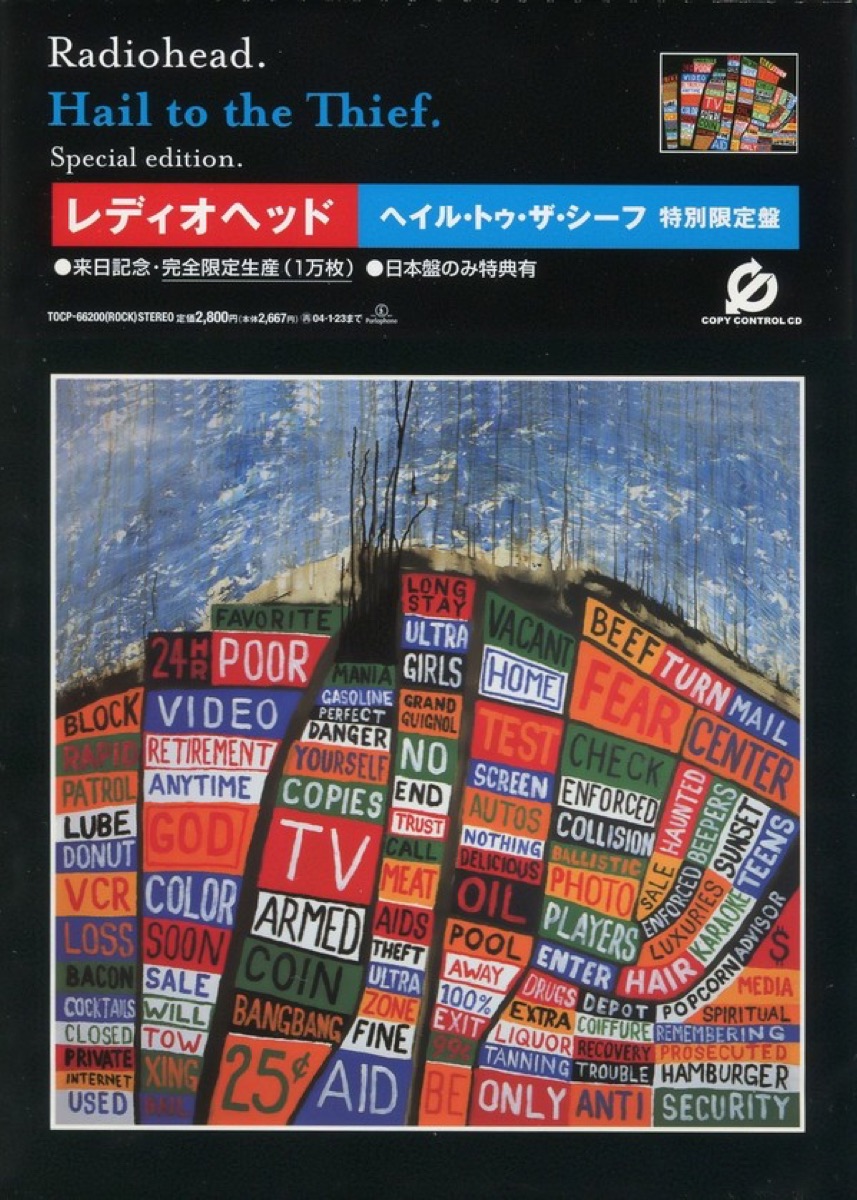
Donwood's first idea for the cover was photographs of topiary, and giant phalluses made of chicken wire and astroturf. Yorke told him it was not quite appropriate. What went on the front instead was a painting Donwood called Pacific Coast, made from what he saw out of the car window in Los Angeles.
I was being driven along in a car and there were all these signs everywhere, big and brash, to catch your attention.
stanley donwood · the guardian, 22 november 2006
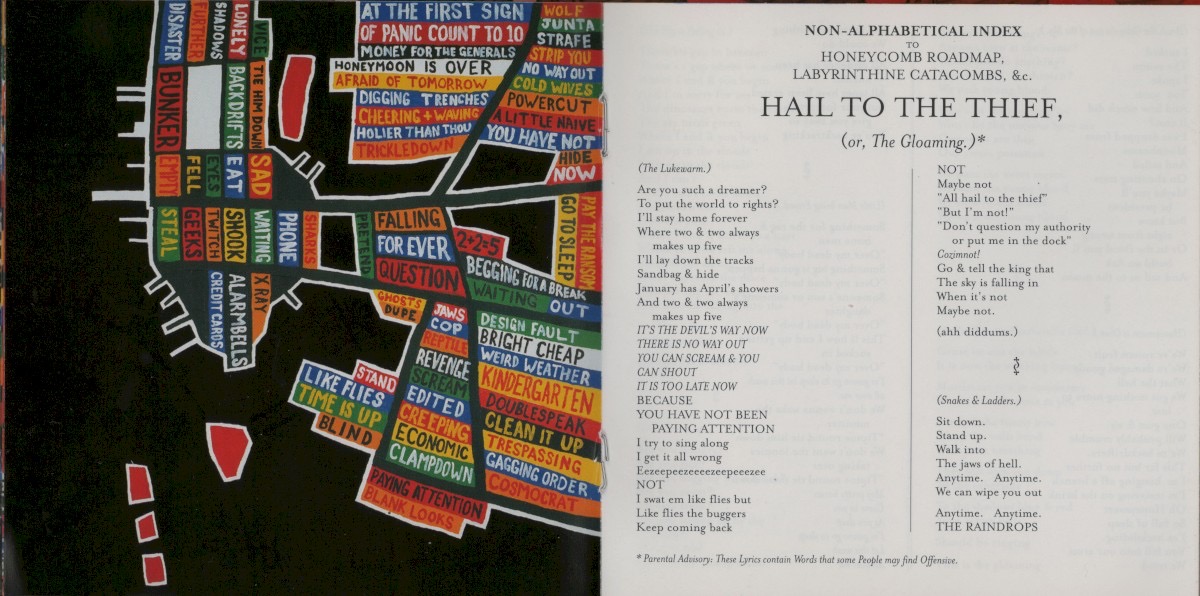
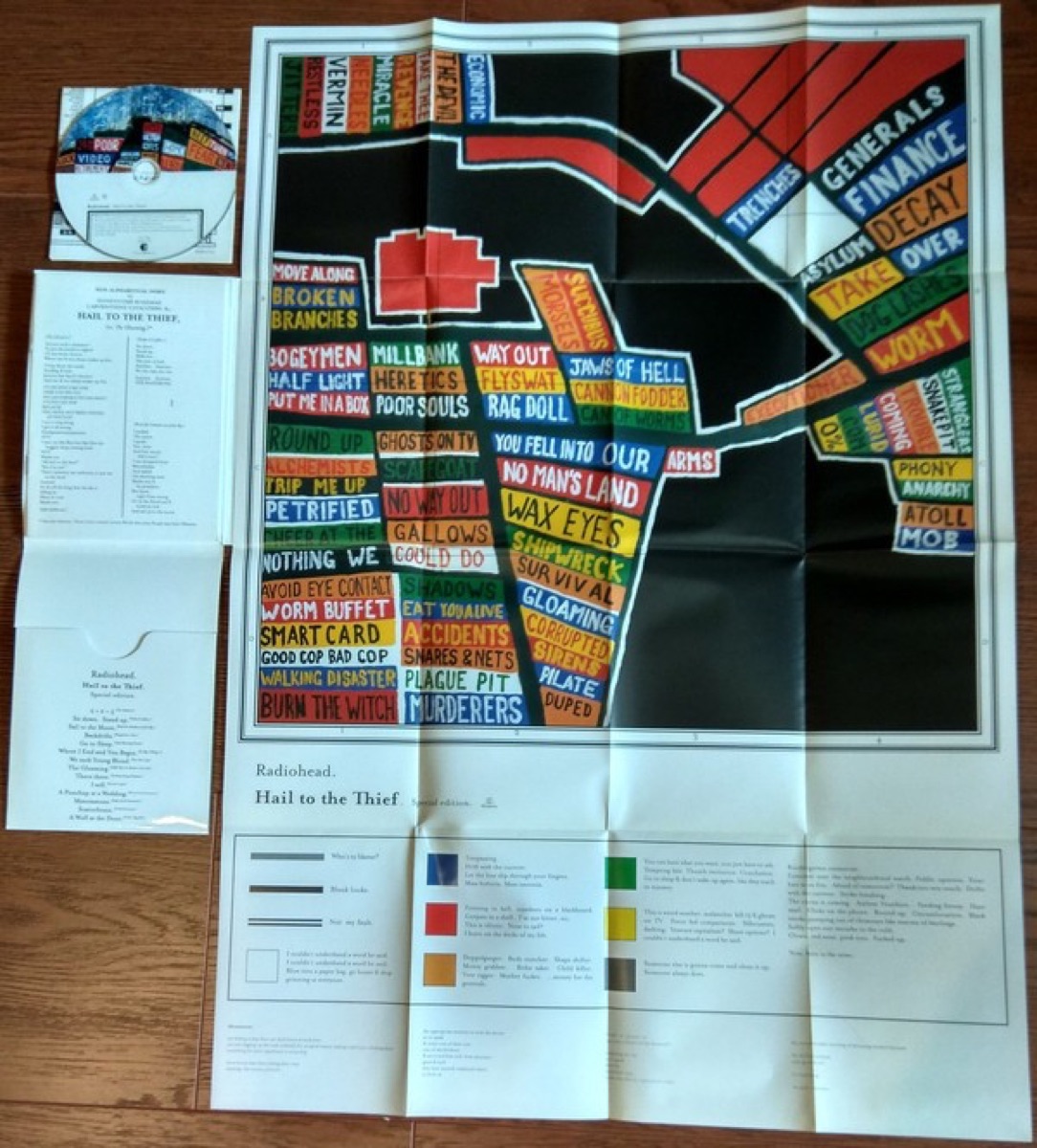
It is a street map in which every block is a word: TV, OIL, GOD, FEAR, POOL, 25¢, a hillside of roadside advertising under a dripping blue sky. Donwood said later that the colours were the ones signs use to be seen at speed, and that they were ominous for a plainer reason: the pigments come out of the petrochemical industry. The words inside the booklet came partly from Yorke, who had spent the months after 11 September and the war in Afghanistan writing down phrases from Radio 4 that rang bells, until the list was long enough to be most of the artwork. One block on the inside spread reads BURN THE WITCH, thirteen years before Radiohead released a song with that name.
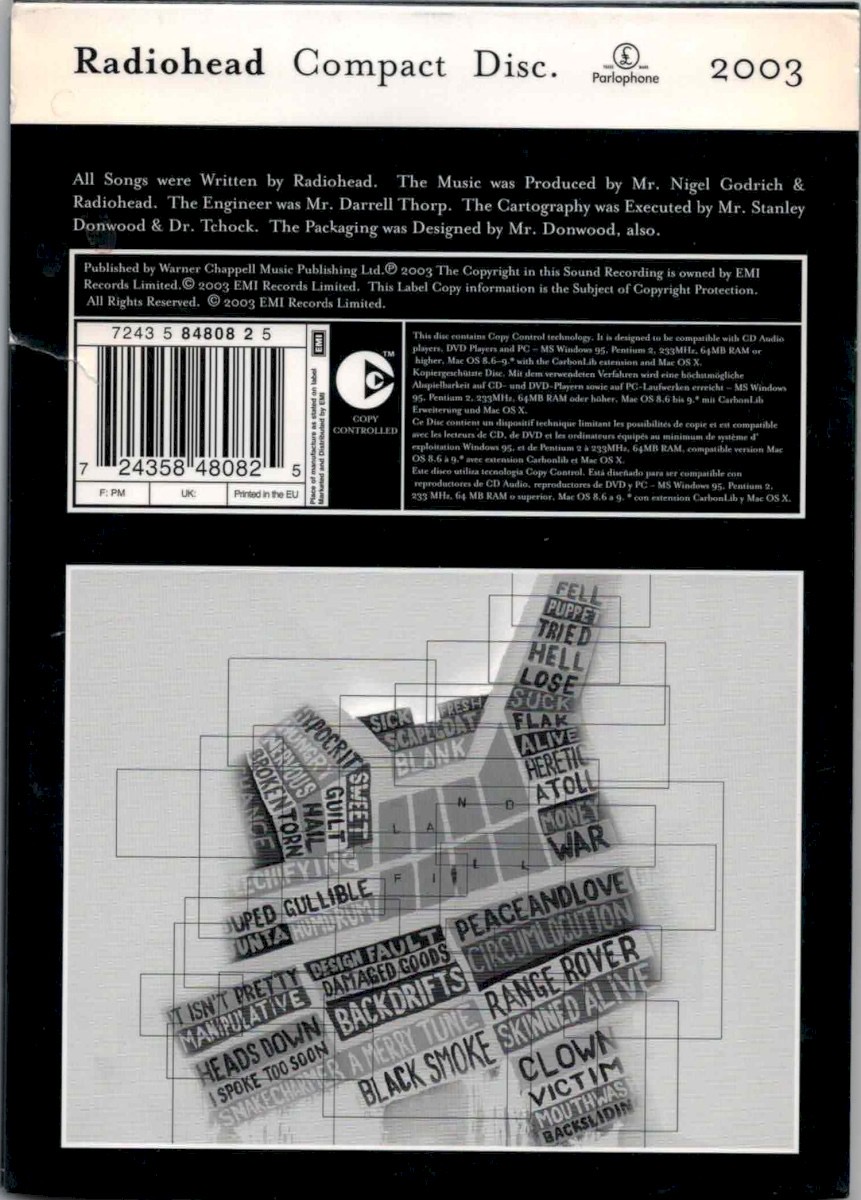
The credits call it “painting of words onto BLACK canvas”, by Stanley “who's in charge here?” Donwood, set in a typeface called Mrs Eaves from the Emigre foundry in Sacramento. The lyrics are headed “Non-alphabetical index to honeycomb roadmap, labyrinthine catacombs, &c.”, with an asterisk warning that they contain words some people may find offensive. The special edition came bound like a book, with a fold-out map of the painting, and its back cover hands the job to two men: “The Cartography was Executed by Mr. Stanley Donwood & Dr. Tchock.” In Japan that edition was issued in July 2003 for the band's Summer Sonic shows, limited to 10,000 copies.
2003
hail to the chief
“Hail to the thief” was what protesters called George W. Bush after the 2000 election, and it is a line in “2 + 2 = 5” before it is the album's name. Yorke gave two accounts of where he first heard it. To Fricke it came off the BBC on his car radio one evening, in reports about the Florida vote, and threw a switch in his head. To Klosterman it was a radio programme about the election of 1888. Capitol, he said, never said a word about it.
The band's accounts have moved too. In 2003 Yorke said he got nervous about the phrase, because the record was not only about that, and that the others steered him back to it. Colin Greenwood told Launch they had not wanted to be subtle about where they stood. Twenty-two years later Yorke told the Observer the phrase had been about something closer to home, his old fear that the band were a lie and someone would see through them.
Jonny [Greenwood] begged me not to call it that. To some extent he was right, but I was like, 'It's all I've got, man.'
thom yorke · the observer, 26 april 2025
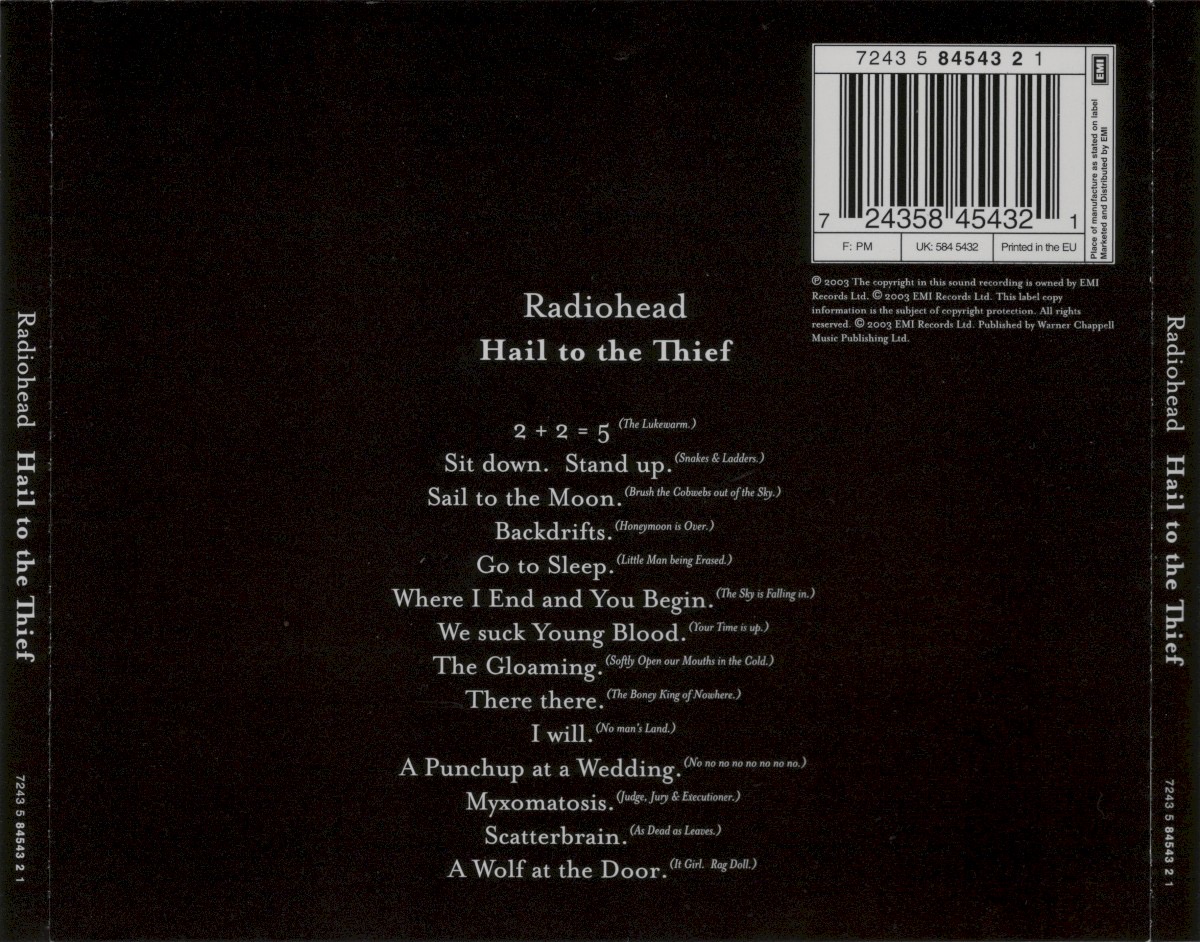
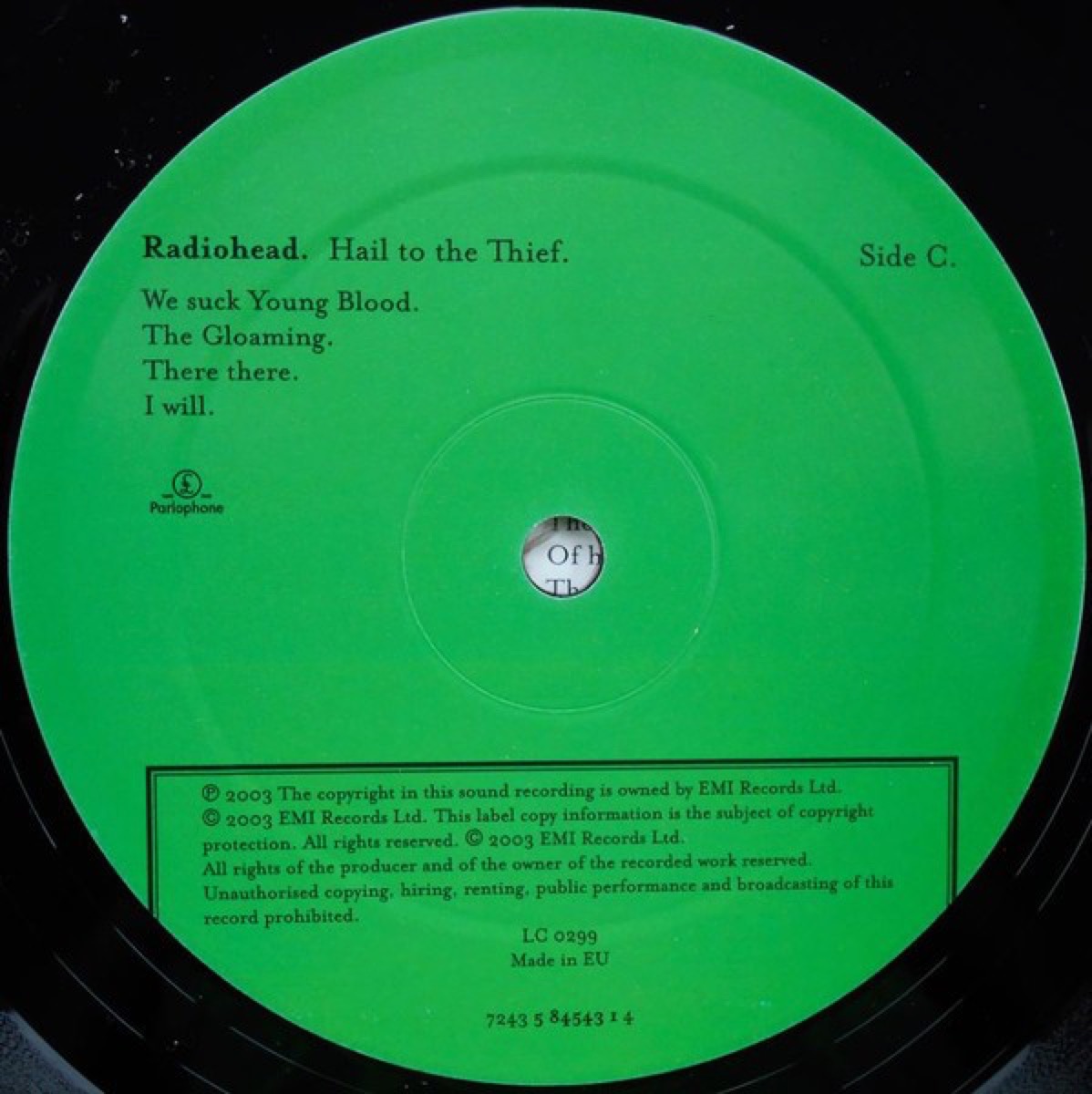
Every song on the sleeve carries a second title in brackets, and so does the album: Hail to the Thief, (or, The Gloaming.)
mar–jun 2003
leaked, then launched
Capitol's mailing list had the announcement on 24 March, opening “DON'T PANIC!”: 14 tracks from Oxford and Los Angeles, out in June. Within a week the internet had it, or something like it: unmixed roughs and edits from the winter. Jonny Greenwood said they were stolen early roughs. Colin likened it to being burgled halfway through doing the house up, and Selway wrote on the band's site that the mixes were not bad, only that the real album was better, “honest”. Godrich pointed out that some of it was not even finished. EMI kept the release date. The mastered album got out on 15 May anyway.
By the band's standards, Alexis Petridis wrote in the Guardian, what followed was a blitzkrieg. Posters dressed up as a talent-show casting call went up in Los Angeles and London, planes towed banners for the album over Coachella, and radiohead.tv opened on 26 May; Yorke, someone close to the band told NME, had wanted the address to be the-most-gigantic-lying-mouth-of-all-time.com. Capitol's website ran a game called The Hunt, in which fans chased missing Radiohead words through shaded boxes for a trip to a show, with Obey posters of Bush among the prizes. Yorke went on Jonathan Ross. In the Independent Nick Hasted noted that Kid A had been handed to critics in a candle-lit room like scripture, and Hail to the Thief had come in his post with the gas bill.
Parlophone released it on 9 June 2003 and Capitol a day later. In parts of Europe it came on copy-controlled discs, and in Belgium the consumer group Test-Achats took complaints from fans whose players would not read it. It went straight to number one in Britain, the band's fourth number one album in a row. In America it entered at number three on about 300,000 copies, more than any Radiohead album had sold in a first week there.
photo
Photo: g_leon_h · CC BY-SA 2.0 · Wikimedia Commons
2003–04
reviews, prizes, the road
The NME got it first, in April, and found it good rather than great: 14 tracks, nearly an hour, and “Backdrifts” and “The Gloaming” the two to drop. Q's John Harris thought parts of it all experiment and no substance, and Petridis gave it three stars. Pitchfork made it Best New Music at 9.3, the Daily Telegraph made it CD of the week, and Robert Christgau, by his own account not known as a fan, wrote that it flowed better than OK Computer.
It was on the Mercury Prize shortlist in July, joint favourite with Coldplay at 4-1, and lost to Dizzee Rascal's Boy in da Corner. At the Grammys in February 2004 it lost Best Alternative Music Album to the White Stripes' Elephant, while Godrich and Thorp won Best Engineered Album, Non-Classical.
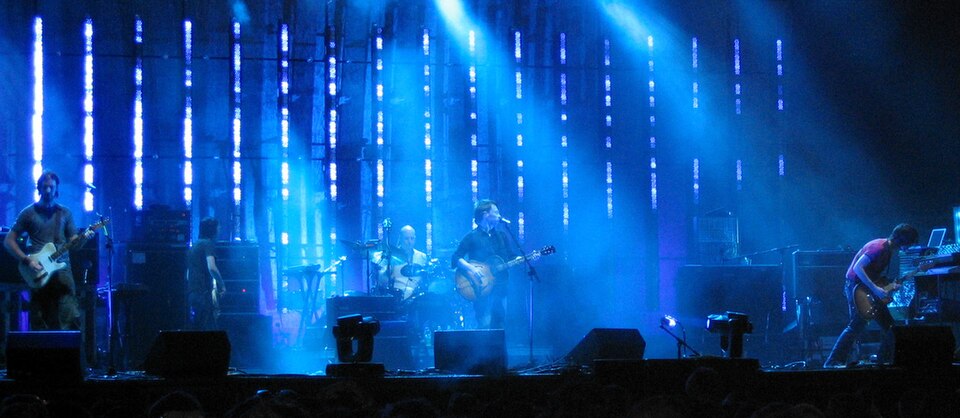
The tour opened at the Olympia in Dublin on 17 May 2003, a small room with tickets sold only through the band's website, and took in the Pyramid Stage at Glastonbury on 28 June. The North American leg began in Mansfield on 13 August; the Toronto night was lost to the blackout that week and made up at the SkyDome in October. Yorke admitted afterwards that the band had worried how America would take them after what he had said about Bush, and that Colin, whose wife is American, had been right not to. After “Go to Sleep” in August and “2 + 2 = 5” in November came arena dates in Britain, with Yorke's Tony Blair impression on the screens at Earls Court, and a close for the year at The Point in Dublin. In April 2004 they went to Japan and Australia with the Com Lag EP, lost the second Melbourne night to an infection in Yorke's throat, and finished at Coachella on 1 May 2004.
2004–25
too many songs
Hail to the Thief was the last of the six albums Radiohead owed EMI, and they did not sign again. The leak stayed with them. When they put In Rainbows out themselves in 2007, Yorke told David Byrne that every record for the last four had leaked, his own solo album included, “so the idea was like, we'll leak it, then.”
The band have been its hardest critics. Yorke told Spin in 2006 that they had a meltdown putting it together, and in 2008 he posted a running order of his own on W.A.S.T.E., the band's mail-order site, without “Backdrifts”, “We Suck Young Blood”, “I Will” and “A Punchup at a Wedding”. Colin Greenwood called it a holding process. Godrich, in 2013, loved “Sit Down. Stand Up” and “Go to Sleep”, thought there were too many songs, and called it probably his least favourite of all their albums, though charming because nobody had edited it.
Nobody agrees on what to cut, which is the best case for keeping all 14. The NME would have lost “The Gloaming”, which Yorke's own list kept; Yorke lost “A Punchup at a Wedding”, which Petridis thought the best thing on it. It is the one Radiohead album with every version of the band on it at once, and it should stay that long.
Rolling Stone put it at 89 among the best albums of the 2000s, for its overabundance of ideas. EMI's Capitol reissued it on vinyl in 2008 and as a Collector's Edition with the B-sides and a DVD in 2009, and in 2016 it moved with the rest of the early catalogue to XL. Selway, in 2023, called it a bridge between Kid A, Amnesiac and In Rainbows, two records in one with both halves of the Radiohead brain in it.
Then Yorke went back to it for the stage, turning the album into Hamlet Hail to the Thief with Christine Jones and Steven Hoggett, and the old tour tapes became Hail to the Thief (Live Recordings 2003–2009). Twenty-two years after Jonny Greenwood begged him not to use the title, Yorke put it on a play.
on film
The lyrics of the 2003 record, read against its politics.· Stempwatch on youtube →
videos(7)
the sleeve
the booklet (5)
the art and the editions
the press
the press release
from Capitol Records
dated 24 mar 2003
DON'T PANIC! Radiohead will release their sixth album Hail To The Thief on June 10. The first single off the album will be “There There.” Hail To The Thief features 14 tracks and was recorded in Oxford and Los Angeles.
the reviews
7/10
NME
James Oldham · 26 apr 2003
read it →a good rather than great record
4/5
Rolling Stone
Touré · 3 jun 2003
read it →people who used to seem paranoid now seem prudent
A-
Entertainment Weekly
Rob Brunner · 6 jun 2003
read it →plenty of weird, but there's considerably more great
3/5
The Guardian
Alexis Petridis · 6 jun 2003
read it →neither startlingly different and fresh nor packed with the sort of anthemic songs
no mark
The Independent
Nick Hasted · 6 jun 2003
read it →a disappointing rest-stop, a relaxation of their long march forward
no mark
The Daily Telegraph
Neil McCormick · 7 jun 2003
read it →Radiohead firing on all cylinders, a major work by major artists
4/4
Los Angeles Times
Richard Cromelin · 8 jun 2003
read it →a relentlessly invigorating stretch of music that never lets you get comfortable
9.3
Pitchfork
Chris Ott · 9 jun 2003
read it →most of us will long cherish the view from this bridge
no mark
New York
Ethan Brown · 16 jun 2003
read it →Hail to the Thief isn't a protest album, and that's why it works so well
3/5
Q
John Harris · jul 2003
all experimentalism and precious little substance
no mark
The Village Voice
Robert Christgau · 8 jul 2003
read it →Hail to the Thief flows better than OK Computer; it's not so self-regarding
later
- looking backPitchfork · Joe Tangari · 27 aug 2009 8.6almost an anti-masterpiece, a well-sequenced collection of songsread →
- looking backStereogum · Michael Nelson · 7 jun 2013Every other Radiohead record reimagined the band's sound; this one recycled it.read →
- looking backRolling Stone · Angie Martoccio · 9 jun 2023Radiohead's most misunderstood albumread →
- on the listsRolling Stone, 100 Best Albums of the 2000s, no. 89 · 18 jul 2011The dazzling overabundance of ideas makes Hail to the Thief a triumphread →
sources27
- David Fricke, “Bitter Prophet: Thom Yorke on ‘Hail to the Thief’”, Rolling Stone, 26 June 2003, for the 2001 tour and no big leap, Ocean Way as holiday camp and the parties, the running order by Selway and O'Brien, the title on the car radio, Capitol's silence and the others steering him back.
- Chuck Klosterman, “Fitter Happier: Radiohead Return”, Spin, July 2003 (web, 29 June 2003), for the band's method, the Old Parsonage day, two and a half weeks in Los Angeles and the 1888 radio programme.
- Lucy Jones, “‘Hail To The Thief’ Is 10: Revisiting Radiohead's Underrated Masterpiece”, NME, 7 June 2013, for the 18 months of Kid A and Amnesiac, the sixth and last album due to EMI, Godrich on Ocean Way, Beck, a track a day, the third of rough mixes, hating LA, too many songs and his least favourite; Yorke's 2006 Spin meltdown line, the 2008 running order on W.A.S.T.E. and Colin Greenwood's holding process.
- Miranda Sawyer, “‘Like being thrown down a staircase’: Thom Yorke's Shakespeare mash-up”, The Observer, 26 April 2025, for the finishing and mixing, Jonny Greenwood begging him not to use the title, and the fear behind the phrase.
- Steven Hyden, interview with Philip Selway, Uproxx, 23 February 2023, for “we started quickly”, the bridge and the two hemispheres.
- Hail to the Thief sleeve and booklet, Parlophone 7243 5 84543 2 1, 2003, for the dates, studios, credits, Plank, Stewart, Cycling '74, Mrs Eaves, the index heading, the second title and the BURN THE WITCH block; the special edition, Parlophone 7243 5 84808 2 5, for the book binding, the fold-out map and the cartography credit.
- Cycling '74, “What is Max?”, cycling74.com, for the company behind Max.
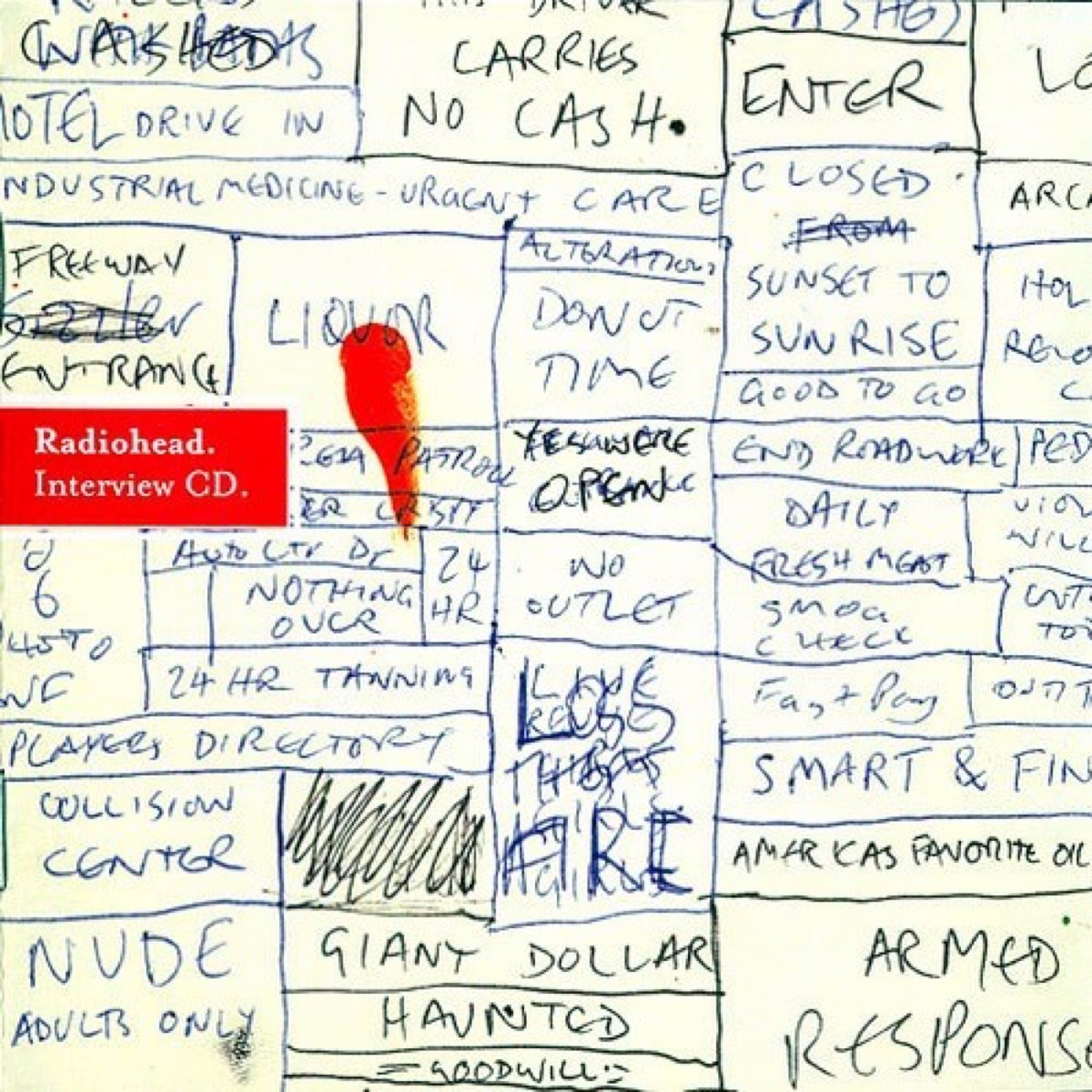
- Wikipedia, “Hail to the Thief”, for the Parlophone interview CD of 22 April 2003 (May and June spent arranging), Nick Collins in Computer Music Journal (electronic parts recorded live), Donwood joining the band in Hollywood, Billboard on EMI keeping the date, and John Harris as the Q reviewer.
- Matthew Fritch, “A Conversation With Thom Yorke”, Magnet, September 2003, as told on the news desk here, for Yorke and Donwood driving round Hollywood and Beverly Hills.
- Stanley Donwood, interviewed in “Radiohead's ‘sixth man’ reveals the secrets behind their covers”, The Guardian, 22 November 2006, for Pacific Coast and the drive through Los Angeles.
- Ryan Dombal, “Take Cover: Radiohead Artist Stanley Donwood”, Pitchfork, 15 September 2010, for the colours of signs seen at speed and the petrochemical pigments.
- Angie Martoccio, “Twenty Years Later, Radiohead's ‘Hail to the Thief’ Has Never Sounded Better”, Rolling Stone, 9 June 2023, for the topiary idea (Donwood in 2017) and Yorke's line to David Byrne about the leak.
- NME, “Maps and Legends”, 29 April 2003, for Yorke's Radio 4 list; NME, “Hail to the mischief makers!”, 6 May 2003, for the posters, radiohead.tv and the address Yorke wanted; both as told on the news desk here.
- NME news, 4 August, 2 and 9 September and 2 October 2002, for Benicàssim, the first day, the instrument rota and ten tracks; NME, 1 January 2003, for Selway's eight weeks and April 2002; NME, 19 December 2002, for the webcast and Green Plastic's masks; NME, 3, 4, 7 April and 16 May 2003, and Drowned in Sound, 3 April 2003, for the leak and the band's replies; all as told on the news desk here.
- Pitchfork's spring 2002 report on the sessions, as reprinted by Green Plastic and told on the news desk here, for Graeme Stewart's earlier work.
- treefingers.com, the 2003 “Hail To The Thief info” page, for the new songs of summer 2002 and Yorke's message-board reply; the release pages here for “I Am a Wicked Child” and In Rainbows Disk 2.
- Rolling Stone, review, 3 June 2003, for the record heard as a record of the march to Iraq; Dave Johnston, review, Vue Weekly, 12 June 2003, as told on the news desk here, for the tension over the war.
- Capitol Records, Radiohead album announcement email, 24 March 2003, and “The Hunt” contest page, June 2003, both on the Wayback Machine.
- Alexis Petridis, review, The Guardian, 6 June 2003, for the blitzkrieg, the Coachella banners, three stars and “A Punchup at a Wedding”; Nick Hasted, “Radio daze”, The Independent, 6 June 2003, for the candle-lit room and the gas bill.
- BBC News, “Consumers sue over anti-copy CDs”, 6 January 2004, for Test-Achats.
- NME, “Radiohead Steal It”, 15 June 2003, and Billboard, “Radiohead's ‘Thief’ Goes Right To No. 1”, 16 June 2003, for the UK chart; Billboard, “Ailing Vandross Dances Atop Album Chart”, 18 June 2003, for number three and the first week.
- James Oldham, review, NME, 26 April 2003; the Guardian's On the Record column, 10 June 2003, for Q; Chris Ott, review, Pitchfork, 9 June 2003; Neil McCormick, “CD of the week: firing on all cylinders”, Daily Telegraph, 7 June 2003; Robert Christgau, “No Hope Radio”, Village Voice, 8 July 2003.
- NME, The Independent and The Guardian, 22 July 2003, for the Mercury shortlist and odds; the news desk here, 10 September 2003, for Dizzee Rascal; Grammy.com, 46th Grammy Awards winners list, 9 February 2004.
- The live archive here and its news desk, May 2003 to May 2004, for the Olympia, Glastonbury, Mansfield, the blackout and the SkyDome, Earls Court, The Point, Melbourne and Coachella; NME, “Radiohead get in state!”, 30 November 2003, for the worries about America.
- J. Kelly Nestruck, “EMI stab Radiohead in the back catalogue”, The Guardian, 8 November 2007, for the contract fulfilled with this album.
- “100 Best Albums of the 2000s”, Rolling Stone, 18 July 2011, for number 89.
- The news desk here, 10 July 2008 and 22 June 2009, for the Capitol vinyl and Collector's Edition reissues; Billboard via the news desk here, 4 April 2016, for the move to XL.